Los Órganos · Piura · Perú

Dive where two seas meet

Recreational diving and marine research on Peru's tropical north coast — where the Humboldt Current meets equatorial water and life explodes.

— 10 m

The dive chart

Five sites between Punta Sal and El Ñuro, minutes from our port in Los Órganos. Pick a point on the chart.

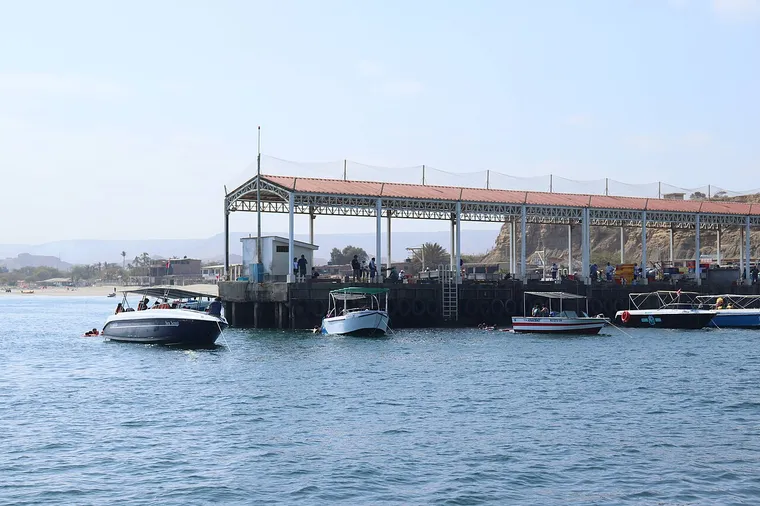
The artisanal fishing pier of Los Organos with fishing boats, seen from the water.
The artisanal fishing pier of Los Organos with fishing boats, seen from the water. · Nao Alayo · CC BY-SA 4.0

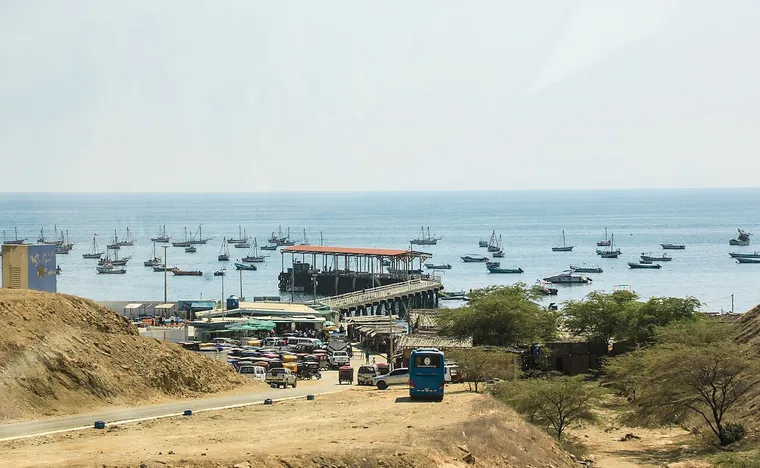
Los Órganos Pier

The natural classroom — calm, shallow and full of life

Depth
3–10 m
Level
All levels
By boat
5 min

The artisanal pier's pilings host an artificial reef: resident green turtles, pufferfish, blennies and sea stars. Ideal for first dives and courses.

Who lives here

View on Google Maps ↗
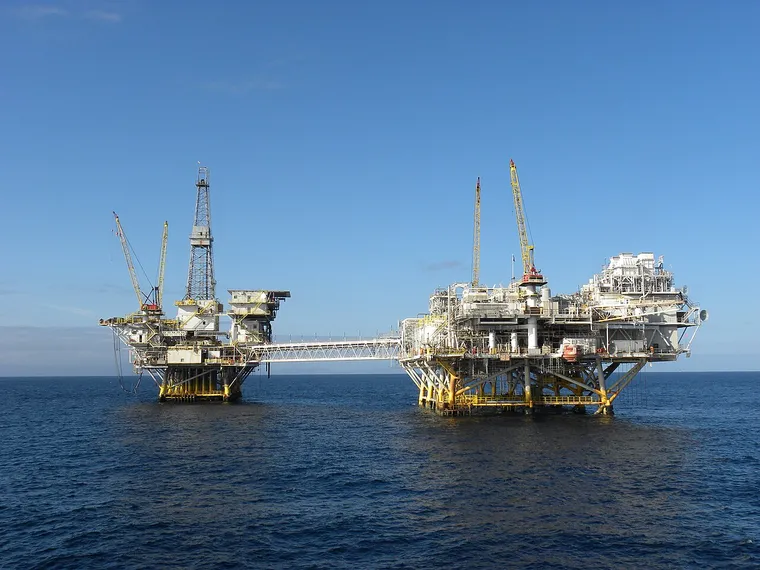
Offshore oil platforms similar to the MX-1 (illustrative photo, California, USA)
Offshore oil platforms similar to the MX-1 (illustrative photo, California, USA) · Bureau of Safety and Environmental Enforcement (BSEE) · Public domain (U.S. federal government work)

MX-1 Platform

The north's best dive: a protected steel reef

Depth
12–30 m
Level
Advanced
By boat
15 min

An oil platform turned reef with 80+ species and a sea-lion colony. Declared a special protection area in 2025. In season you can hear whale song underwater.

Who lives here

View on Google Maps ↗
— 18 m

Marine life

The cold Humboldt Current converging with equatorial water concentrates over 70% of Peru's marine species here. Meet some of the neighbours you'll see with us.

Green sea turtle

Chelonia mydas · Tortuga verde

The only sea turtle that is mainly herbivorous as an adult; a resident colony at the El Nuro pier feeds daily alongside the local fishermen.

El Ñuro · Los Órganos Pier

Photo: Diego Delso · CC BY-SA 4.0

Humpback whale

Megaptera novaeangliae · Ballena jorobada

It migrates over 6,000 km from Antarctic waters to breed off northern Peru from July to October; males sing long, complex songs.

Jul–Oct · from the boat and underwater

Photo: Whit Welles (Wwelles14) · CC BY 3.0

Whale shark

Rhincodon typus · Tiburón ballena

The largest fish on Earth, growing past 12 m. Each shark's spot pattern is unique, like a fingerprint, and it visits northern Peru from June to November.

Jun–Nov · en route to Punta Sal

Photo: National Marine Sanctuaries (NOAA) · Public domain

Giant oceanic manta ray

Mobula birostris · Manta gigante

The world's largest ray, spanning up to 7 m; the Peru–Ecuador population is the largest known, estimated at more than 22,000 individuals.

Open water · occasional sightings

Photo: Elias Levy · CC BY 2.0

South American sea lion

Otaria flavescens · Lobo marino chusco

Adult males grow a thick lion-like mane and can top 300 kg, more than double a female's weight; in Peru the species is known as the "lobo chusco".

MX-1 Platform

Photo: GORE Callao (Gobierno Regional del Callao) · Public domain

Fine-spotted moray (jewel moray)

Muraena lentiginosa · Morena pinta

Nocturnal and fierce-looking, it opens and closes its mouth just to breathe; its range reaches its southern limit at Peru's Lobos de Afuera Islands.

Vichayito Reefs

Photo: LASZLO ILYES (Cleveland, Ohio, USA) · CC BY 2.0

Changos octopus

Octopus mimus · Pulpo (pulpo común del Perú)

Peru's most important commercial octopus: it hunts crabs and molluscs by night and hides in plain sight by day, changing both skin color and texture.

Pier · Vichayito

Photo: Josh Noseworthy · CC BY 4.0

Red-tipped sea goddess

Chromolaichma sedna · Babosa de mar sedna

Named for Sedna, the Inuit goddess of the sea; its yellow-and-red margins warn predators of chemical defenses drawn from the sponges it eats.

Vichayito Reefs

Photo: Don Loarie · CC BY 3.0

Pacific spotted scorpionfish (stone scorpionfish)

Scorpaena mystes · Pez diablo (escorpión moteado del Pacífico)

An ambush predator that mimics algae-covered rock; it periodically sheds its outer skin layer to stay clean, and its fin spines are venomous.

Vichayito Reefs

Photo: LASZLO ILYES (Cleveland, Ohio, USA), via Flickr · CC BY 2.0

Flag cabrilla (starry grouper)

Epinephelus labriformis · Murique (mero murique)

A rocky-reef ambush hunter ranging from Baja California to northern Peru; its scattered white spots earn it the name starry grouper. Reaches about 60 cm.

MX-1 · Punta Sal

Photo: Derek Keats · CC BY 2.0

Green spiny lobster

Panulirus gracilis · Langosta verde

It lacks claws, defending itself with spiny antennae and a rasping squeak made by rubbing them; it hides in rocky crevices by day and forages at night.

Vichayito Reefs

Photo: keesgroenendijk (iNaturalist) · CC BY-SA 4.0

Chalapo blenny

Labrisomus philippii · Trambollo

One of the largest blennies of the southeast Pacific, it reaches about 25 cm and ambushes crabs and snails among rocks and pier pilings from Peru to Chile.

Los Órganos Pier

Photo: Yuri Hooker · CC BY 3.0

·

— 24 m

Seasons

The calendar rules: humpbacks arrive from Antarctica to calve in warm water, and in season you can hear their song while diving.

Humpback whaleJul 15 – Oct 31 · peak Aug–Sep
Whale sharkJun – Nov
Green turtlesyear-round
Divingyear-round · high: Dec–Mar & Jul–Oct · water 17–29 °C

high seasonlow season (fewer people, same animals)

— 26 m

Trips

Small groups, local guides, gear inspected before every departure. Want to get certified? See the PADI courses below.

Turtle snorkel — El Ñuro

Swim with the resident green turtles off the community pier.

No experience needed · half day

Ask us →

Fun dive — 2 tanks

Two guided dives at the pier or the Vichayito reefs.

Open Water · half day

Ask us →

MX-1 Platform — 2 tanks

The steel reef: sea lions, groupers and — in season — whale song.

Advanced · half day

Ask us →

— next departures

Book your spot

Pick a departure and we'll hold your spot while we confirm over WhatsApp. Payment is arranged directly with us.

Loading departures…

— 30 m

PADI courses

From your first breath to the professional level, with PADI instructors and small groups. Tap a course for details.

1Discover Scuba Diving (try dive)10+half daymax 12 m

Requirements: No experience needed. Basic swimming and good health.

Your first breath underwater, always with a PADI instructor at your side. Not a certification, but the first dive can later count toward your Open Water.

Ask for dates & price →
2PADI Scuba Diver10+2 daysmax 12 m

Requirements: No previous certification.

The short version of Open Water: dive to 12 m, always guided by a pro. Ideal on a tight schedule — upgrade to full Open Water later by completing the rest.

Ask for dates & price →
3PADI Open Water Diver10+3–4 daysmax 18 m

Requirements: No previous certification. Junior (ages 10–11): to 12 m.

The world's best-known dive certification, valid for life: theory, 5 confined-water sessions and 4 ocean dives. You finish diving independently to 18 m.

Ask for dates & price →
4PADI Advanced Open Water12+2 daysmax 30 m

Requirements: Prerequisite: Open Water Diver.

Five adventure dives — deep and navigation are mandatory — extending your limit to 30 m. This unlocks the MX-1 platform and the best of the north.

Ask for dates & price →
5PADI Rescue Diver + EFR12+3–4 days

Requirements: Prerequisites: Advanced (with navigation) and a current EFR first-aid/CPR course (can be taken with us).

The course that makes you the buddy everyone wants: prevent problems, manage them, rescue. Demanding, fun, and the one that most changes how you dive.

Ask for dates & price →
6PADI Divemaster18+2–6 weeks

Requirements: Prerequisites: Rescue Diver + EFR, 40 logged dives to start (60 to certify) and a medical clearance.

The first professional level: lead dives, assist courses and live the operation from inside — including our research work in the Mar Tropical de Grau.

Ask for dates & price →

prices

What it costs

Final prices per person, in Peruvian soles. If something isn't listed yet, message us and we'll tell you straight.

Loading prices…

adaptive diving

The sea is for everyone

Fran is a certified IAHD instructor — the international association for diving with people with disabilities. That means adaptive diving here isn't a favour or an exception: it's a programme with standards, training and its own team.

Adaptive try dive

Your first breath underwater with as much support as you need. No experience or certification required.

Adaptive snorkelling

Being in the water with the turtles without scuba gear, with surface support.

IAHD certifications

From confined water to open water (to 20 m), with the partner level that matches your autonomy in the water.

Courses for companions

Dive Partner for certified divers, and Surface Support for family and friends — whether or not you dive.

What we can and can't do yet

We launch from artisanal piers with stairs and from small boats, so we cannot promise independent wheelchair access to the water today. What we do is plan each trip with you before you travel — how many companions in the water, how you enter and exit, adapted equipment and timings — and tell you honestly what is possible at each site.

Tell us what support you need when booking, or message us and we'll talk it through with no commitment. Nobody has to explain their body in a form.

Site-by-site access detail →

Let's talk

— 34 m

Who we are

Three people, one boat, and many hours of bottom time. Full bios (and their Instagrams) very soon.

A

Adriana

Guiding & training

The water is her language: she guides every trip with calm, a sharp eye, and endless patience for beginners.

placeholder bio

F

Fran

Founder & operations

Between the sea and the systems: if something runs well at Organos Blue — from the compressor to this website — it probably passed through his hands.

placeholder bio

N

Nacho

Trips & boat

The one who always knows where the life is: eagle eyes underwater and guaranteed good humour on the boat.

placeholder bio

— 40 m

Diving with purpose

Every Organos Blue Dive Center trip is also a research platform: our guides log sightings, photograph individuals, and feed a scientific database on the Mar Tropical de Grau — the national reserve created in 2024 to protect these waters.

We dive by the reserve's rules and wildlife-approach distances, work with El Ñuro's fishing community, and soon you'll be able to contribute your own photos and sightings as a citizen-scientist diver.

living record

What we've been seeing

Every surveyed dive leaves a record of which species turned up. This isn't a gallery — it's the data as it was written down underwater.

Loading…

— back to the surface

Write to us

Dates, rates, courses or research projects? Leave us a message or reach us directly on WhatsApp.

Leave at least one of the two.