
Blog · wildlife of Peru · subgroup
Boobies, pelicans, cormorants and the Humboldt penguin
On the islands and headlands of the Peruvian coast, the cold sea of the Humboldt Current sustains colonies of birds that for centuries produced guano. Alongside them live a penguin, tropical birds that arrive from the north and a few wetland birds.
Published

A group gathered by the sea
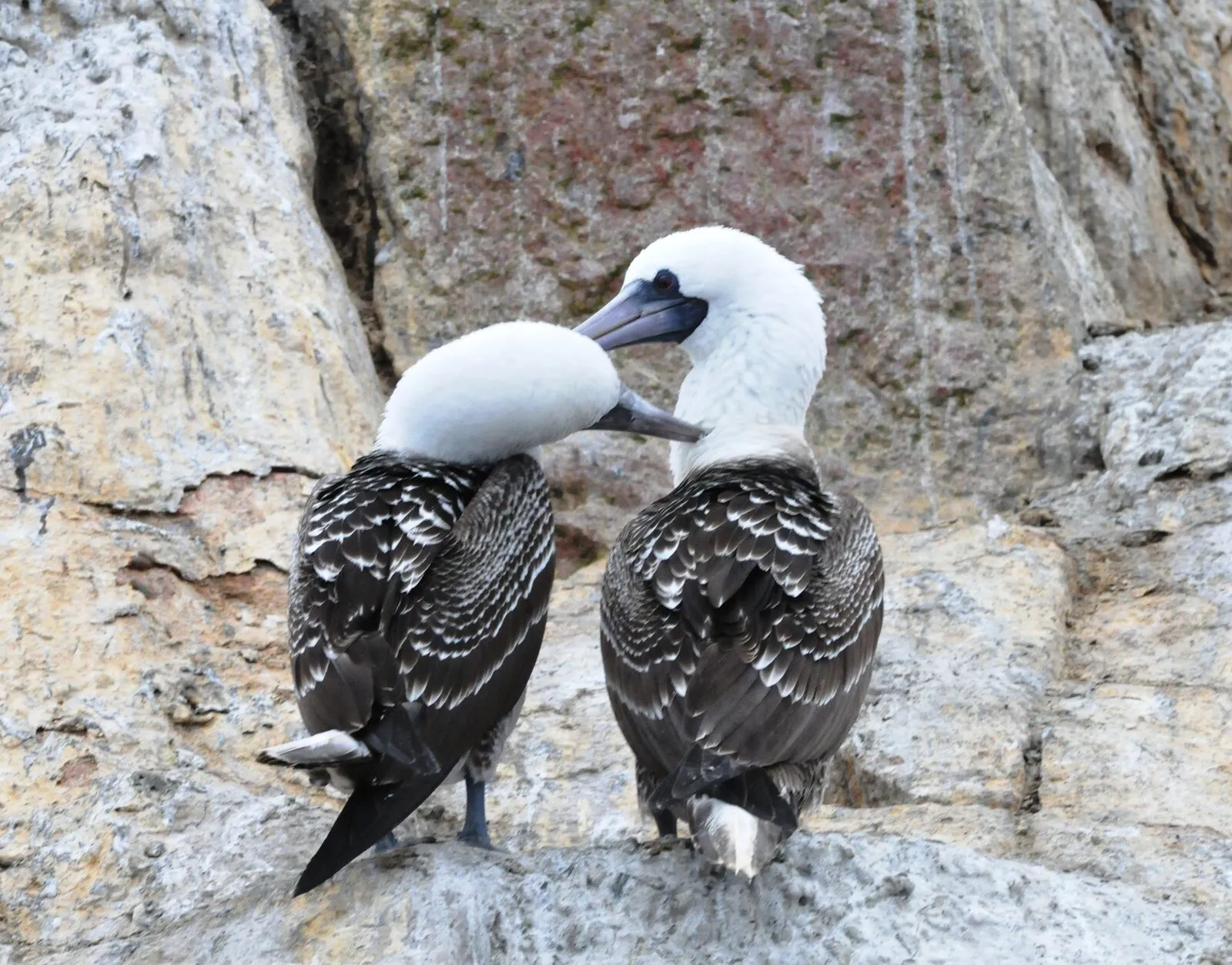
The trio known as the guano birds is made up of the Peruvian pelican, the guanay cormorant and the Peruvian booby, and the pelican is the least numerous of the three.1 The guanay is endemic to the Humboldt Current and is one of the three cormorants that breed on the Peruvian coast.2 The Peruvian booby is endemic to the Humboldt Current upwelling and nests on islands and headlands from northern Peru to south-central Chile.3
The Humboldt penguin breeds on the Pacific coast of South America, from La Foca Island in northern Peru to Metalqui Island in southern Chile.4 The chuita, a red-legged cormorant, lives on the Pacific coast from Isla Foca in northern Peru to southern Chile.5 The Peruvian pelican, for its part, is endemic to the Pacific coast of South America.6
Who is who
The Peruvian booby is a relatively small sulid, at 1200 to 1500 g, and females weigh 19 % more than males.7 The blue-footed booby (Sula nebouxii), called «camanay» in Peru, also differs in weight by sex: on Lobos de Tierra Island, 169 females weighed 1723 g on average and 139 males 1319 g, and the females were 31 % heavier.89 The masked booby (Sula dactylatra) is the largest of the tropical boobies, with a mass of 1.5 to 2 kg.10
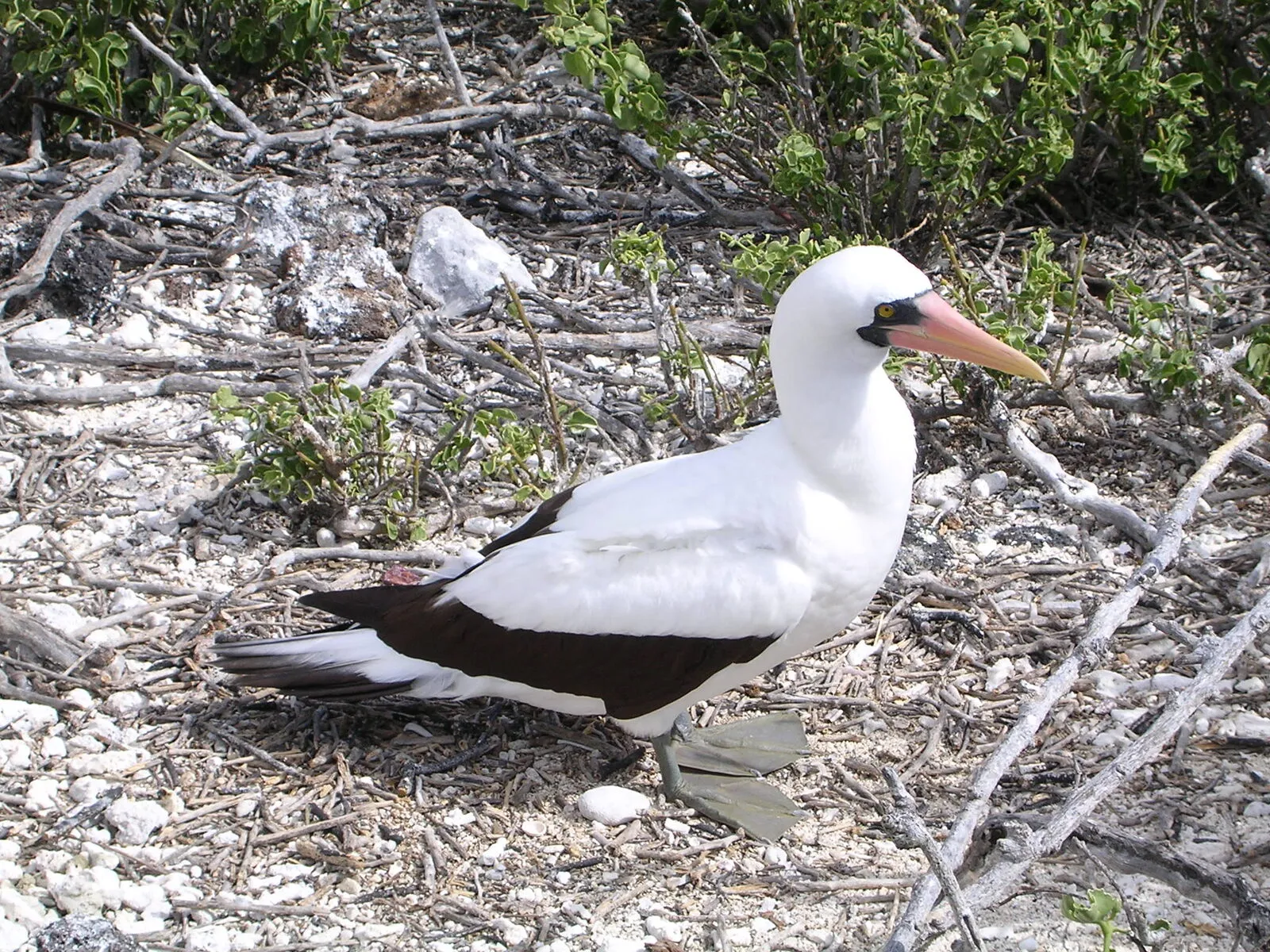
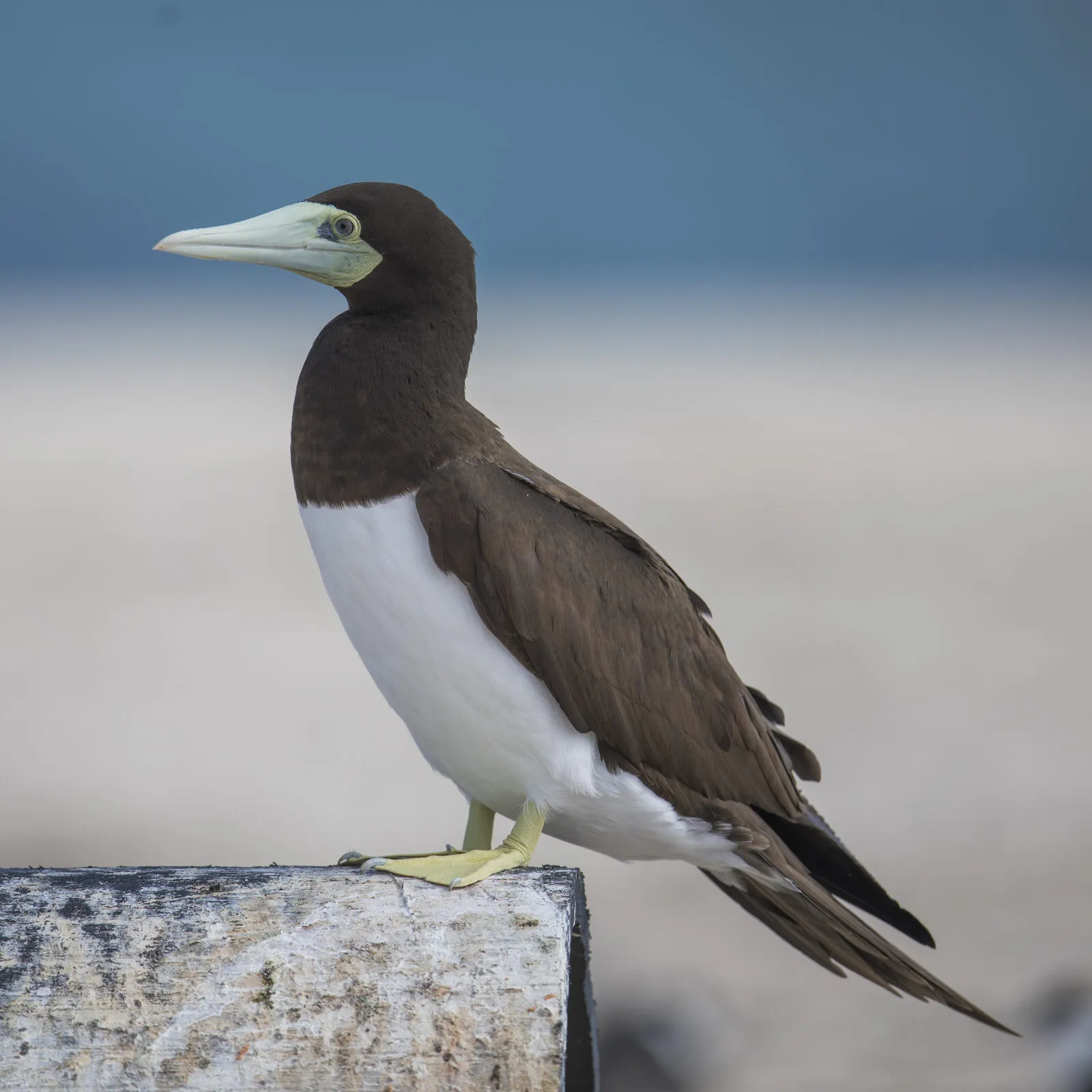
The Nazca booby (Sula granti), which the master plan of the guano islands and headlands reserve calls «piquero Nazca», nests on islands of the tropical eastern Pacific.811 The adult is white and its bill has an orange or pinkish-orange base.12 Sula leucogaster in the strict sense has a uniformly dark brown head and neck and an entirely white belly, with a sharp boundary between the belly and the brown breast.13

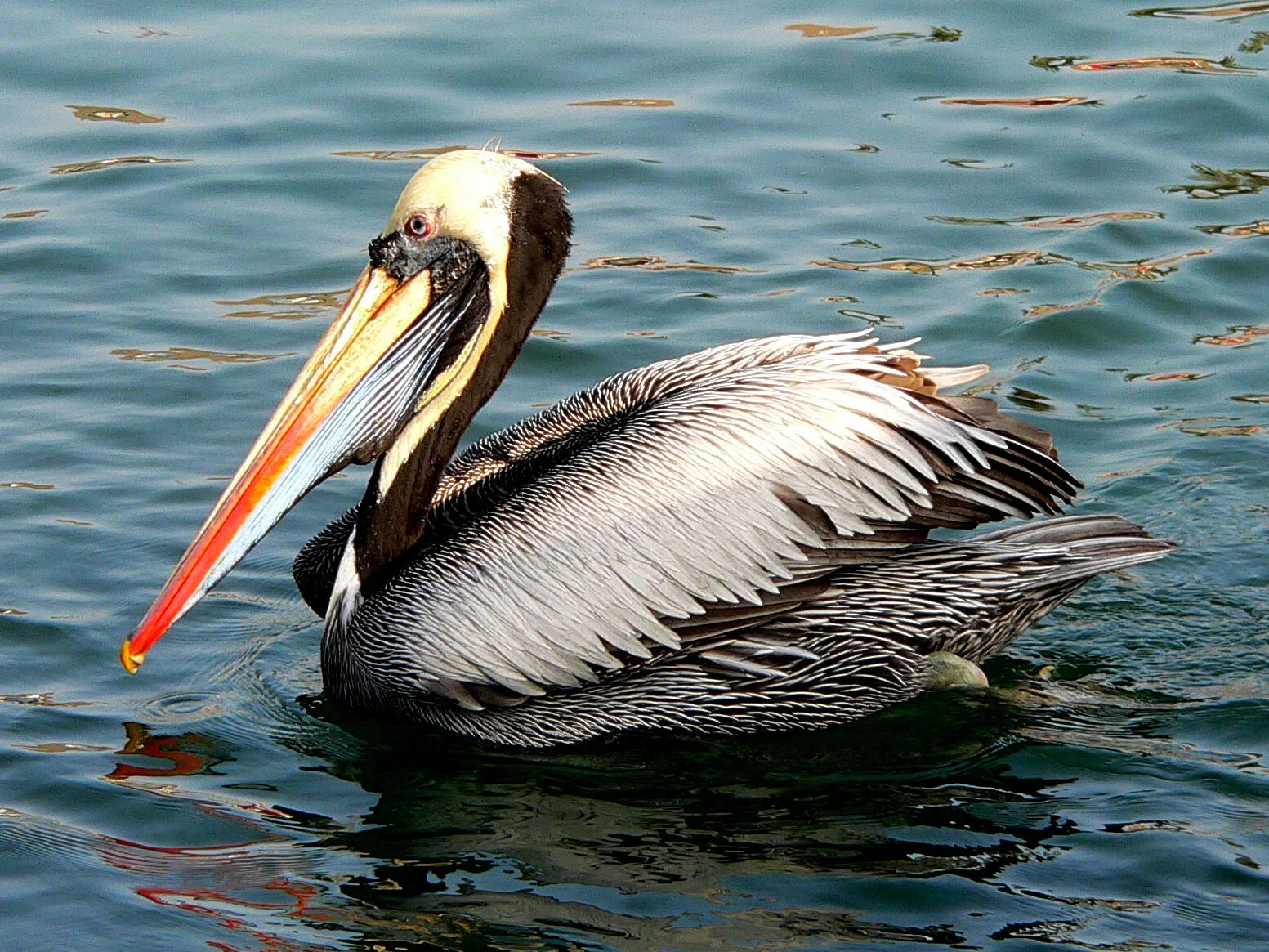
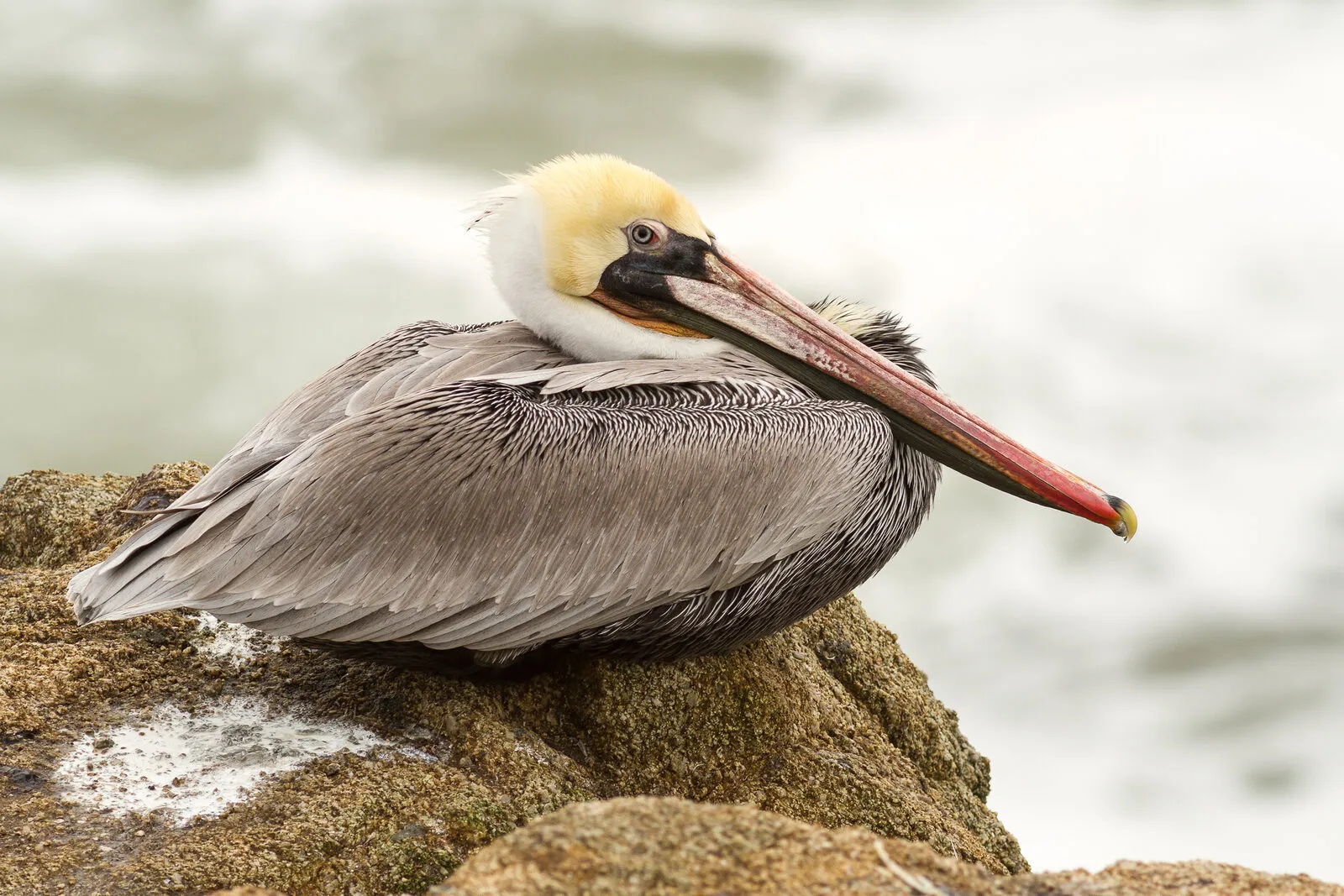
The Peruvian pelican (Pelecanus thagus) is bulky, with broad wings and a long bill, and an adult weighs between 5 and 7 kg.114 Outside the breeding season it has a yellowish head and a white neck, and during breeding it keeps the same head but the neck turns black.1 The brown pelican (Pelecanus occidentalis), the name under which it appears in the master plan of the Los Manglares de Tumbes National Sanctuary, is one of only two pelican species that live year-round in marine environments.1516

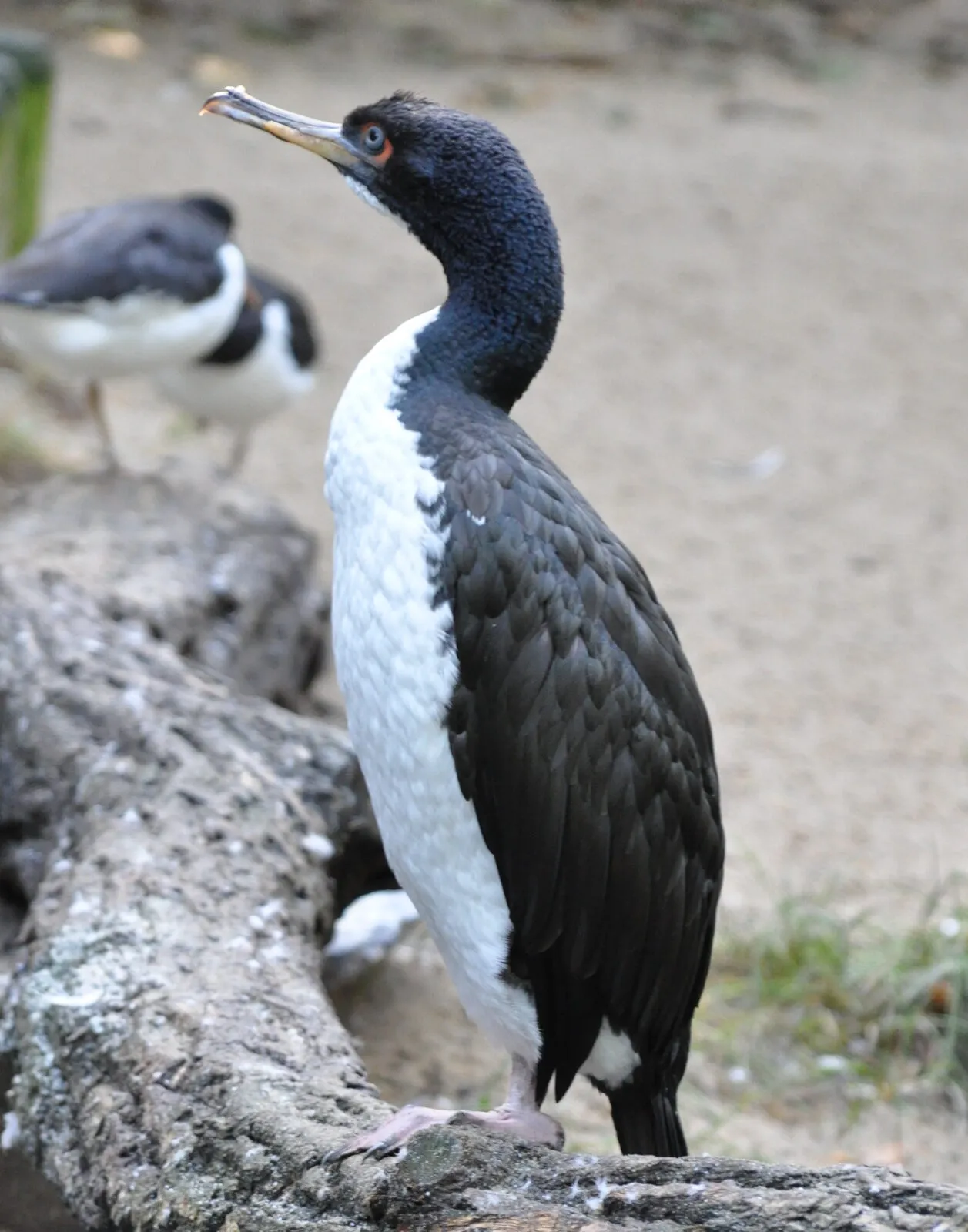
The guanay is a two-coloured bird: its throat, breast and belly are white, and its head, back and wings are black.2 Males are larger than females, at 2292 g against 1983 g.17 The chuita, by contrast, needs rock walls to breed, and in Chile it nested only on high cliffs, sea caves or rocky islets close to shore.18

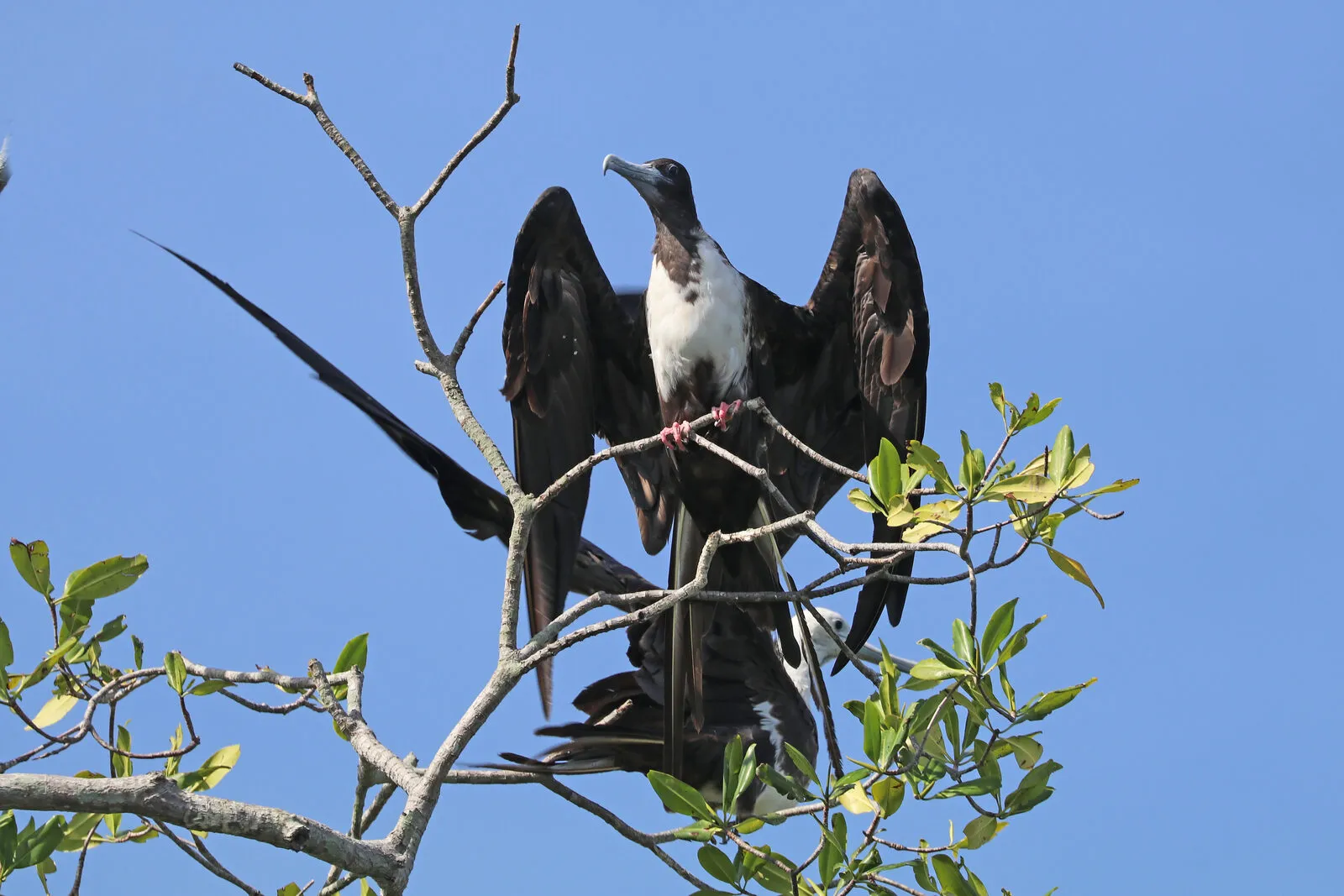
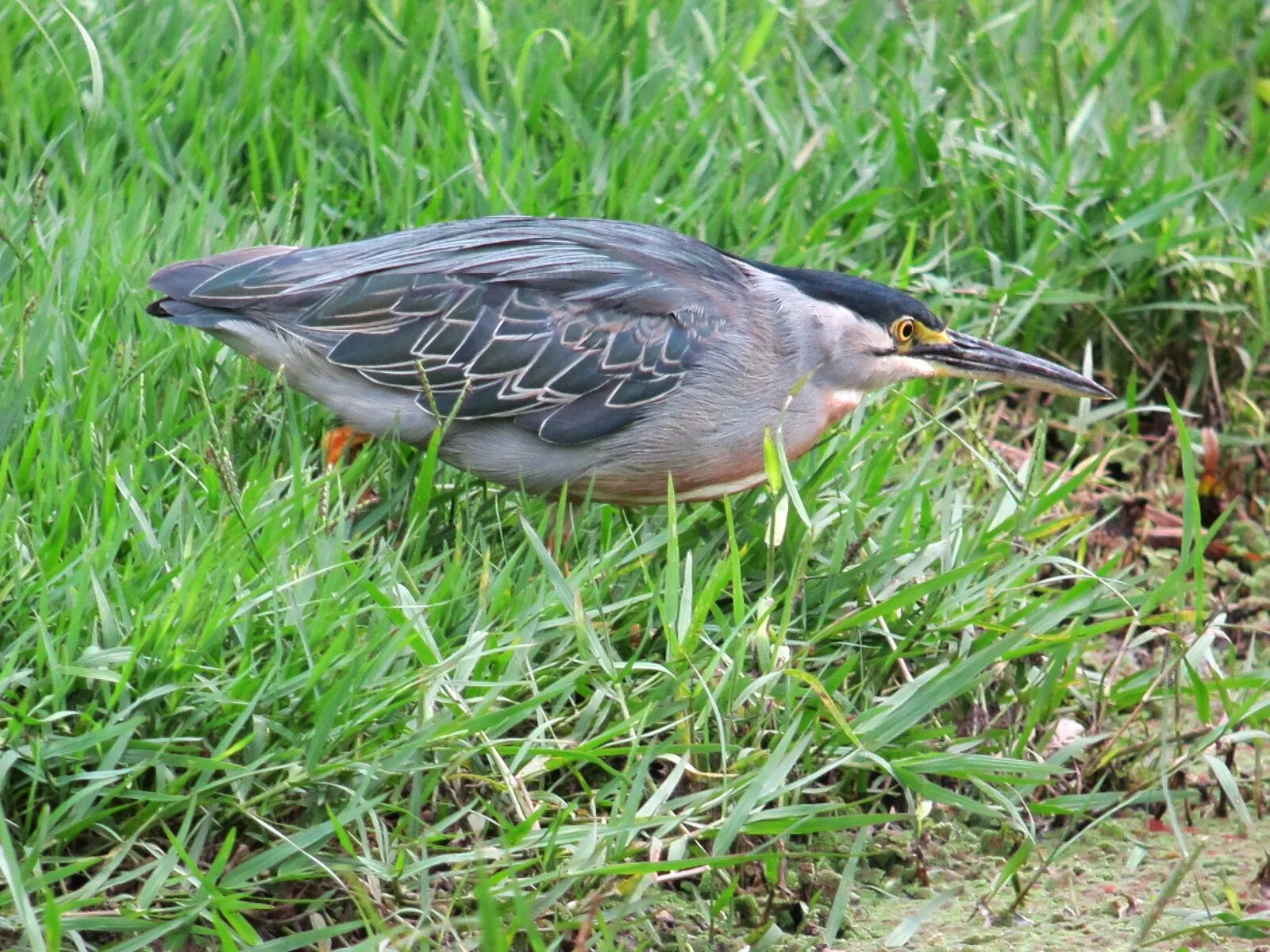
Among all the birds of the world, frigatebirds have the lowest ratio of body weight to wing area, which lets them take off easily and soar for hours on high thermals.19 The tracked adult tropicbirds weighed 615 g on average on Île de la Madeleine, Senegal, and 702 g on Saint Helena.20
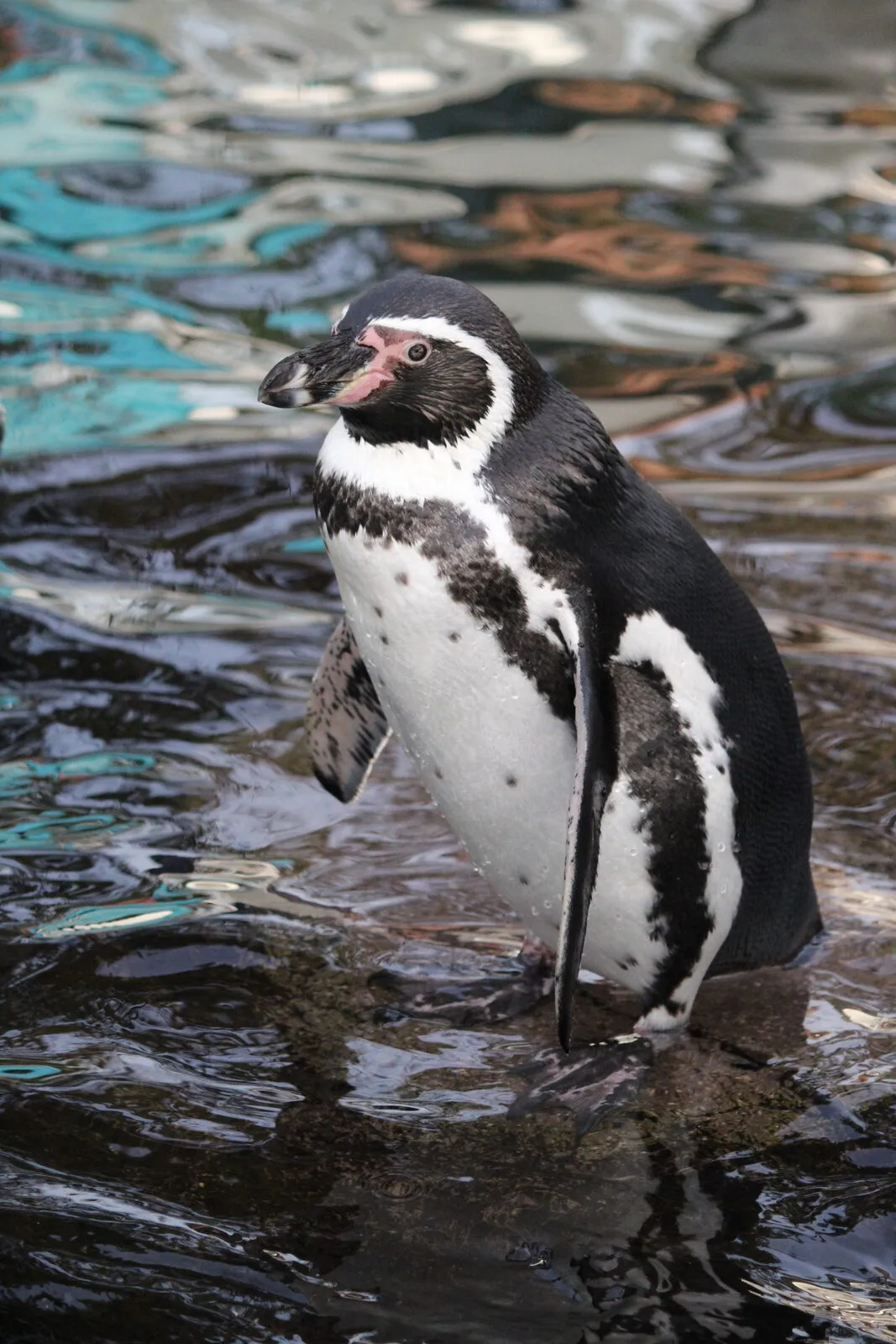
In the Humboldt penguin (Spheniscus humboldti), 6 adults weighed on Pan de Azúcar Island in northern Chile while tending chicks ranged from 3975 to 4975 g.21 From afar its plumage and size are easily confused with those of the Magellanic penguin, Spheniscus magellanicus, a rare but perhaps regular visitor to the southern coast of Peru.22

Telling them apart
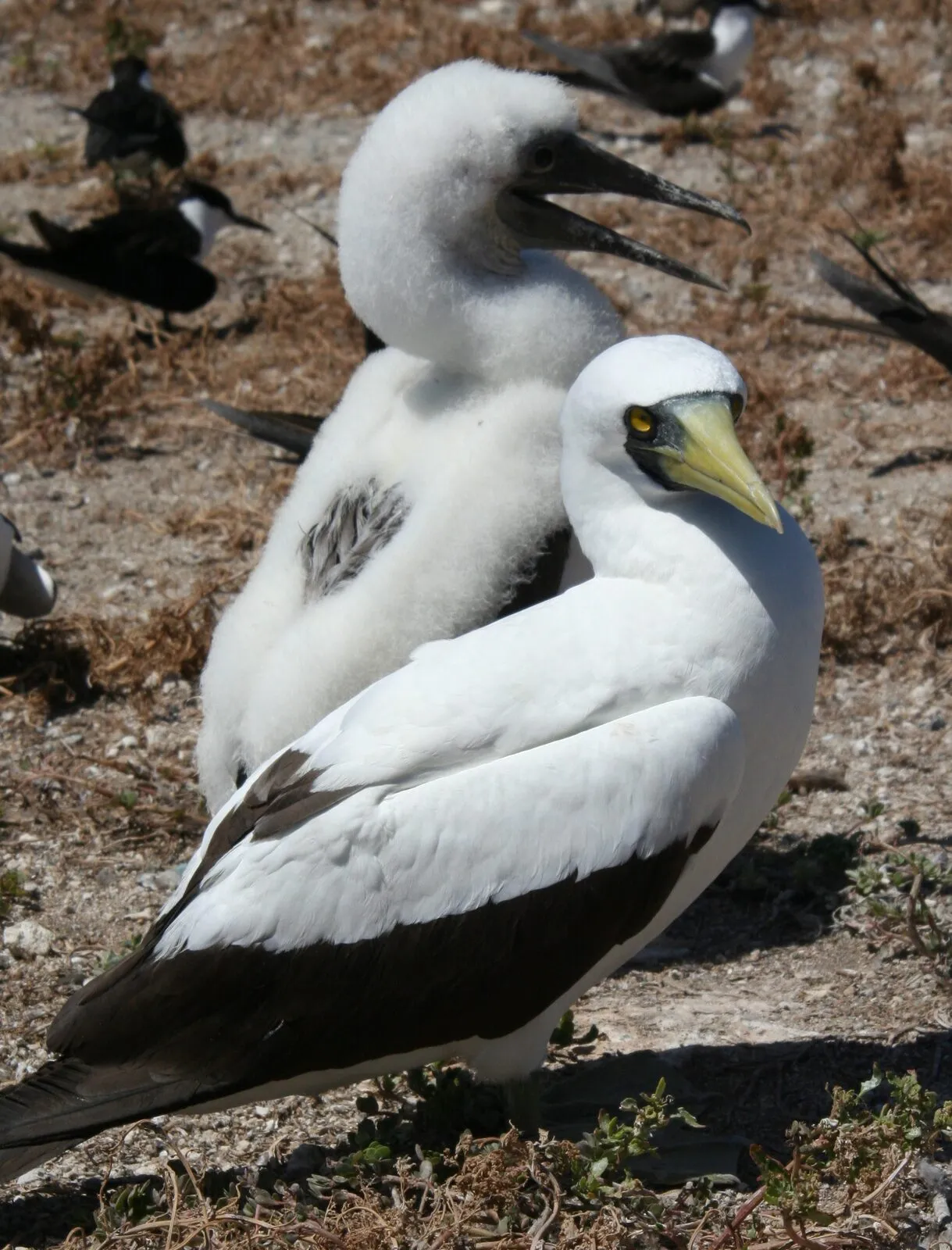
The masked and Nazca boobies were recognised as separate species only in 1998.11 The masked booby has a yellow bill and pale olive-green legs, whereas the Nazca has an orange bill in the male and coral red in the female, and khaki-grey legs.11 In the masked booby the bill runs from greenish yellow to yellow, a difference that separates almost all birds in the field from their third plumage onward.12

The Peruvian booby has a marbled pattern on its secondary wing feathers and grey legs.23 Genetic analysis of 5 birds of intermediate appearance captured on Lobos de Tierra and Lobos de Afuera confirmed that they were hybrids with the blue-footed booby: 4 were males and 1 a female, and all carried Peruvian booby mitochondrial DNA.24
The Humboldt has a single black band across the breast, whereas the Magellanic adds a second black band across the neck.22 The Humboldt also has a heavier bill and a larger patch of bare skin on the forehead.22 In southern Chile, where both species breed together, one mixed pair and one hybrid confirmed by genetic analysis have been documented.25
The Pacific coast from southern Ecuador and all along Peru is the range of the Peruvian pelican.26 The brown pelican of the North American Pacific breeds in subpopulations in the Southern California Bight, the Pacific of southern Baja California, the Gulf of California and the Mexican mainland coast.27 In the study of the avian influenza outbreak in Peru, the Peruvian pelican, with 58000 individuals, is cited among the most recorded birds, and the brown pelican is not.28

Where and when they are recorded in Peru
The Peruvian booby breeds along the Peruvian coast, from Lobos de Tierra Island to Morro Sama.23 In December 2006, 2000 to 2500 pairs bred on Lobos de Tierra, and in December 2007, 5500 to 6000 pairs bred on Independencia Island, in the Lobos de Afuera group.7 At the end of 2008, about 41 thousand boobies nested on Pescadores Island, 7.5 km from the coast.17
The blue-footed booby breeds on Lobos de Tierra and Lobos de Afuera, where it lives alongside the Peruvian booby but far outnumbers it.23 In the monthly censuses of 2014, up to 239980 birds were estimated on Lobos de Tierra, in January, and up to 60000 on Lobos de Afuera, in March and April.8 According to the 2026 master plan of the Mar Tropical de Grau National Reserve, it also nests on Foca Island, mostly on the cliffs.29
The Peruvian records of Sula leucogaster, between 1972 and 2017, are spread along the coast from 3° S to 19° S, and the largest group was 50 individuals.30 The authors place the nearest breeding area between 2860 and 3800 km away, and since 2008 its presence has been reported almost every year, sometimes with long stays.30

The Peruvian pelican lives in the cold sea off the coast, mostly between Tacna and Piura, although it has been recorded as far as the far north of Tumbes.31 Its southernmost breeding site in the country is Punta Coles, in Ilo.1 The brown pelican appears in the north, in the bird list of the Los Manglares de Tumbes National Sanctuary.15 The frigatebird was counted mostly between 4° S and 5° S: IMARPE's monitoring from 2015 to 2019 added up to 73 sightings and 646 birds, with the largest number, 383, off Paita.19

At Punta San Juan, about 137 thousand breeding pairs of guanay were estimated in January 2017, 46 thousand in January 2019 and 20 thousand in January 2020.2 The chuita has been recorded along the coast between Isla Foca, in Piura, and Playa Meza, in Tacna.31 In 2018 it bred at Punta Atico, Arequipa, where an adult carrying a GPS made 3 to 5 trips a day and went an average of 5.63 km from the nest.32
The Humboldt penguin was censused in Peru in 1999 and 2000, after the 1997-1998 El Niño, and was found from La Foca Island to Punta Coles.33 Almost four of every five birds, 78 %, were in only five localities: Punta San Juan, San Juanito islet, Hornillos Island, Pachacamac Island and Tres Puertas.33 In El Ferrol bay it was recorded again in 2024, after more than 70 years with no known presence, with 148 individuals counted.34
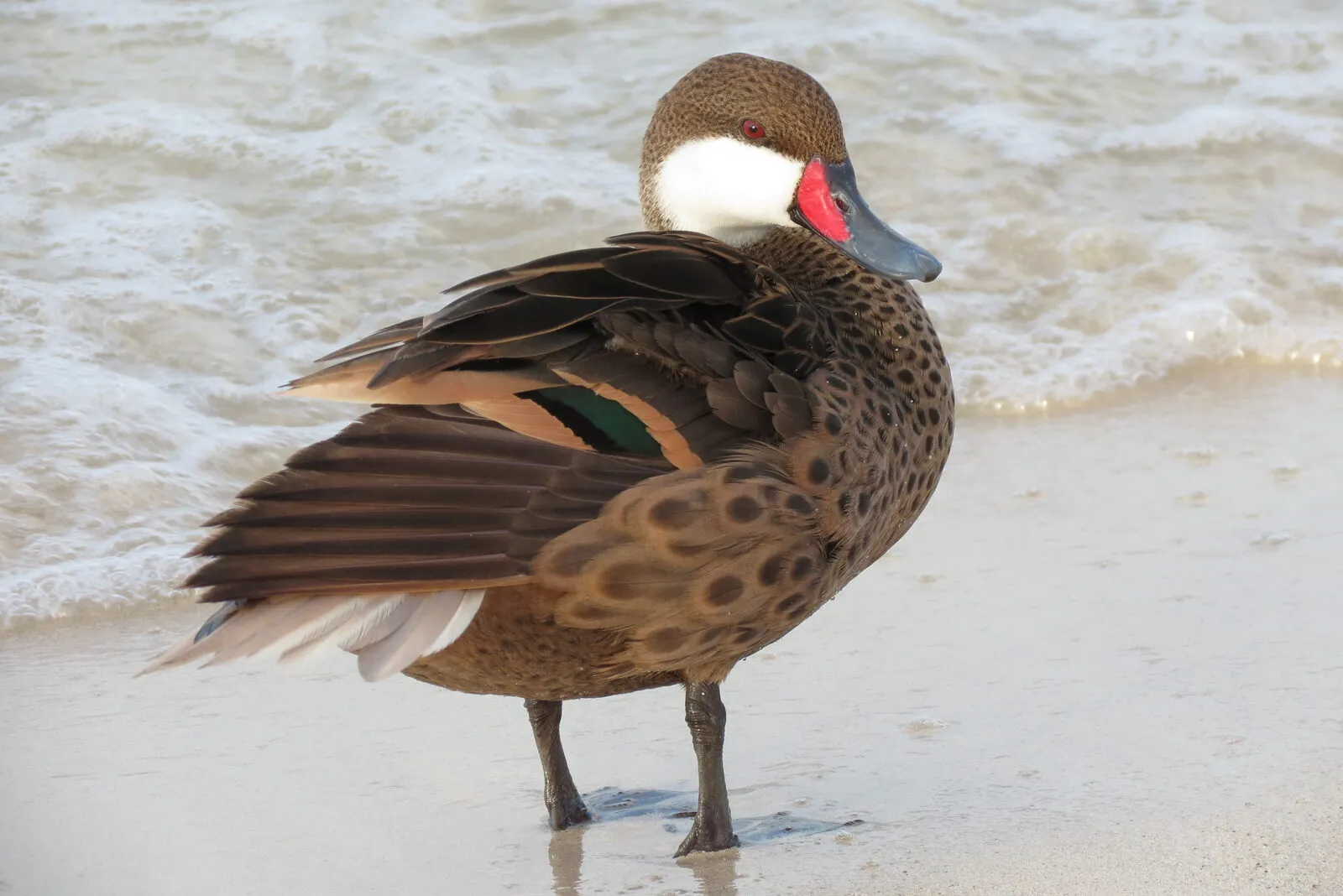
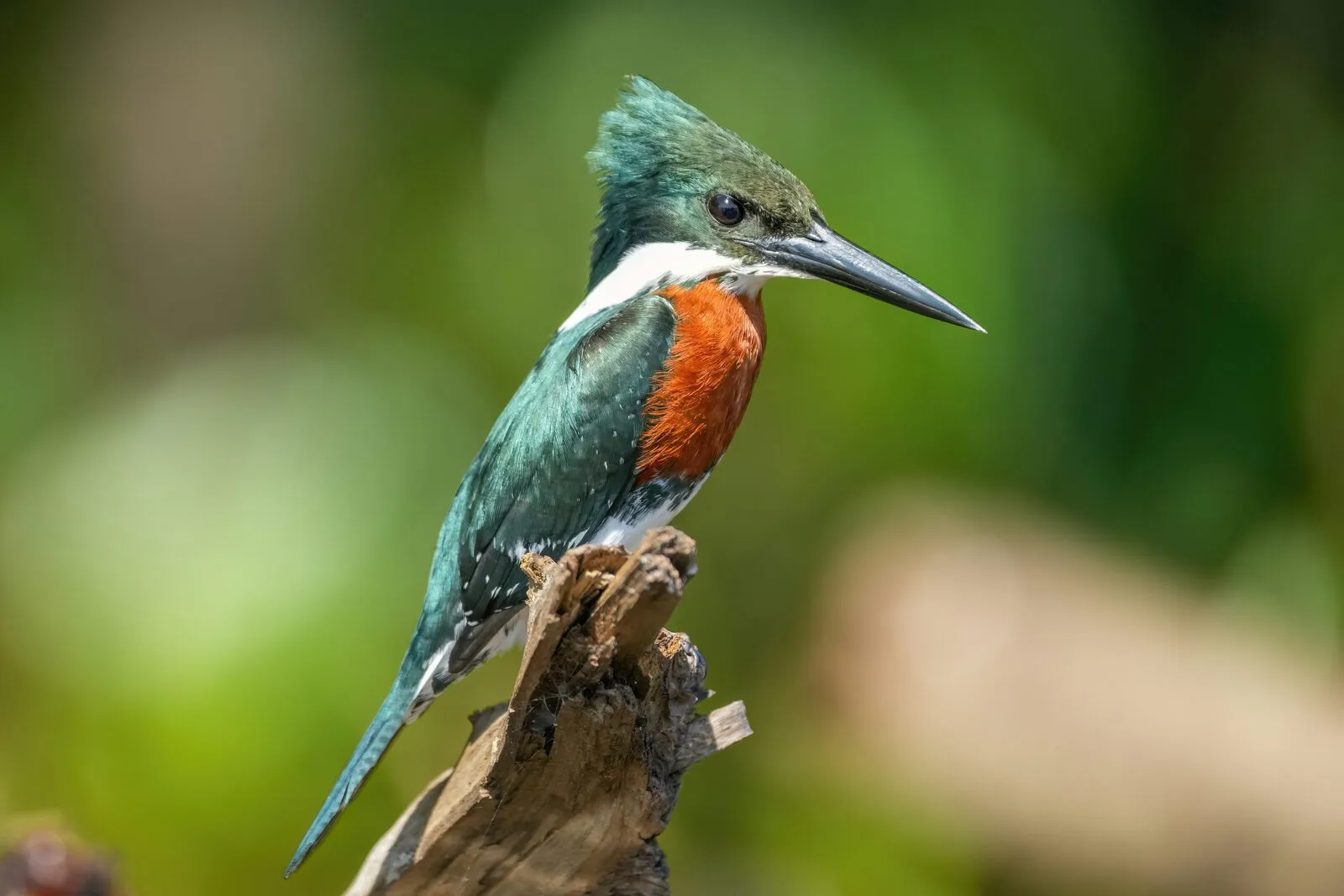
The duck Anas bahamensis was sampled in 2006 and 2007 in the Medio Mundo and Puerto Viejo wetlands, on the central coast.35 The heron Butorides striata is classified as a resident on the beaches of San Andrés, in Pisco36, but in the Lima metropolitan area there is only one documented breeding record, from January.37 The kingfisher is listed in the Eten wetlands, in Lambayeque, and in the Pantanos de Villa, in Lima.3839 Of the spoonbill, a single bird was seen at the Ite Wetlands, in Tacna, on 29 April 2009, and it kept being seen until 14 June.40

Diet and behaviour
The Peruvian boobies followed with GPS and depth recorders on Lobos de Tierra and Lobos de Afuera fed only on anchoveta, which they caught with shallow plunge dives: the median was 2.5 m and the deepest reached 8.8 m.7 They went out to fish only in daylight; each trip lasted a median of 1.8 hours and took them a median of 25 km from the colony, with a maximum of 68 km.7
On Pescadores Island, the guanay, which dives from the surface, reached 32 m, while the Peruvian booby, which plunges from the air, stayed at a median of 2 m, so it can only reach the shallowest schools.17 The Peruvian pelican does the opposite: 87 % of the sea trips of 5 adults carrying GPS were strictly nocturnal.14 The authors propose that feeding at night would let them avoid competition with boobies and guanays, which fish only by day.14
While raising chicks, Humboldt penguins feed by day with short dives that almost never go past 30 m deep.41 The chuita has been described as a coastal fisher that goes less than 3 km from the colony and seeks bottom fish and invertebrates in water under 15 m deep.18 At Punta Atico, more than half of the trips of a GPS-tracked bird went out to sea, which suggests it could feed on pelagic prey such as anchoveta.32
The frigatebird, known as the pirate of the seas, chases other seabirds in flight, mostly boobies, until they regurgitate, and takes their food; it also exploits fishing waste.19 The masked booby, at Clipperton, fed almost always above tuna and dolphins, which push flying fish toward the surface.10 For the tropicbird, in the eastern Pacific, aquatic predators that bring prey to the surface seem to determine where the colonies live and how the species is distributed.42
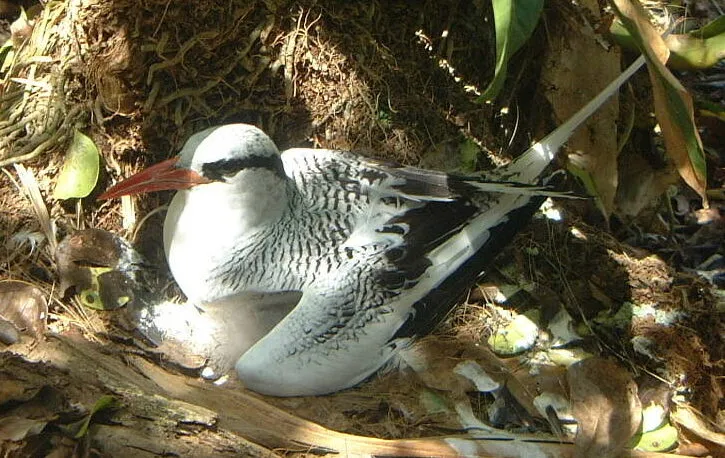

The heron Butorides striata eats mostly fish, and also amphibians, various invertebrates, small reptiles, birds and mice.43 The kingfisher uses perches to see its prey and prepare its attack from some height: in the Pantanal, the 5 individuals studied perched on natural perches, at an average of 1.38 m.44


Breeding and movements
The Peruvian booby can lay up to 5 eggs and raise up to 4 chicks, whereas other booby species raise 1 chick and some, in favourable conditions, 2.17 Ticks can empty a colony: between August 2016 and November 2018, in five of the six colonies followed with cameras, the adults left every nest within two to three weeks.45
The blue-footed booby breeds all year round on Lobos de Tierra, although hatchings peak in late December.9 Raising one chick takes 5 to 6 months: about 42 days of incubation, nearly 100 days of rearing in the nest and at least 28 more days during which the parents keep feeding the young bird.46 The masked booby normally lays 2 eggs, but after hatching only one chick survives.10
The Peruvian pelican lays 1 to 4 eggs, with 37 days of incubation and about 80 days of chick care.1 The guanay lays up to 3 eggs, and on Pescadores Island the nests checked held 1 to 4 chicks, an average of 2.1 in 21 nests.17 At the 31 breeding sites followed between 2003 and 2012, breeding in the three guano birds starts mostly between the austral winter and early spring, so that chicks fledge when food is at its best.47
At Punta San Juan, between 1993 and 1997, Humboldt penguin females laid eggs from mid-March to the first week of December, with one peak in April and another in August and September.48 About half of the females laid twice a year, and over 3 consecutive years each female produced an average of 4.54 chicks that reached independence.48 A genetic study of 11 Humboldt penguin colonies distinguished three groups that follow geography: Peru, northern Chile, and central and southern Chile.49
Guano, fishing and El Niño
The Peruvian booby is one of the three guano birds whose guano has been exploited in commercial quantities.3 In the 19th century the guano of these birds was a major source of fertiliser, and it is still extracted industrially today, although in much smaller quantities.17
According to a 2012 paper, in some 50 years the guanay went from about 21 million to 2 million individuals, while the Peruvian booby stayed near 2 million.17 A model of carbon flow to the three guano birds explained 94 % of the variation in their populations between 1925 and 2000, and attributed the fall after 1955 to competition with the fishery, which came to take about 85 % of the anchoveta.50
In 1907, 100000 Peruvian pelicans were recorded on Lobos de Tierra Island; Peru's population was estimated at 350000 birds in 1953 and reached its recorded maximum, 509000, in 1988, but during the 1997 El Niño it fell from 300000 to 1800 birds.51 After the 1997-1998 El Niño the number of chuitas fell by 73 % at 8 localities in southern Peru.31 The Peruvian booby, unlike the guanay, kept its numbers stable in the long term, although they fell for a time after such events.52
Conservation status and threats
The Humboldt penguin is Vulnerable on the IUCN Red List53, and the official Peruvian list of threatened wildlife approved in 2014 places it Endangered.54 The Peruvian pelican is Near Threatened on the IUCN list55 and Endangered in Peru.54 The Peruvian booby is Least Concern for the IUCN56, but in Peru it is classified Endangered.54 The guanay appears on the Peruvian list as «cormorán guanay» in the Near Threatened category54, and the chuita appears as Endangered.54
The other boobies are Least Concern on the IUCN list: the blue-footed57, the Nazca58, the masked59 and Sula leucogaster.60 The Nazca booby is also Endangered in Peru under Supreme Decree 004-2014-MINAGRI.54 The red-billed tropicbird is Least Concern, although a recent synthesis notes that its trend is decreasing.6120 Since 2024 the Peruvian pelican has been listed on Appendices I and II of the Convention on Migratory Species.62
On 29 November 2022 SERFOR counted 2919 Peruvian boobies and 614 blue-footed boobies dead among more than 13869 seabirds.63 For the Peruvian pelican, the authorities reported between 39633 and 47414 dead birds between November 2022 and May 2023, and abundance in marine protected areas fell by 31.5 % to 37.6 %.51 For anyone who finds sick or dead birds, SERFOR recommended not approaching seabirds or taking them home, so as not to spread the virus to poultry.63
Incidental capture in fishing nets is one of the most serious threats to the Humboldt penguin.64 At San Juan port, the landing of 922 penguins was documented between November 1991 and June 1998, mostly in the years when surface drift gillnets were used.65 Surveys of 779 fishers at 39 landing sites in Peru and Chile estimated 4067 penguins caught in 2023, most of them in gillnets.64 Punta San Juan, the country's largest colony, lost 51 % of its birds between 1980 and 2008.4
For the chuita, the national Red Book lists entanglement in fishing nets, the harvest of shellfish and seaweed in the intertidal zone, the hunting of adults and chicks, pollution near scallop farms and competition for food with shore fishers.31 In the Mar Tropical de Grau National Reserve, informal tourism that lands on Foca Island or sails right along the shore disturbs the nesting and resting areas of the guano birds and causes nest abandonment.29 The upper part of Foca Island is a strict protection zone: entry by people is not allowed, nor is sailing, swimming or diving in it.29
The norm that lists the penguin, the Peruvian booby and the other threatened species forbids hunting, capture, possession, trade, transport and export for commercial purposes of the listed species.54 For the colonies, the master plan of the guano islands and headlands reserve asks that the resting and breeding areas of guano birds be kept undisturbed.66 In the wild zones of Lobos de Afuera where they rest and breed, even research and photography require prior evaluation and authorisation from the reserve's management.66
What is still unknown and where sources differ
Of the masked booby in Peru there is a single record, from a single visit.11 The source does not say whether the species returns every year or how to get there.11 In 1997 masked boobies were reported nesting on Lobos de Tierra, but their features resemble the Nazca booby's more.11 According to the 2016 master plan, the Lobos de Tierra colony between Ñopo beach and Punta Sáenz is of Nazca boobies.8
On Sula leucogaster in Peru, the authors of the study assigned the Guañape bird to the subspecies brewsteri and the others to etesiaca.30 Under the current classification, both forms belong to Sula brewsteri and not to Sula leucogaster in the strict sense.13 The visits arrive mostly in warm El Niño years.30
The authorities reported between 39633 and 47414 dead pelicans, when in August 2022 125794 had been counted in protected areas.51 Another study cites about 558000 seabirds of at least 14 species dead in Peru, mostly from December 2022 to June 2023, with 58000 Peruvian pelicans among the most recorded.28 Official counts in 2023 ranged between 1652 and 46046 live birds.51
The chuita was described as a coastal fisher that seeks bottom fish and invertebrates.18 More recent work in the Atlantic indicates, however, that it eats almost only pelagic prey.32 The chuita population is also counted in two ways: a 2004 study estimated fewer than 15000 individuals worldwide, more than 70 % of them in Chile, and in 2000 the Peruvian population was estimated at between 1500 and 2100 birds.185
The species in this article
- Anas bahamensis
- Butorides striata
- Chloroceryle americana
- Fregata magnificens
- Pelecanus occidentalis
- Pelecanus thagus
- Phaethon aethereus
- Phalacrocorax bougainvillii
- Phalacrocorax gaimardi
- Platalea ajaja
- Spheniscus humboldti
- Sula dactylatra
- Sula granti
- Sula leucogaster
- Sula nebouxii
- Sula variegata
Sources (66)
- Governments of Chile, Ecuador, Panama and Peru (2023). Proposal for the inclusion of the Peruvian Pelican (Pelecanus thagus) in Appendices I and II of the Convention. Convention on the Conservation of Migratory Species of Wild Animals, UNEP/CMS/COP14/Doc.31.4.6. cms.int
- Gonzales Del Carpio, D.D. (2022). Flexibilidad del comportamiento de forrajeo del cormorán guanay (Phalacrocorax bougainvillii) bajo un ambiente marino impredecible. Universidad Peruana Cayetano Heredia (tesis de licenciatura). hdl.handle.net
- Taylor, S.A., Zavalaga, C.B., Luna-Jorquera, G., Simeone, A., Anderson, D.J., Friesen, V.L. (2010). Panmixia and high genetic diversity in a Humboldt Current endemic, the Peruvian Booby (Sula variegata). Journal of Ornithology, 623-630. doi.org
- Vianna, J.A., Cortes, M., Ramos, B., Sallaberry-Pincheira, N., González-Acuña, D., Dantas, G.P.M., Morgante, J., Simeone, A., Luna-Jorquera, G. (2014). Changes in Abundance and Distribution of Humboldt Penguin Spheniscus Humboldti. Marine Ornithology. doi.org
- Millones, A., Gandini, P., Frere, E. (2014). Long-term population trends of the Red-legged Cormorant Phalacrocorax gaimardi on the Argentine coast. Bird Conservation International, 234-241. doi.org
- Cursach, J.A., Arriagada, A., Rau, J.R., Ojeda, J., Bizama, G., Becerra, A. (2019). Predicting the potential distribution of the endemic seabird Pelecanus thagus in the Humboldt Current Large Marine Ecosystem under different climate change scenarios. PeerJ, e7642. doi.org
- Zavalaga, C.B., Halls, J.N., Mori, G.P., Taylor, S.A., Dell'Omo, G. (2010). At-sea movement patterns and diving behavior of Peruvian boobies Sula variegata in northern Peru. Marine Ecology Progress Series, 259-274. doi.org
- Servicio Nacional de Áreas Naturales Protegidas por el Estado (2016). Plan Maestro de la Reserva Nacional Sistema de Islas, Islotes y Puntas Guaneras 2016-2020. SERNANP; copia en SINIA, Ministerio del Ambiente. sinia.minam.gob.pe
- Zavalaga, C.B., Benvenuti, S., Dall'Antonia, L., Emslie, S.D. (2007). Diving behavior of blue-footed boobies Sula nebouxii in northern Peru in relation to sex, body size and prey type. Marine Ecology Progress Series, 291-303. doi.org
- Weimerskirch, H., Le Corre, M., Bost, C.A. (2008). Foraging strategy of masked boobies from the largest colony in the world: relationship to environmental conditions and fisheries. Marine Ecology Progress Series, 291-302. doi.org
- Figueroa, J. (2004). First Record of Breeding by the Nazca Booby Sula Granti on Lobos De Afuera Islands, Peru. Marine Ornithology, 117-118. doi.org
- Pyle, P. (2020). Molt, age, and identification of the Masked and Nazca boobies in California. Western Birds, 129-149. doi.org
- VanderWerf, E.A. (2025). Identification and distribution of the Brown and Cocos Boobies and their subspecies. Western Birds, 176-199. doi.org
- Zavalaga, C.B., Dell'Omo, G., Becciu, P., Yoda, K. (2011). Patterns of GPS Tracks Suggest Nocturnal Foraging by Incubating Peruvian Pelicans (Pelecanus thagus). PLoS ONE, e19966. doi.org
- Servicio Nacional de Áreas Naturales Protegidas por el Estado (2023). Plan Maestro del Santuario Nacional Los Manglares de Tumbes 2023-2027. SERNANP, RP N.° 064-2023-SERNANP. cdn.www.gob.pe
- Lamb, J.S., Satgé, Y.G., Jodice, P.G.R. (2017). Diet composition and provisioning rates of nestlings determine reproductive success in a subtropical seabird. Marine Ecology Progress Series, 581:149-164. doi.org
- Weimerskirch, H., Bertrand, S., Silva, J., Bost, C., Peraltilla, S. (2012). Foraging in Guanay cormorant and Peruvian booby, the major guano-producing seabirds in the Humboldt Current System. Marine Ecology Progress Series, 231-245. doi.org
- Frere, E., Gandini, P., Ruiz, J., Vilina, Y.A. (2004). Current status and breeding distribution of Red-legged Cormorant Phalacrocorax gaimardi along the Chilean coast. Bird Conservation International, 113-121. doi.org
- Ochoa, M., Bouchon, M., Quiñones, J. (2021). Distribución del ave fragata común (Fregata magnificens Mathews, 1914) durante eventos anómalos positivos en el litoral norte centro del Perú. 2015 - 2019. Boletín del Instituto del Mar del Perú, 44-53. doi.org
- Diop, N., Zango, L., Beard, A., Ba, C.T., Ndiaye, P.I., Henry, L., Clingham, E., Oppel, S., González-Solís, J. (2018). Foraging ecology of tropicbirds breeding in two contrasting marine environments in the tropical Atlantic. Marine Ecology Progress Series, 221-236. doi.org
- Luna-Jorquera, G., Culik, B.M. (1999). Diving Behaviour of Humboldt Penguins Spheniscus Humboldti in Northern Chile. Marine Ornithology, 67-76. doi.org
- Zavalaga, C.B., Paredes, R. (2009). Records of Magellanic Penguins Spheniscus Magellanicus in Peru. Marine Ornithology, 281-282. doi.org
- Figueroa, J., Stucchi, M. (2008). Possible Hybridization Between the Peruvian Booby Sula Variegata and the Blue-footed Booby S Nebouxii in Lobos De Afuera Islands, Peru. Marine Ornithology, 75-76. doi.org
- Taylor, S.A., Zavalaga, C.B., Friesen, V.L. (2010). Hybridization between Blue-Footed (Sula nebouxii) and Peruvian (Sula variegate) Boobies in Northern Peru. Waterbirds, 251-257. doi.org
- Simeone, A., Hiriart-Bertrand, L., Reyes-Arriagada, R., Halpern, M., Dubach, J., Wallace, R., Pütz, K., Lüthi, B. (2009). Heterospecific Pairing and Hybridization Between Wild Humboldt and Magellanic Penguins in Southern Chile. The Condor, 544-550. doi.org
- Cursach, J.A., Rau, J.R., Gelcich, S., Rodríguez-Maulén, J. (2018). Situación poblacional del pelícano peruano (Pelecanus thagus) en Chile: prospección inicial. Ornitología Neotropical, 29:77-89. doi.org
- Anderson, D.W., Godínez-Reyes, C.R., Velarde, E., Avalos-Tellez, R., Ramírez-Delgado, D., Moreno-Prado, H., Bowen, T., Gress, F., Trejo-Ventura, J., Adrean, L., Meltzer, L. (2017). Brown Pelicans, Pelecanus occidentalis californicus (Aves: Pelecanidae): Five decades with ENSO, dynamic nesting, and contemporary breeding status in the Gulf of California. Ciencias Marinas, 43:1-34. doi.org
- Kuiken, T., Vanstreels, R.E.T., Banyard, A.C., Begeman, L., Breed, A.C., Dewar, M., Fijn, R., Serafini, P.P., Uhart, M., Wille, M. (2025). Emergence, spread, and impact of high-pathogenicity avian influenza H5 in wild birds and mammals of South America and Antarctica. Conservation Biology, e70052. doi.org
- Servicio Nacional de Áreas Naturales Protegidas por el Estado (2026). Plan Maestro de la Reserva Nacional Mar Tropical de Grau 2026-2031. SERNANP, RPE N.° 000052-2026-SERNANP. cdn.www.gob.pe
- Gutiérrez, C., Melgarejo-Layza, I., Figueroa, J. (2018). PIQUERO PARDO (SULA LEUCOGASTER) EN EL PERÚ:. Biotempo. doi.org
- Servicio Nacional Forestal y de Fauna Silvestre (SERFOR) (2018). Libro Rojo de la Fauna Silvestre Amenazada del Perú. SERFOR, Ministerio de Agricultura y Riego; documento en SINIA, Ministerio del Ambiente, 237. sinia.minam.gob.pe
- Van Oordt, F., Silva, J., Hertel, F., Elliott, K.H. (2025). First GPS record of a Red-legged Cormorant off the coast of Peru suggests pelagic foraging behavior. El Hornero, 99-104. doi.org
- Paredes, R., Zavalaga, C.B., Battistini, G., Majluf, P., McGill, P. (2003). Status of the Humboldt Penguin in Peru, 1999-2000. Waterbirds, 129-133. doi.org
- Loayza Aguilar, R.E., Medina-Quezada, H., Merino Moya, J.F., Saldaña Rojas, G.B., Mendoza Espinoza, S., Olivos-Ramirez, G.E. (2026). Nuevo registro del pingüino de Humboldt (Spheniscus humboldti) en la bahía El Ferrol, Perú: Recuperación ambiental y desafíos para su conservación local. Manglar, 407-416. doi.org
- Ghersi, B.M., Blazes, D.L., Icochea, E., Gonzalez, R.I., Kochel, T., Tinoco, Y., Sovero, M.M., Lindstrom, S., Shu, B., Klimov, A., Gonzalez, A.E., Montgomery, J.M. (2009). Avian influenza in wild birds, central coast of Peru. Emerging Infectious Diseases, 935-938. doi.org
- Pulido-Capurro, V. (2025). Las aves de la orilla marina de San Andrés, Pisco, Ica. The Biologist (Lima), 55-70. doi.org
- Díaz, A., Quispe-Torres, A., Tataje, D., Reynoso, A., Hein, L. (2023). Records of breeding activity in birds of the Lima Metropolitan Area, central coast of Peru, based on citizen science data. Revista del Museo Argentino de Ciencias Naturales, 97-120. doi.org
- Angulo-Pratolongo, F., Schulenberg, T.S., Puse-Fernández, E.E. (2010). LAS AVES DE LOS HUMEDALES DE ETEN, LAMBAYEQUE, PERÚ. Ecología Aplicada, 71-81. doi.org
- Pulido, V. (2018). Ciento quince años de registros de aves en Pantanos de Villa. Revista Peruana de Biología, 291-306. doi.org
- Vizcarra, J.K., Hidalgo, N., Chino, E. (2009). Adiciones a la avifauna de los Humedales de Ite, costa sur de Perú. Revista Peruana de Biología, 221-225. doi.org
- Taylor, S.S., Leonard, M.L., Boness, D.J., Majluf, P. (2002). Foraging by Humboldt penguins (Spheniscus humboldti) during the chick-rearing period: general patterns, sex differences, and recommendations to reduce incidental catches in fishing nets. Canadian Journal of Zoology, 700-707. doi.org
- Spear, L.B., Ainley, D.G. (2005). At-sea behaviour and habitat use by tropicbirds in the eastern Pacific. Ibis, 391-407. doi.org
- Mello, C.M., Loureiro, B.B., Oda, F.H., Monteiro, E.S., Olsen, H., Silva-Soares, T. (2024). Lysapsus limellum (Anura: Hylidae): avian predation by Butorides striata (Pelecaniformes: Ardeidae) in the Pantanal Wetland, Brazil. Revista Latinoamericana de Herpetología, 40-43. doi.org
- Peinado, L.C., Ortega, Z. (2023). Perch selection of three species of kingfishers at the Pantanal of Brazil. Animal Biodiversity and Conservation, 99-109. doi.org
- Burga-Domínguez, C., Gonzales-Delcarpio, D.D., Zavalaga, C.B. (2020). Time-lapse Imagery of Peruvian Boobies Sula variegata Reveals Nest Abandonment Caused by Tick Hyperinfestation. Marine Ornithology, 303-311. doi.org
- Anchundia, D., Huyvaert, K.P., Anderson, D.J. (2014). Chronic lack of breeding by Galápagos Blue-footed Boobies and associated population decline. Avian Conservation and Ecology. doi.org
- Passuni, G., Barbraud, C., Chaigneau, A., Demarcq, H., Ledesma, J., Bertrand, A., Castillo, R., Perea, A., Mori, J., Viblanc, V.A., Torres-Maita, J., Bertrand, S. (2016). Seasonality in marine ecosystems: Peruvian seabirds, anchovy, and oceanographic conditions. Ecology, 182-193. doi.org
- Paredes, R., Zavalaga, C.B., Boness, D.J. (2002). Patterns of Egg Laying and Breeding Success in Humboldt Penguins (Spheniscus Humboldti) at Punta San Juan, Peru. The Auk, 244-250. doi.org
- Dantas, G.P.M., Oliveira, L.R., Santos, A.M., Flores, M.D., Melo, D.R., Simeone, A., González-Acuña, D., Luna-Jorquera, G., Le Bohec, C., Valdés-Velásquez, A., Cardeña, M., Morgante, J.S., Vianna, J.A. (2019). Uncovering population structure in the Humboldt penguin (Spheniscus humboldti) along the Pacific coast at South America. PLoS ONE, e0215293. doi.org
- Jahncke, J., Checkley, D.M., Hunt, G.L. (2004). Trends in carbon flux to seabirds in the Peruvian upwelling system: effects of wind and fisheries on population regulation. Fisheries Oceanography, 208-223. doi.org
- Ayala, L., Sandoval-Lazaro, G. (2025). Updating the Status of the Peruvian Pelican Pelecanus thagus Following Avian Influenza and El Niño Events in Peru. Marine Ornithology, 217-221. doi.org
- Crawford, R.J.M., Jahncke, J. (1999). Comparison of trends in abundance of guano-producing seabirds in Peru and southern Africa. South African Journal of Marine Science, 145-156. doi.org
- BirdLife International (2020). Spheniscus humboldti: BirdLife International. The IUCN Red List of Threatened Species 2020: e.T22697817A182714418. doi.org
- Ministerio de Agricultura y Riego (2014). Decreto Supremo N.° 004-2014-MINAGRI: actualización de la lista de clasificación y categorización de las especies amenazadas de fauna silvestre legalmente protegidas. El Peruano, Normas Legales, 8 de abril de 2014 (edición del diario oficial en el portal del Ministerio de Economía y Finanzas). mef.gob.pe
- BirdLife International (2018). Pelecanus thagus: BirdLife International. The IUCN Red List of Threatened Species 2018: e.T22697619A132596827. doi.org
- BirdLife International (2018). Sula variegata: BirdLife International. The IUCN Red List of Threatened Species 2018: e.T22696686A132589026. doi.org
- BirdLife International (2021). Sula nebouxii: BirdLife International. The IUCN Red List of Threatened Species 2021: e.T22696683A168988087. doi.org
- BirdLife International (2021). Sula granti: BirdLife International. The IUCN Red List of Threatened Species 2021: e.T22728990A163626479. doi.org
- BirdLife International (2018). Sula dactylatra: BirdLife International. The IUCN Red List of Threatened Species 2018: e.T22736173A132666363. doi.org
- BirdLife International (2018). Sula leucogaster: BirdLife International. The IUCN Red List of Threatened Species 2018: e.T22696698A132590197. doi.org
- BirdLife International (2019). Phaethon aethereus: BirdLife International. The IUCN Red List of Threatened Species 2019: e.T22696637A155736224. doi.org
- Convention on the Conservation of Migratory Species of Wild Animals (2026). Peruvian Pelican Pelecanus thagus. CMS species page. cms.int
- Servicio Nacional Forestal y de Fauna Silvestre (2022). Más de 13 mil aves silvestres marinas muertas por influenza aviar. Nota de prensa, SERFOR (29-11-2022). gob.pe
- Segura-Cobeña, E., Alfaro-Shigueto, J., Colodro, V., Mangel, J.C. (2025). Use of rapid assessments of fishery bycatch of Humboldt penguins Spheniscus humboldti in Peru and Chile to help identify conservation priorities. Royal Society Open Science. doi.org
- Majluf, P., Babcock, E.A., Riveros, J.C., Schreiber, M.A., Alderete, W. (2002). Catch and Bycatch of Sea Birds and Marine Mammals in the Small-Scale Fishery of Punta San Juan, Peru. Conservation Biology, 1333-1343. doi.org
- Servicio Nacional de Áreas Naturales Protegidas por el Estado (2026). Plan Maestro de la Reserva Nacional Sistema de Islas, Islotes y Puntas Guaneras 2026-2031. SERNANP, RPE N.° 000102-2026-SERNANP/PE. sis.sernanp.gob.pe