
Blog · wildlife of Peru · subgroup
Gulls, terns, skuas and shorebirds of Peru
Gulls, terns, skuas and shorebirds share an order, the Charadriiformes, and little else: some live all year on the rocks of the Peruvian coast, others arrive from the Arctic tundra and others from the south of the continent. The guide holds thirty species of the group.
Published

What this group is
Skuas belong to the family Stercorariidae, within the order Charadriiformes.1 Oystercatchers form the family Haematopodidae, which has a single genus, Haematopus.2 Phalaropus fulicarius, although classified as a shorebird, behaves at sea like a seabird that feeds on zooplankton at the surface.3
Calidris minutilla is the smallest of the Nearctic Calidris and belongs to the family Scolopacidae.45 Himantopus mexicanus belongs to the family Recurvirostridae.6 Gulls and terns, such as Larosterna inca, belong to the family Laridae.7
Residents and travellers: who is here and when
Larosterna inca is resident: it makes no regular migrations, though it may move to follow food, especially during El Niño episodes.8 Larus belcheri lives all year on the coast of Peru.9 Its range is restricted to the Humboldt Current region, from the far south of Ecuador to northern Chile.10 Charadrius vociferus is a resident and is common along the Peruvian coast.11 Larus dominicanus breeds on the Pacific side as far north as Piura.12
Himantopus mexicanus breeds from the United States, through the Caribbean, Mexico and Central America, to Brazil and Peru.6 In Lima a nest was recorded at Pantanos de Villa, near Laguna Sur.13 Sternula lorata, for its part, nests on the coast of Peru and northern Chile.14 Three birds from northern Chile fitted with geolocators spent the non-breeding season at various points on the Peruvian coast and returned to Mejillones in July 2016.15
Calidris pusilla breeds in the Arctic, from Alaska eastward, and spends the non-breeding season in South America; Paracas lies at the southern edge of that range.16 Of the Sterna hirundo from North American lake colonies followed with geolocators, 70 % of those whose wintering site could be identified spent the boreal winter in Peru.17 Six Sterna paradisaea tagged at an Alaskan colony flew down the Pacific coast and stopped off Ecuador and Peru.18 In the Western Hemisphere, the main wintering area of Phalaropus lobatus is the Humboldt Current off Ecuador, Peru and northern Chile.19
From the Canadian Arctic, the large majority of Xema sabini tracks ended off the coast of Peru.20 Others come from the south: Stercorarius chilensis, which breeds in southern Chile and Argentina, disperses northward outside the breeding season and in Peru is regarded as a rare visitor to the coast.2122 Leucophaeus modestus breeds in the Atacama Desert and outside the breeding season appears along the Pacific coast, from Ecuador to southern Chile.23 The inventory of shore birds at San Andrés, in Pisco, lists it among the austral birds, which arrive on those beaches from April and stay until August or September.24 One Stercorarius maccormicki, a species that breeds in Antarctica, wintered off Peru according to its light logger.25
Terns: from the Inca tern to the Peruvian tern
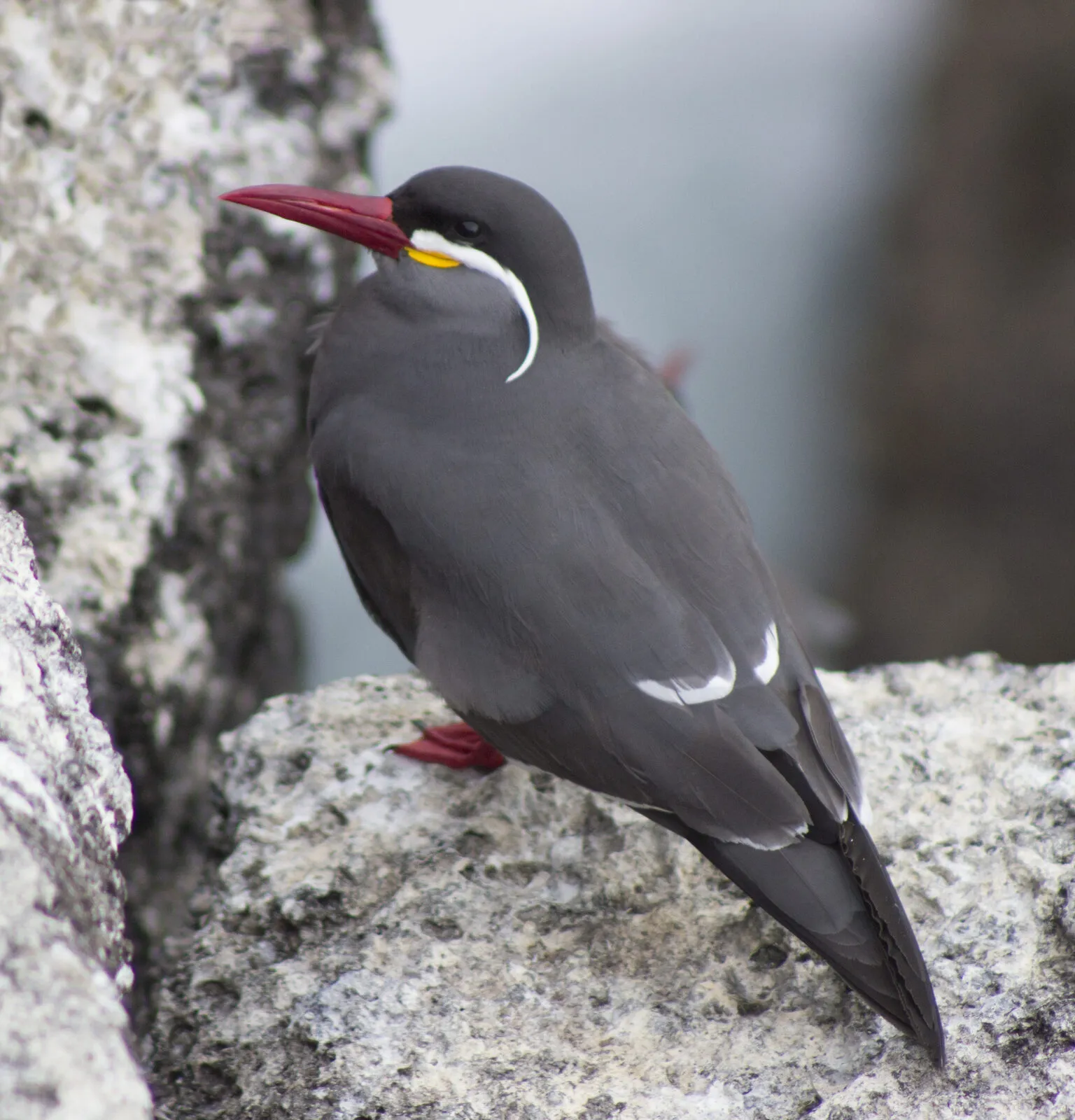
The Inca tern (Larosterna inca) is a dark-bodied tern with a bright red bill, white feather moustaches and yellow caruncles at the gape.8 In Peru it is known as «zarcillo».26 It has been recorded between Lobos de Tierra Island (6° 27′ S) and the port of Ilo (17° 31′ S).27 Unlike most terns, which nest on the ground, it breeds inside crevices.28 The length of the white moustache proved the best indicator of body condition in both sexes, and it was related to each adult's breeding outcome.29
Sterna hirundinacea is a tern of the South American coasts: on the Atlantic side it lives from Brazil to Cape Horn, and on the Pacific side it reaches Ecuador.30 The northernmost known colony on the South American Pacific coast is on Isla Vieja, in southern Peru, at about 14° S.31 Its main colonies in Peru are on the islands of the Paracas National Reserve, although no population estimates exist.30 Early in the twentieth century it was very common, above all on the southern coast, and Coker found its main breeding sites on San Gallán Island and on the Santa Rosa Islands, in Independencia Bay.32
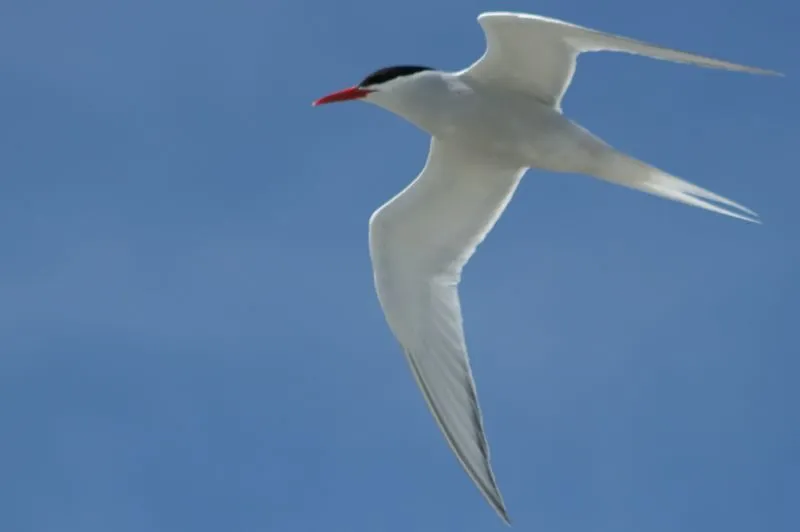

Sternula lorata is a bird of the Humboldt Current that, unlike other seabirds, breeds in the coastal desert.33 At Paracas its nests lay between 1 and 3.7 km from the sea.33 Between 2003 and 2008 it was recorded at 14 localities on the Peruvian coast, from the San Pedro de Vice mangrove (5° 31′ S) to the Ite wetlands (17° 56′ S), about 2200 km.14 In Peru it is called «gaviotín peruano».34 It is among the smallest terns, about 23 cm in total length.14
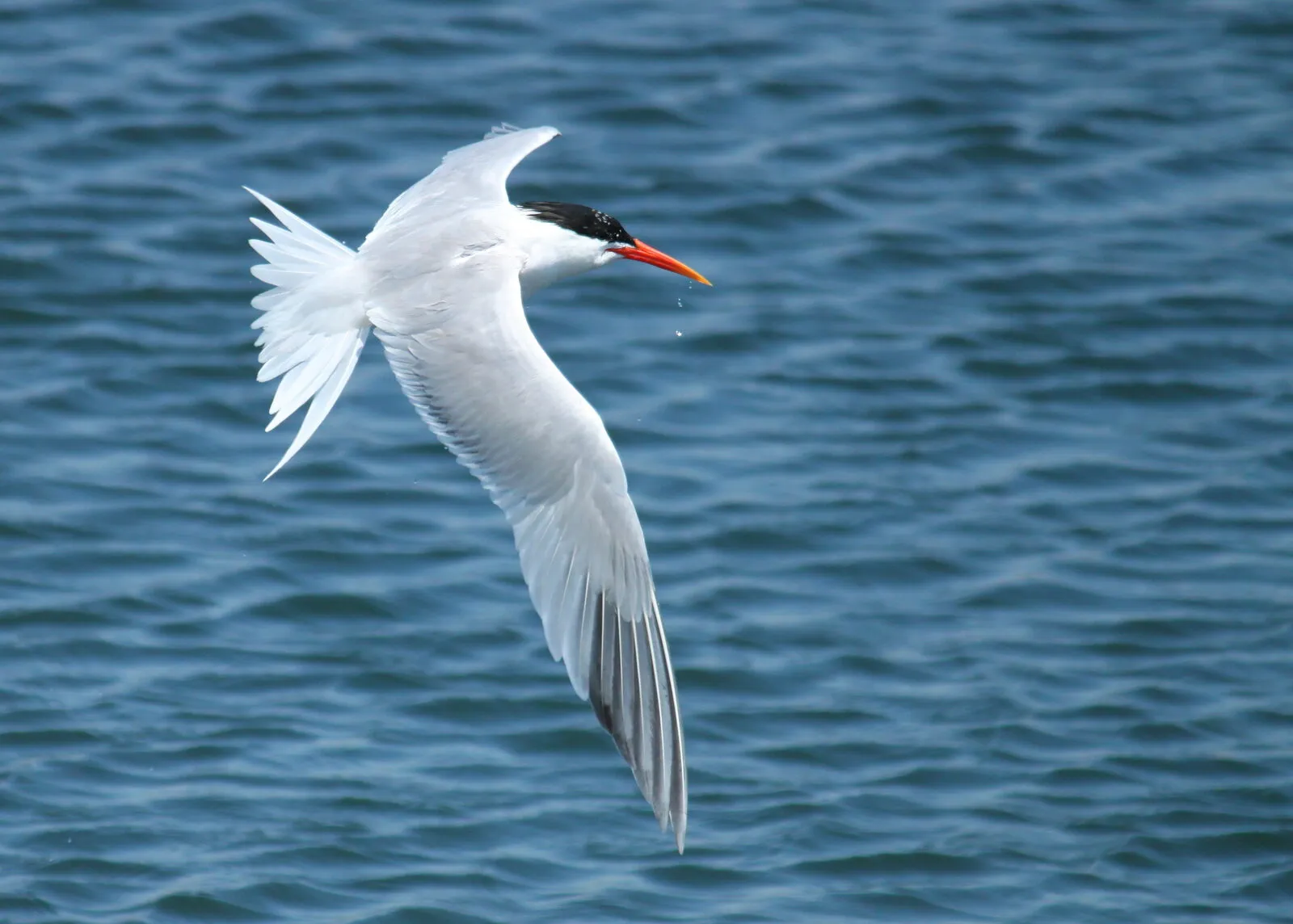
Thalasseus elegans breeds on islands in the northern Gulf of California and in a few colonies on the shores of southern California, and for decades Isla Rasa was regarded as holding more than 95 % of the species' world breeding population.35 After breeding, most spend the northern winter between Ecuador and northern Chile.36 Thalasseus maximus does not breed in Peru: the master plan of the Illescas National Reserve counts it among the migratory birds that visit its beaches seasonally.37 Birds from the mid-Atlantic colonies of the United States winter along the coast as far as Peru.38 What is known in detail about Thalasseus sandvicensis comes from Europe and southern Africa, not from Peru.39

Gulls: the coast, the desert and the night
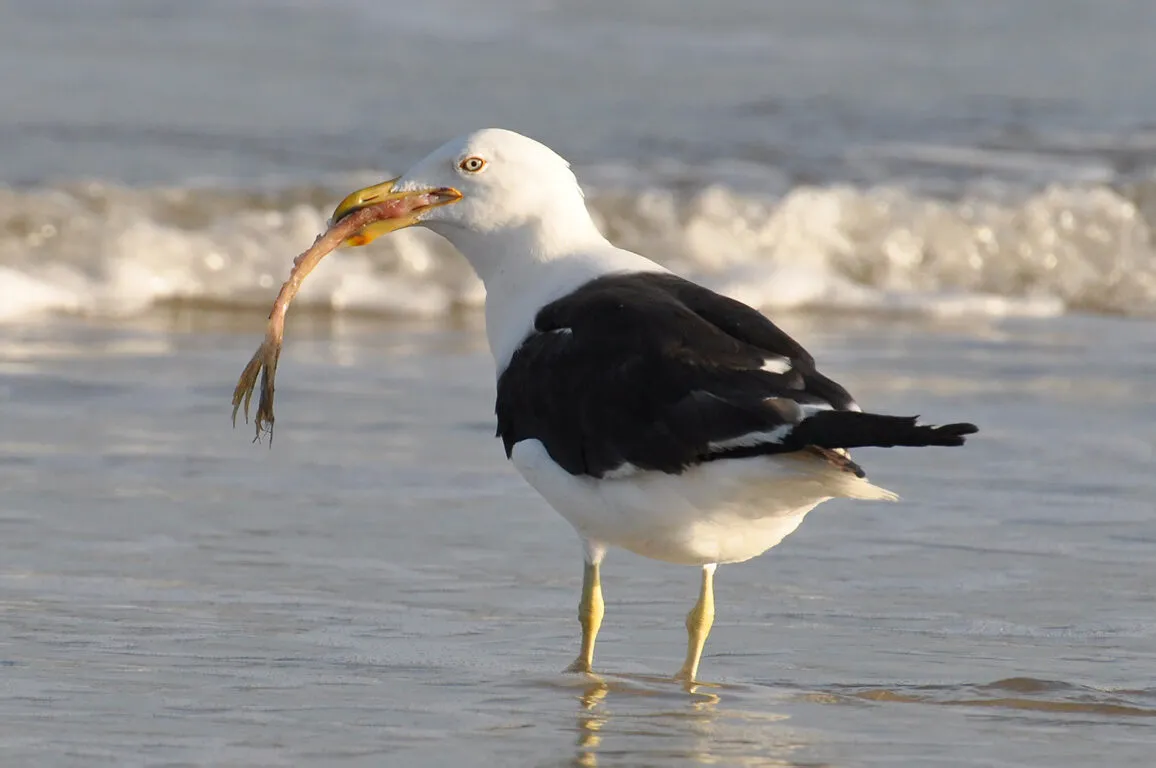
Larus belcheri is a coastal bird often found in rocky settings, although it will feed several kilometres from the shore.10 It is omnivorous and a scavenger: it eats fish, crabs, molluscs and dead animals, and it also preys on the eggs and chicks of the guano birds.9 Among the gulls of its region it is the one most inclined to search the rocks at low tide for prey protected by a hard shell or carapace.10 In the San Fernando National Reserve, in Ica, it was recorded breeding on two islets off Punta Vera beach.27
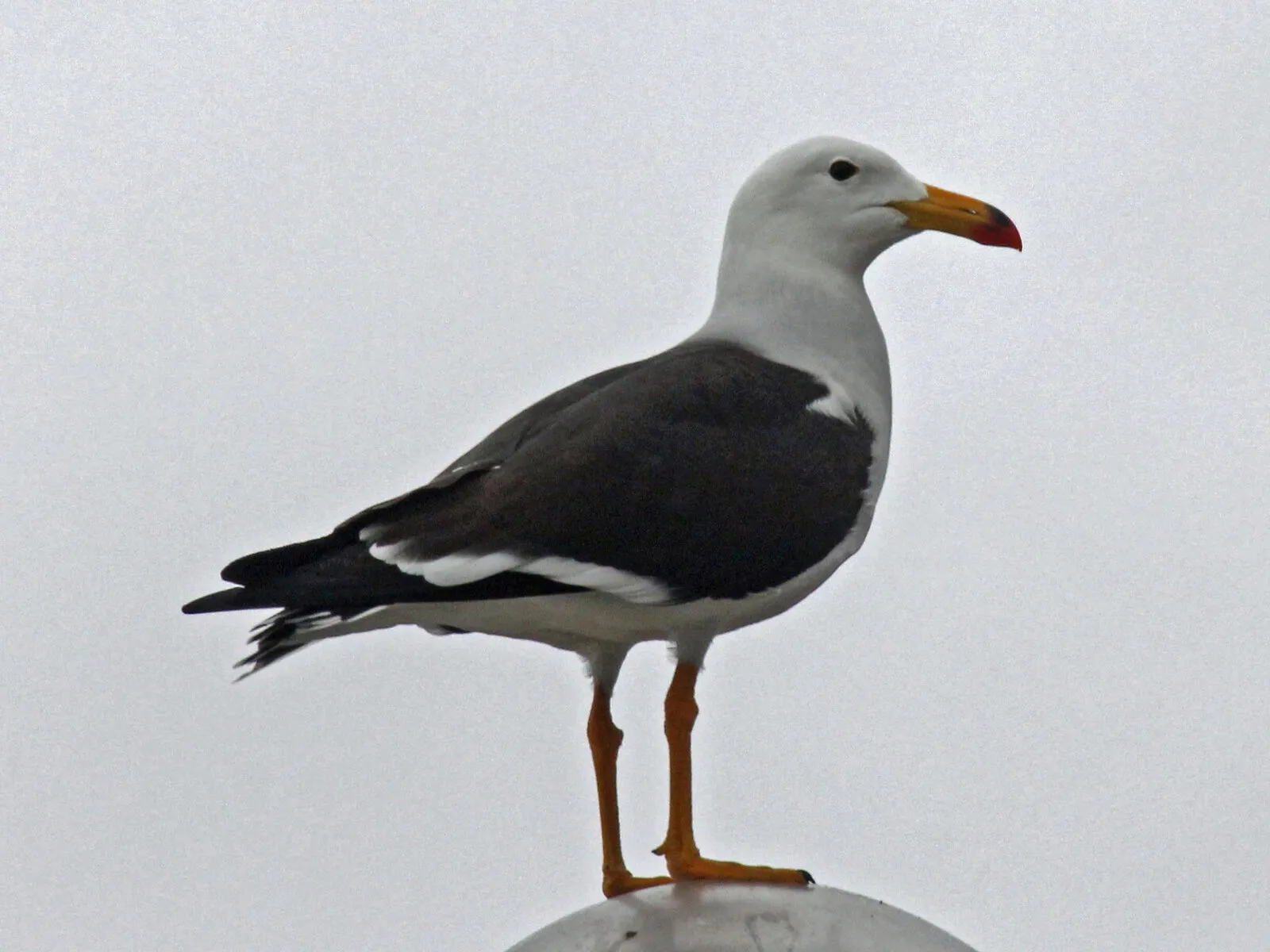

Larus dominicanus is the dominant large gull of the Southern Hemisphere, with blackish upperparts and pale yellowish-green legs, and it eats a very wide range of animals and makes use of rubbish dumps.40 In northern Peru it forms colonies on islands such as Foca, Lobos de Tierra and Lobos de Afuera.41 On those three islands laying seemed to begin around the third week of October and most nests held three eggs.41 A review of South America's coastal populations puts the breeding population at no fewer than 160,000 pairs, and colonies of over 1,000 pairs are rare.12

Leucophaeus modestus breeds in the Atacama Desert, often tens of kilometres from the sea, and flies at night to the waters of the Humboldt Current to feed.23 On a July 2010 cruise off La Libertad, Áncash and northern Lima, which counted 25,001 birds of 23 species, it was present in about 90 % of the area surveyed.42 Leucophaeus pipixcan breeds in interior North American marshes and spends the boreal winter on the Pacific coast of South America.43 It reaches the coasts of Peru in October and November.44 In the non-breeding season it occupies the Pacific coast of Chile and Peru, often at very high densities at river mouths.45
Creagrus furcatus is near-endemic to the Galápagos Islands, where the colonies studied are located.46 According to its authors it is the only gull that forages exclusively at night: across 114 GPS-tracked trips, 99.5 % of the time at sea fell in night hours.46
Shorebirds: oystercatchers, stilts and Arctic sandpipers
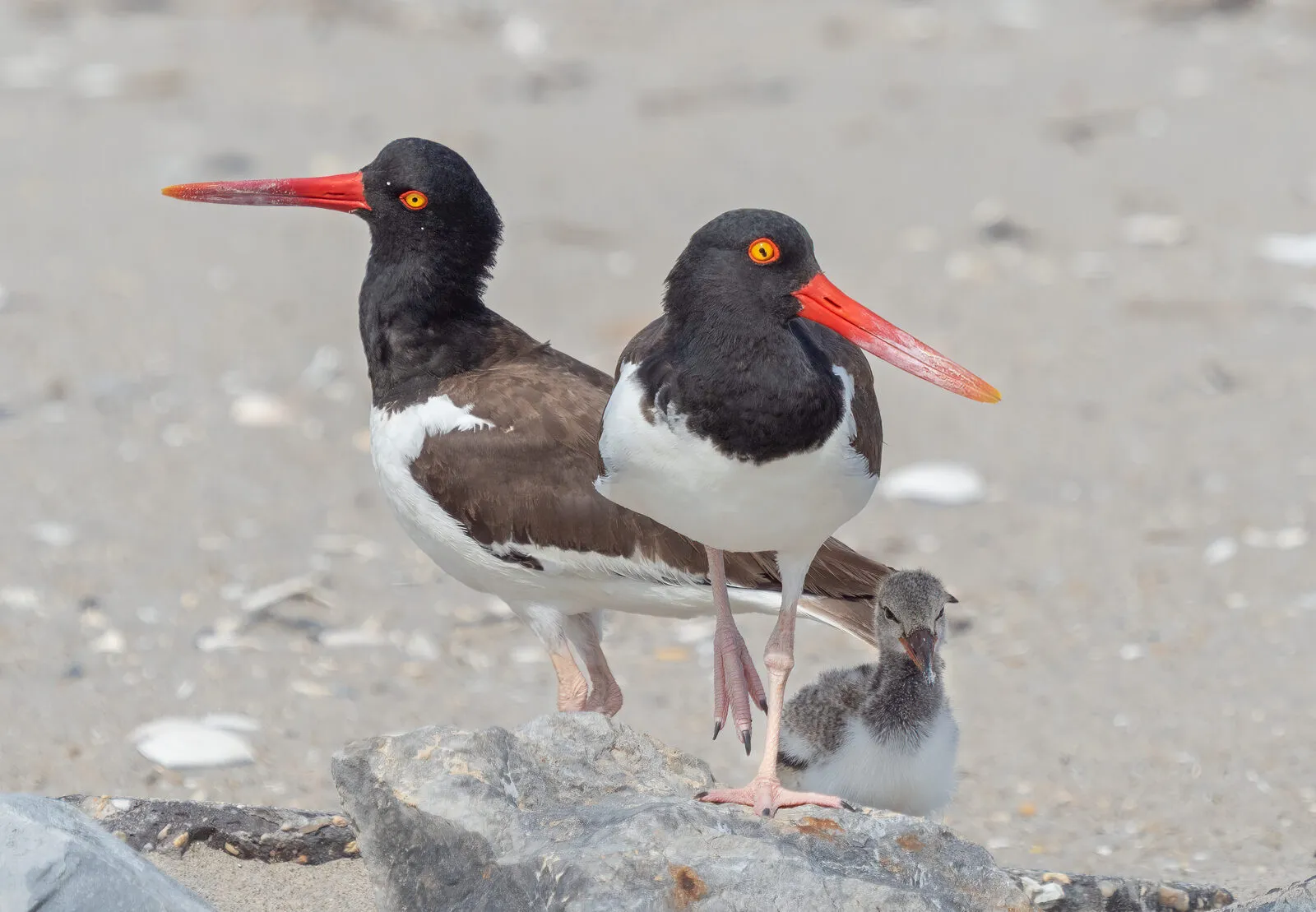
Haematopus palliatus is represented on the South American Pacific by the subspecies Haematopus palliatus pitanay, from Ecuador to southern Chile.47 At Pantanos de Villa, in Lima, it nests on sand less than 50 m from the highest high-tide line, and oystercatchers in general tolerate people poorly.48 In Lima and Callao, human disturbance is one reason why there are few nests on the coast.2

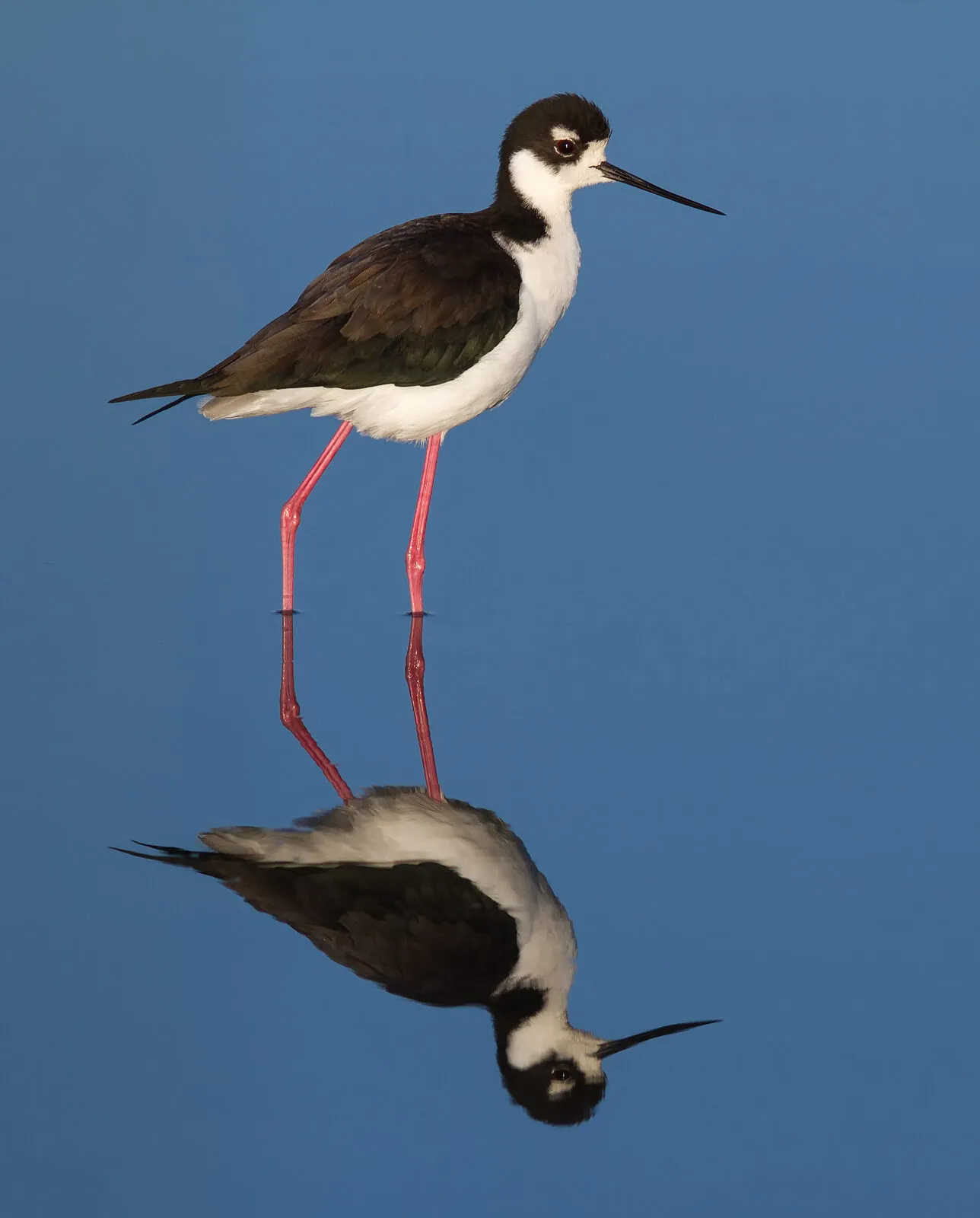
A Peruvian study describes Himantopus mexicanus as a bird of wetlands, estuaries and other natural or artificial bodies of water.76 The nests at Pantanos de Villa are usually, the authors note, in areas of high salinity and dense vegetation.13 Charadrius vociferus nests in the same wetland, in a saltgrass meadow on salty soil.13 Until 2015 only two breeding sites of the plover were known in Peru, Medio Mundo lagoon and Pantanos de Villa, and a record at Huacho, at about 11° S, added a third.11

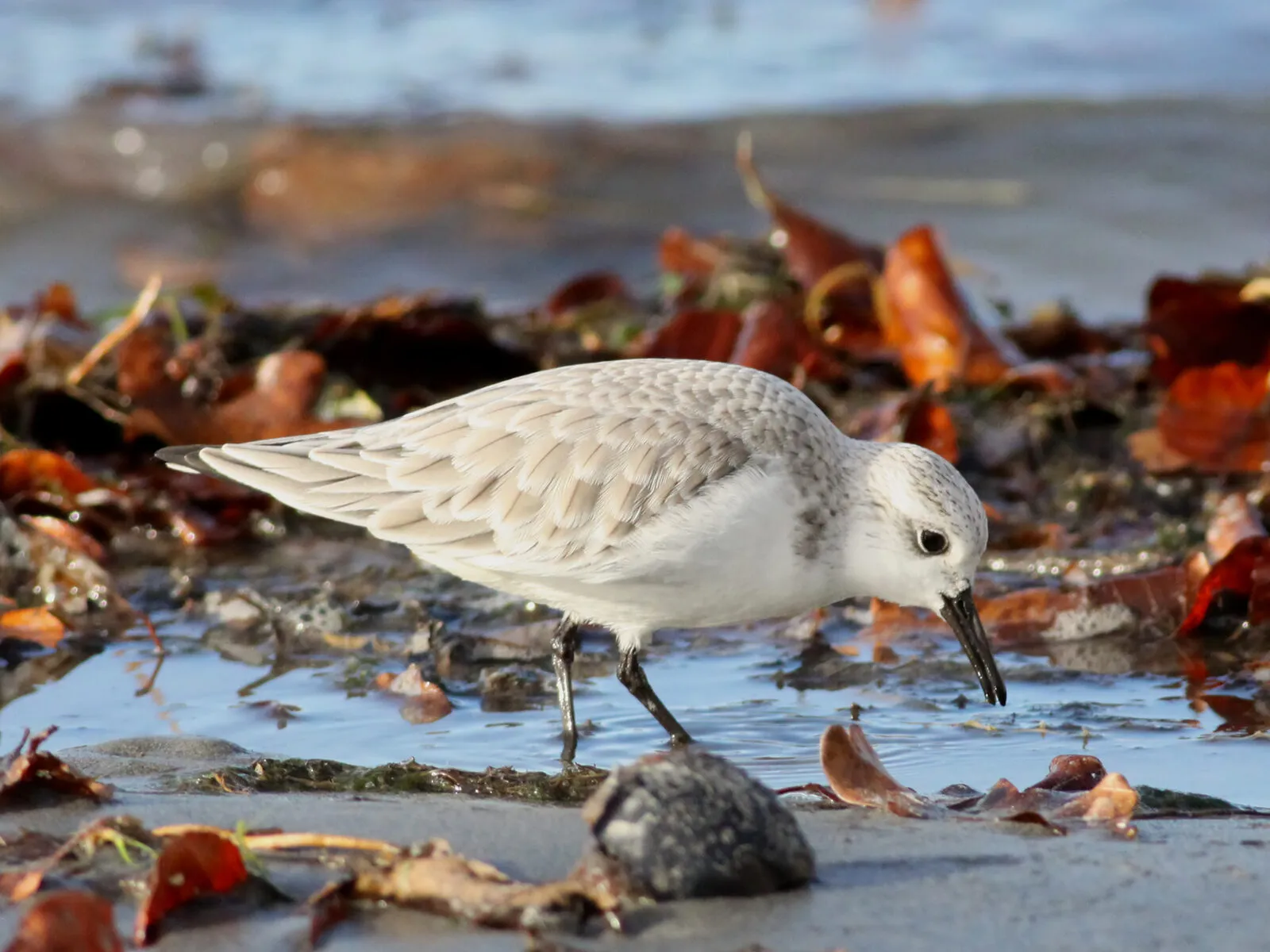
Calidris alba breeds in Alaska and northern Canada and winters along the coasts of the continent down to northern Chile and Argentina; it frequents mostly open beaches.37 At San Andrés, in Pisco, Nearctic migrants arrive in the austral summer, between September and March.24 In winter Calidris minutilla uses lakes, marshes, mudflats, flooded farmland and coastal salt marshes.4 At the Caucato wetland in Pisco, most of the birds counted were on the lagoon shore (91 of 164).49

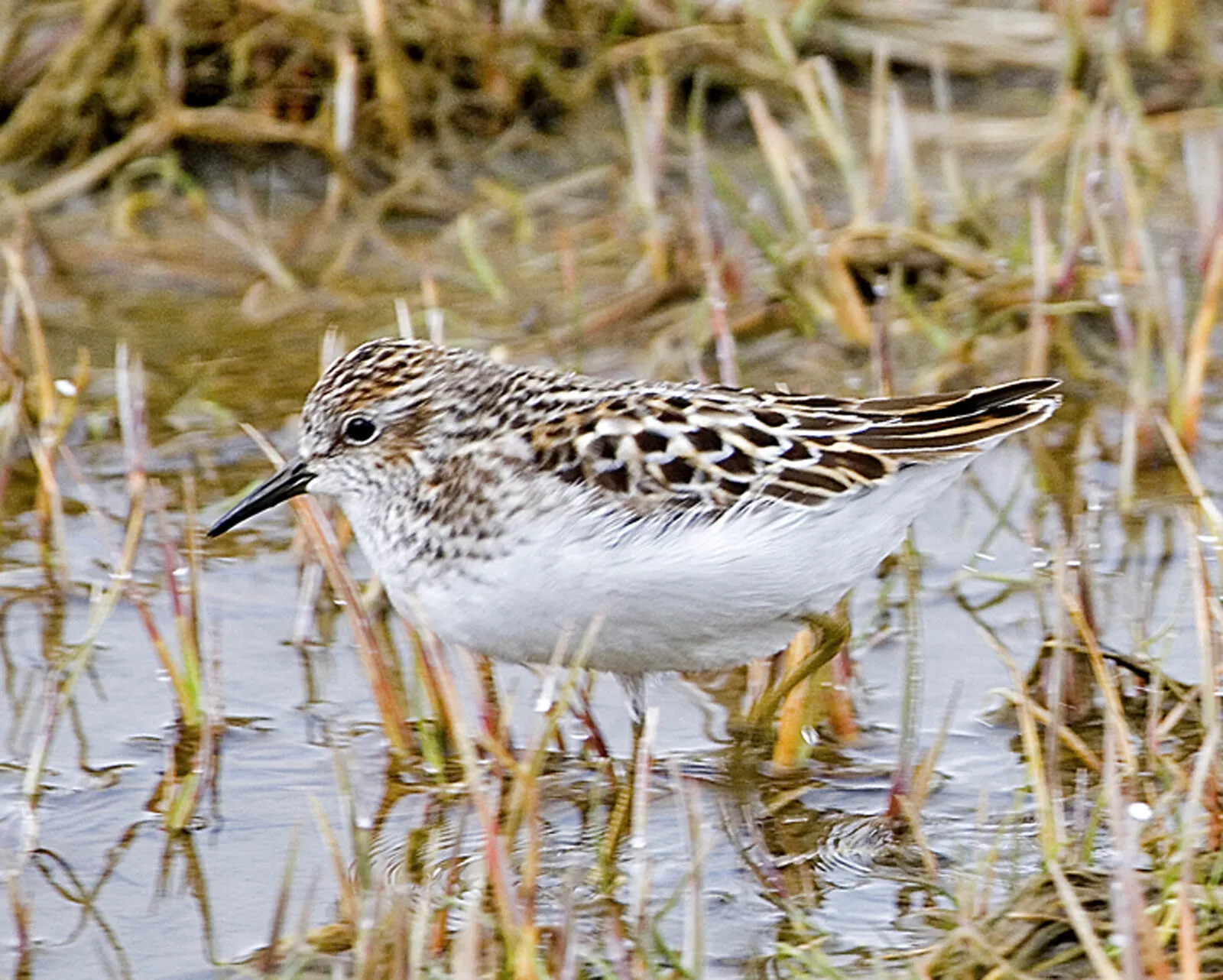

At Paracas several thousand Calidris pusilla spend the non-breeding season, on an intertidal mudflat about 2 km long and 50 m wide surrounded by coastal desert.16 At the Caucato wetland 222 individuals were counted.49 Actitis macularius lives in Peru along the coast, on rocky shores, beaches and shallow wetlands, and is also common away from the sea, along the banks of small rivers.50 Calidris bairdii is listed as a Nearctic migrant on the San Andrés beaches.24 About Calidris melanotos there is an unusual fact: during the Arctic summer males compete for females so intensely that they almost stop sleeping.51
Skuas, phalaropes and open-sea gulls
Stercorarius chilensis breeds on the coast and islands of centre-southern Chile, including Cape Horn, and in southern Argentina.21 Outside the breeding season it occupies the South American coast between central Peru and northern Argentina.52 It is estimated at about 6000 mature individuals.52 It steals food from other seabirds.22
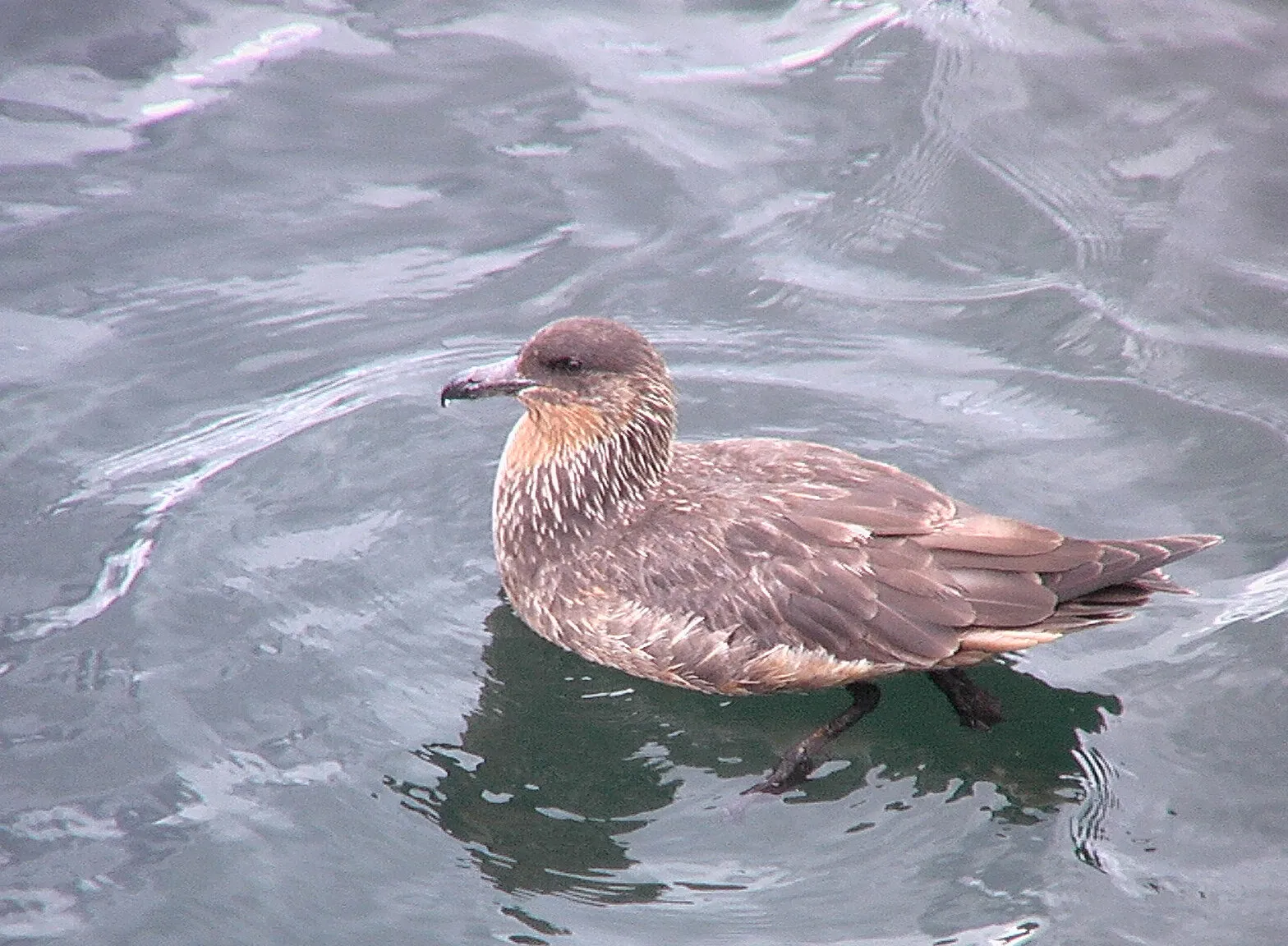

Stercorarius pomarinus breeds in the Arctic and migrates south during the northern winter, from Peru to the far south of Chile and Argentina.1 One bird of that species tracked by satellite from the Canadian Arctic crossed to the western Pacific, but this is the result of a single individual.53 Stercorarius longicaudus breeds on the Arctic tundra, and almost everything known about its routes comes from the Atlantic.54 Between 1980 and 1995, on cruises within 370 km of the coast between 3° S and 50° S, off Peru and Chile, 195 individuals of Stercorarius parasiticus were counted and all were classed as migrants that breed in the Northern Hemisphere.55 Stercorarius maccormicki, by contrast, breeds in Antarctica and not in the Northern Hemisphere.25
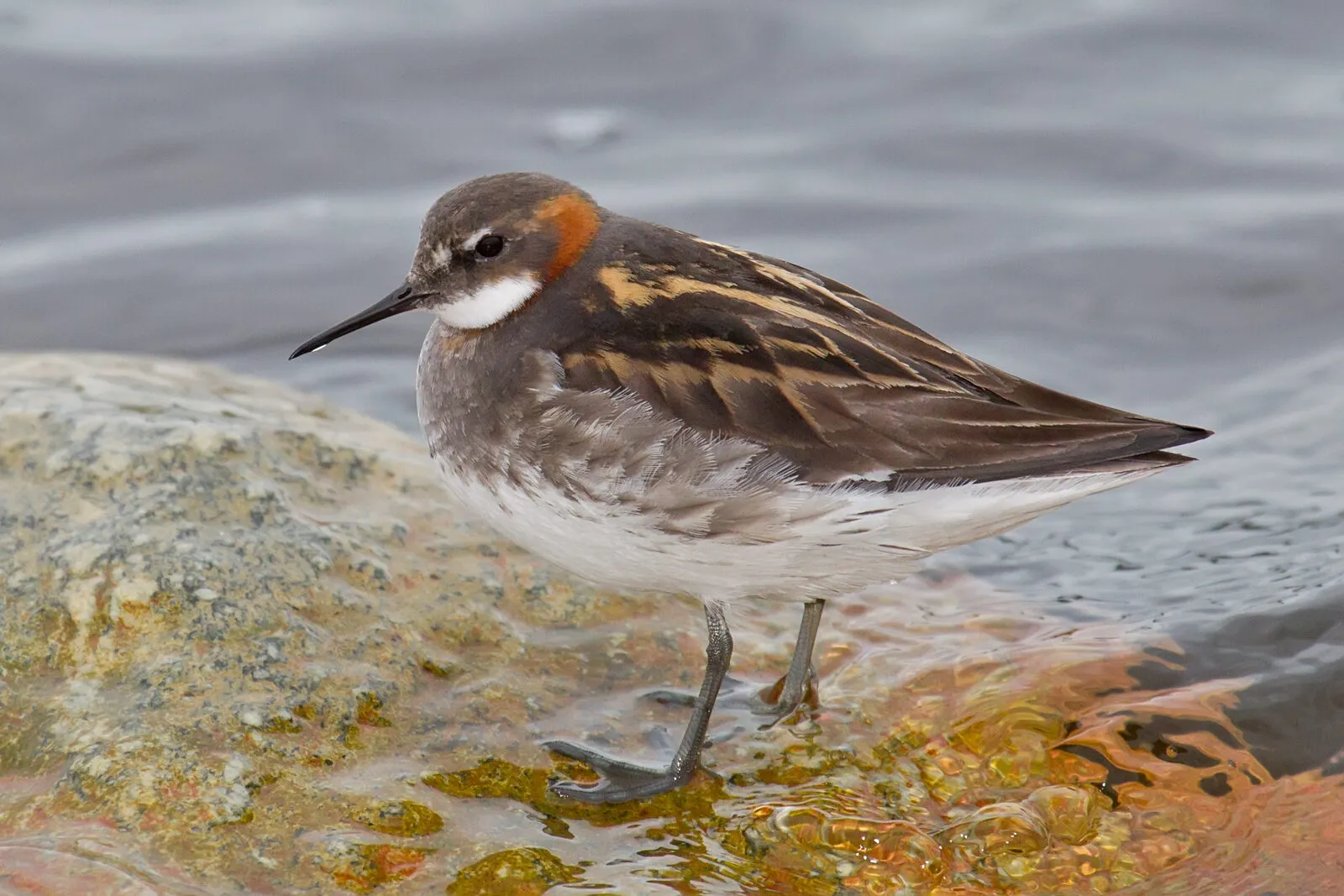
Phalaropus lobatus breeds on freshwater tundra ponds and from there travels to the tropical ocean; of 8 birds of the western route with complete tracks, 6 wintered in the northern Humboldt Current.56 Phalaropus fulicarius breeds on the coastal tundra of the Arctic and part of the North American birds winter in the Pacific, mostly off Peru and Chile.3 In the pelagic environment it is often far from the coast, at 80–160 km according to earlier studies.3

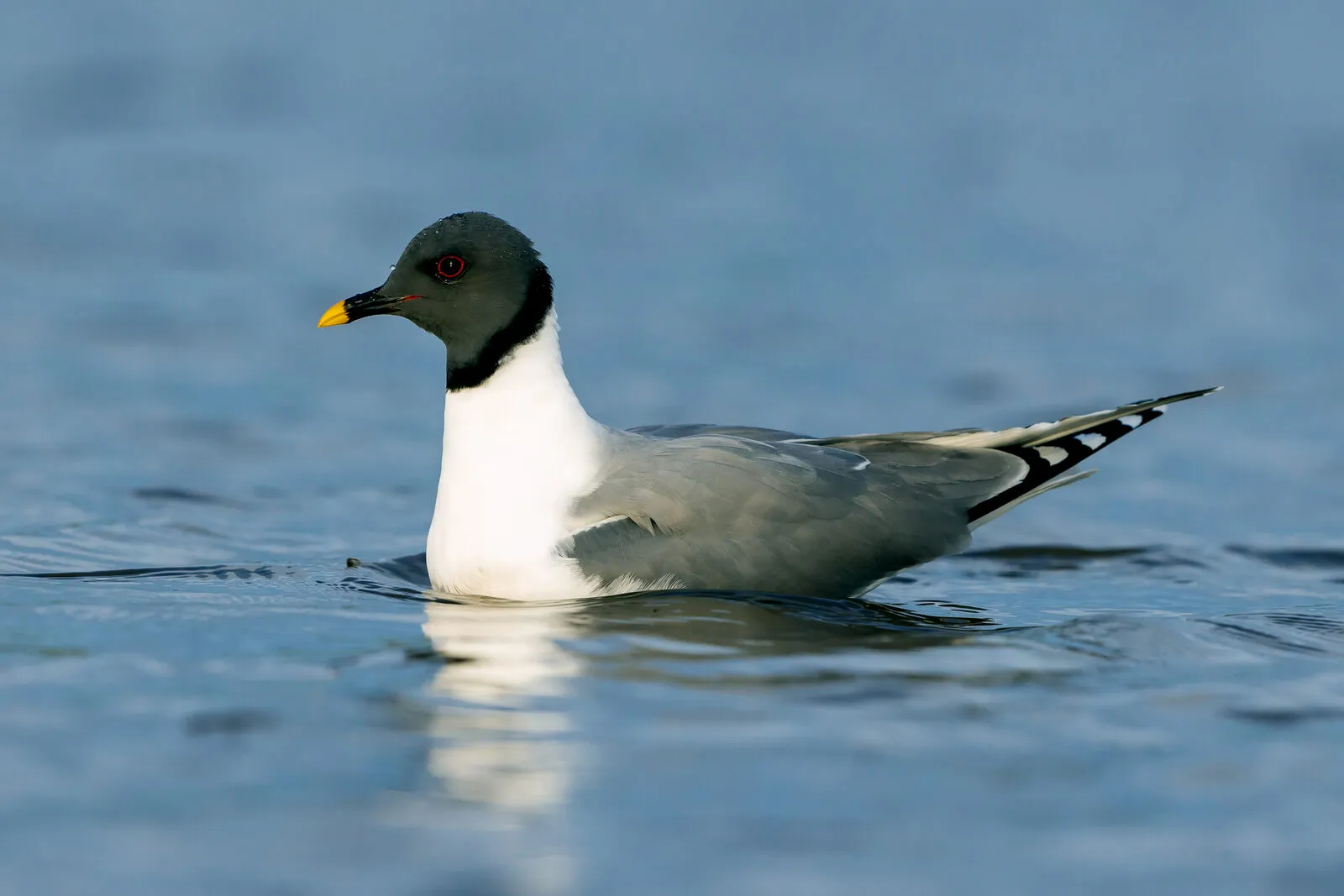
Xema sabini has a fragmented breeding range around the Arctic and outside the breeding season is highly pelagic.20 Every breeding population is presumed to reach one of two large upwelling zones of the southern hemisphere: the Humboldt Current off Peru or the Benguela Current off South Africa and Namibia.20 Of 28 tracks that reached a wintering site, 26 went to the Pacific and 2 to the Atlantic.20

Telling them apart
In the breeding season the adult of Sterna hirundinacea has pale grey upperparts that contrast with a black cap, and a vermilion bill; outside the breeding season the forehead and crown turn white and the bill becomes blackish or dull red.57 Larosterna inca, by contrast, is dark, with white moustaches.8 Young birds of that species have brownish body feathers with pale edges, a dark bill and small dark caruncles.8 Larus dominicanus is bulky, with blackish upperparts.40
The nest of Sternula lorata is a plain hollow with no decoration, whereas that of the plover Charadrius alexandrinus, which breeds in the same area, tends to be lined with pebbles or shell fragments.58 Charadrius vociferus is the largest of the ringed plovers and the only one with a double band across the chest.11 The eggs of Haematopus palliatus, sand-coloured with small dark spots, blend into their surroundings.48
Actitis macularius is recognised by its constant tail-bobbing.50 Stercorarius pomarinus is 48 to 58 cm long and weighs about 700 g.1 Leucophaeus pipixcan is a small, black-hooded gull.43 Thalasseus elegans is larger than its relative Thalasseus acuflavidus, with a longer crest and a long, thick bill with no black at all.59
Feeding and breeding
Larosterna inca feeds mainly on small fish, usually anchoveta (Engraulis ringens), and also on scraps left by fishing, so it often approaches boats.8 Observers aboard the industrial anchoveta purse-seine fleet recorded top predators in 12,778 hauls between 2015 and 2019: the Inca tern was present in 26.69 % of them and was the most frequently sighted seabird in the whole study.26 The two stomachs of Sterna hirundinacea that Coker examined in Peru held mostly small fish, in particular anchoveta.32
In Antofagasta Bay, Haematopus palliatus feeds mainly on beds of the tunicate Pyura praeputialis, and each bird ate on average 59 individuals during a daytime low tide.60 Outside the breeding season Leucophaeus modestus appears, according to the authors, to specialise on the surf-zone mole crab Emerita analoga, which occurred in all 75 pellets from three sites in central Chile, with no fish remains.23 Phalaropus fulicarius feeds on zooplankton at the sea surface, especially large copepods.3 Creagrus furcatus eats mainly the squid Sthenoteuthis oualaniensis and clupeid fish, which move up the water column at night.61
At sea off the north-central coast of Peru, an individual Leucophaeus modestus was seen taking food from a Sterna hirundinacea.42 On the northern islands, Larus dominicanus often ate eggs and stole food from blue-footed boobies.41
On the Pacific side, Sterna hirundinacea seems to breed from May to July, with late cases into August, in Ecuador, Peru and northern Chile.30 Coker found active colonies in midwinter, on San Gallán on 25 June and on the Santa Rosa Islands on 18 July 1907.32 At Pantanos de Villa, between September and October 2020, 24 eggs were found in 11 nests of Haematopus palliatus, and only 20.83 % hatched.48 Among shorebirds roles are sometimes reversed: in Actitis macularius females compete for territories and for males, often take more than one mate, and it is the male that incubates.62
Conservation status and threats
Larosterna inca is Near Threatened on the IUCN Red List.63 The same category holds Calidris minutilla,64 Calidris pusilla,65 Charadrius vociferus66 and Thalasseus elegans.67 Peru's official list of 2014 classifies Larosterna inca as Vulnerable and Sternula lorata as Endangered.68 It places Sterna hirundinacea as Critically Endangered, although the IUCN regards it as Least Concern.6869
For Sternula lorata in Peru, recreational use of beaches, cars driven off the tracks, pollution and diversion of water from wetlands, conversion of desert plains into farmland and feral cats and dogs have been identified.14 At Paracas, five nests lay 30 m or less from a track.58 At Pantanos de Villa six fires were recorded between 2006 and 2016, which the authors consider a possible harm to the habitat of Charadrius vociferus.13 In the San Fernando National Reserve, in a year of monitoring no pair of Larosterna inca with eggs or chicks was seen, and the authors suggest that tourism and seaweed collection may have led it to stop breeding there.27
Between November 2022 and January 2023 the H5N1 avian influenza outbreak left at least 55,000 seabirds dead on Peru's beaches and islands; a juvenile Inca tern found dead in Villa El Salvador (Lima) tested positive, the first confirmed detection in the species in Peru.70 In Brazil, Sterna hirundinacea was one of the most sampled birds in surveillance of the virus, with 30 records, of which 26.7 % tested positive.71
In French Guiana, the centre of the wintering range of Calidris pusilla, the wintering population fell by about 80 % between 1980 and 2008-2010.72 Great Lakes pairs of Sterna hirundo fell about 18 % between 1976 and 2009, and because a large share winter in a small region, what happens there could affect several colonies at once.17 In the mid-Atlantic, survival of Thalasseus maximus aged 0 to 2 years has dropped by 55 % since the 1960s.38 In 33 colonies in Scotland, the population of Stercorarius parasiticus declined by 81 % between 1992 and 2015.73 A model for the marshes of the Prairie Pothole Region projects, for the 2040s, an average loss of occurrence of 96 % in Leucophaeus pipixcan.74
What is not known
For Sternula lorata, the 283 birds recorded between 2003 and 2008 were counted over a surveyed area of some 1388 ha, just 0.35 % of the area suitable for nesting along the Peruvian coast, so that figure probably falls short.14 For Sterna hirundinacea in Peru no population estimates exist.30 Stercorarius chilensis is believed to be stable, but there are no systematic assessments of its trend.21
Calidris alba is Least Concern for the IUCN, but the management plan of the Illescas National Reserve states that its population may be suffering a serious decline.37 In that same plan, local residents said that the population fluctuates between years.37 For Calidris pusilla, censuses of breeding birds and trends at staging sites indicate a large decline, although a growth estimate based on western Arctic breeding populations does not differ significantly from a stable population.72 For Leucophaeus pipixcan there is controversy over the current level of the population and over an apparent decline over some 30 years.43
The population trend of Calidris bairdii is unknown.75 The authors of the tracking studies of Xema sabini make no specific conservation recommendations.20 Along the Pacific coast of South America little is known about the at-sea ecology of several skuas.22 And the review of the coastal populations of Larus dominicanus found no solid evidence that its breeding range is expanding.12
The species in this article
- Larosterna inca
- Sternula lorata
- Sterna hirundinacea
- Calidris minutilla
- Thalasseus elegans
- Actitis macularius
- Larus belcheri
- Larus dominicanus
- Haematopus palliatus
- Charadrius vociferus
- Calidris alba
- Calidris pusilla
- Thalasseus maximus
- Thalasseus sandvicensis
- Himantopus mexicanus
- Sterna paradisaea
- Calidris melanotos
- Calidris bairdii
- Sterna hirundo
- Stercorarius chilensis
- Creagrus furcatus
- Stercorarius pomarinus
- Phalaropus fulicarius
- Phalaropus lobatus
- Xema sabini
- Leucophaeus modestus
- Stercorarius longicaudus
- Stercorarius parasiticus
- Stercorarius maccormicki
- Larus pipixcan
Sources (76)
- Soto, R., Ruiz R., V.H. & Vega-Roman, E. (2012). Estado actual del conocimiento de la familia Stercorariidae en el extremo sur de Chile. Anales del Instituto de la Patagonia, 83-93. doi.org
- Podestá, J. & Barona, D. (2025). Primer registro reproductivo de Haematopus palliatus (Temminck, 1820) en la zona sur del distrito de la Punta, Callao. South Sustainability, e123. doi.org
- Saalfeld, S.T. et al. (2024). From land to sea: the fall migration of the red phalarope through the Western Hemisphere. Marine Ecology Progress Series 729, 1-29. doi.org
- Cifuentes-Sarmiento, Y. & Renjifo, L.M. (2016). Dieta del correlimos diminuto (Calidris minutilla) en cultivos de arroz orgánico de Colombia. Ornitología Neotropical, 89-96. doi.org
- WoRMS Editorial Board (2026). Calidris minutilla (Vieillot, 1819). World Register of Marine Species. marinespecies.org
- WoRMS Editorial Board (2026). Himantopus mexicanus (Müller, 1776). World Register of Marine Species. marinespecies.org
- WoRMS Editorial Board (2026). Larosterna inca (Lesson, 1827). World Register of Marine Species. marinespecies.org
- VanderWerf, E.A. (2022). An Inca Tern in the Hawaiian Islands: first record for Hawaii and the United States. Western Birds, 208-215. doi.org
- Gomez-Puerta, L.A. & Naupay, A. (2019). Algunos helmintos parásitos de la gaviota peruana (Larus belcheri). Revista Peruana de Biología, 149-156. doi.org
- Burger, J. et al. (2024). Belcher's Gull (Larus belcheri). Birds of the World, version 1.1. doi.org
- Chávez-Villavicencio, C. et al. (2015). Registro de actividad reproductiva de Charadrius vociferus (Linnaeus 1758, chorlo gritón) en el humedal de Paraíso, Huacho (Lima – Perú). The Biologist (Lima), 443-445. doi.org
- Yorio, P. et al. (2016). Distribution and Trends in Kelp Gull (Larus dominicanus) Coastal Breeding Populations in South America. Waterbirds, 114-135. doi.org
- Amaro, L. & Goyoneche, G. (2017). Anidación de aves en el Refugio de Vida Silvestre Los Pantanos de Villa 2007-2009, Lima-Perú. The Biologist (Lima), 155-171. doi.org
- Zavalaga, C.B. et al. (2009). Current status of Peruvian Terns Sternula lorata in Perú: threats, conservation and research priorities. Bird Conservation International, 175-186. doi.org
- Ryan, T.P. et al. (2022). Movements and Asynchronous Nesting of the Peruvian Tern Sternula lorata in Chile and Peru. Marine Ornithology, 63-69. doi.org
- Tavera, E.A. et al. (2020). Oversummering juvenile and adult Semipalmated sandpipers in Perú gain enough survival to compensate for foregone breeding opportunity. Movement Ecology, 42. doi.org
- Bracey, A.M. et al. (2018). Migratory routes and wintering locations of declining inland North American Common Terns. The Auk, 385-399. doi.org
- McKnight, A. et al. (2013). ‘Stepping stone’ pattern in Pacific Arctic tern migration reveals the importance of upwelling areas. Marine Ecology Progress Series, 253-264. doi.org
- Hunnewell, R.W., Diamond, A.W. & Brown, S.C. (2016). Estimating the migratory stopover abundance of phalaropes in the outer Bay of Fundy, Canada. Avian Conservation and Ecology, 11. doi.org
- Davis, S.E., Maftei, M. & Mallory, M.L. (2016). Migratory Connectivity at High Latitudes: Sabine's Gulls (Xema sabini) from a Colony in the Canadian High Arctic Migrate to Different Oceans. PLoS ONE 11(12): e0166043, e0166043. doi.org
- Seco Pon, J.P. et al. (2017). Asociación de la Escúa Parda (Stercorarius antarcticus) y la Escúa Común (Stercorarius chilensis) con operaciones de pesca en el Mar Argentino. El Hornero, 205-214. doi.org
- Simeone, A., Anguita, C. & Luna-Jorquera, G. (2014). At-sea abundance and distribution of skuas and jaegers (Charadriiformes: Stercorariidae) at coastal waters off central Chile. Revista Chilena de Historia Natural, 87:6. doi.org
- Rivera, J. & Thomson, R.F. (2026). From generalist to specialist? Diet shift in the Gray Gull (Leucophaeus modestus) outside its Atacama breeding range. Journal of Field Ornithology 97(3), 6. doi.org
- Pulido-Capurro, V. (2025). Las aves de la orilla marina de San Andrés, Pisco, Ica. The Biologist (Lima), 55-70. doi.org
- Kopp, M. et al. (2011). South polar skuas from a single breeding population overwinter in different oceans though show similar migration patterns. Marine Ecology Progress Series, 435:263-267. doi.org
- Rivadeneyra-Villafuerte, S. & Román-Amancio, G. (2022). Depredadores tope en la pesquería industrial de anchoveta entre los años 2015 y 2019. Boletín Instituto del Mar del Perú, 91-112. doi.org
- Meza, M.A., Llapapasca Lloclla, M. & Romero, C. (2021). Avifauna de algunas playas de la Reserva Nacional de San Fernando (RNSF) Ica – Perú. Junio 2018 - Mayo 2019. Boletín Instituto del Mar del Perú, 29-44. doi.org
- Velando, A. & Márquez, J.C. (2002). Predation risk and nest-site selection in the Inca tern. Canadian Journal of Zoology, 1117-1123. doi.org
- Velando, A., Lessells, C.M. & Márquez, J.C. (2001). The function of female and male ornaments in the Inca Tern: evidence for links between ornament expression and both adult condition and reproductive performance. Journal of Avian Biology, 311-318. doi.org
- Jaime Cursach Valenzuela, Vilugrón, J. & Rau, J.R. (2021). Nidificación del gaviotín sudamericano (Sterna hirundinacea) en islas Caicura (41° S), Seno de Reloncaví, sur de Chile. Anales del Instituto de la Patagonia, 49:6. doi.org
- Portflitt-Toro, M. et al. (2018). Breeding of the South American Tern (Sterna hirundinacea) on anchored boats in Coquimbo, northern Chile. Ornitología Neotropical, 187-191. doi.org
- Coker, R.E. (1919). Habits and economic relations of the guano birds of Peru. Proceedings of the United States National Museum, 449-511. doi.org
- Amorós Kohn, S., Saravia Guevara, P. & Williams, M. (2010). Biología reproductiva de Sternula lorata, «gaviotín peruano», en la reserva nacional de paracas (rnp), ica – perú. Ecología Aplicada, 125-132. doi.org
- Servicio Nacional de Áreas Naturales Protegidas por el Estado (2025). Plan Maestro de la Reserva Nacional de Paracas 2025-2030. SERNANP, RPE N.° 000173-2025-SERNANP/PE. cdn.www.gob.pe
- Velarde, E. et al. (2015). Warm oceanographic anomalies and fishing pressure drive seabird nesting north. Science Advances, e1400210. doi.org
- Veit, R.R. et al. (2021). Population Growth and Long-Distance Vagrancy Leads to Colonization of Europe by Elegant Terns Thalasseus elegans. Frontiers in Ecology and Evolution, 725614. doi.org
- Servicio Nacional de Áreas Naturales Protegidas por el Estado (2024). Plan Maestro de la Reserva Nacional Illescas 2024-2028. SERNANP, aprobado por Resolución Presidencial N.° 000025-2024-SERNANP. cdn.www.gob.pe
- Weithman, C. et al. (2025). Movements of post-breeding royal terns (Thalasseus maximus) in Virginia, U.S.A. PeerJ, e19898. doi.org
- Tree, A.J. (2011). Origins, Occurrence and Movements of Sandwich Tern Thalasseus Sandvicensis in Southern Africa. Marine Ornithology, 173-181. doi.org
- Burger, J. et al. (2025). Kelp Gull (Larus dominicanus). Birds of the World, version 1.2. doi.org
- Figueroa, J. (2010). Aspectos de la biología reproductiva de la gaviota dominicana Larus dominicanus (Charadriiformes, Laridae) en tres islas del norte del Perú. The Biologist (Lima), 189-211. doi.org
- Figueroa, J. & Suazo, E. (2012). Distribución de las aves marinas frente a la costa norte-centro del Perú en el invierno de 2010 y su interacción potencial con la pesquería. The Biologist (Lima), 41-71. doi.org
- Burger, J. & Gochfeld, M. (2020). Franklin's Gull (Leucophaeus pipixcan). Birds of the World. doi.org
- Acuña-Ruz, M.P. et al. (2026). Ocean Chlorophyll-a Concentration and the Extension of the Migration of Franklin’s Gulls (Leucophaeus pipixcan) in Southern South America. Animals. doi.org
- Bonnedahl, J., Stedt, J. & Waldenström, J. (2015). Comparison of Extended-Spectrum β-Lactamase (ESBL) CTX-M Genotypes in Franklin Gulls from Canada and Chile. PLOS ONE. doi.org
- Cruz, S.M. et al. (2025). The owl gull: Exclusively nocturnal foraging by the Swallow-tailed Gull Creagrus furcatus in Galápagos. Marine Ornithology 53(1), 63-69. doi.org
- Thomson, R.F. et al. (2025). Population trends and vital rates for the American Oystercatcher (Haematopus palliatus pitanay) in Central Chile. Journal of Field Ornithology. doi.org
- Arenas, A. et al. (2020). Reproductive success of Haematopus palliatus, the Common oystercatcher, and anthropic activities in the Marvilla Circuit, Pantanos de Villa, Lima- Peru. South Sustainability, e020. doi.org
- Pisconte-Vilca, J.A. et al. (2020). Variación de la abundancia y diversidad de las aves migratorias en el humedal de Caucato, Pisco Perú. Ñawparisun - Revista de Investigación Científica, 103-110. doi.org
- Senner, N.R. & Angulo Pratolongo, F. (2014). Atlas de las aves playeras del Perú. Sitios importantes para su conservación. Ministerio del Ambiente y CORBIDI, Lima, 96. sinia.minam.gob.pe
- Santema, P. et al. (2023). Sexual selection for extreme physical performance in a polygynous bird is associated with exceptional sex differences in oxygen carrying capacity. Biology Letters, 20230391. doi.org
- Tavares, D.C. et al. (2012). Aves, Stercorariidae, Chilean Skua Stercorarius chilensis Bonaparte, 1857: First documented record for the state of Espírito Santo, southeastern Brazil. Check List, 8:560-562. doi.org
- Harrison, A.-L. et al. (2022). Sympatrically breeding congeneric seabirds (Stercorarius spp.) from Arctic Canada migrate to four oceans. Ecology and Evolution. doi.org
- Gilg, O. et al. (2013). Trans-Equatorial Migration Routes, Staging Sites and Wintering Areas of a High-Arctic Avian Predator: The Long-tailed Skua (Stercorarius longicaudus). PLoS ONE, 8(5):e64614. doi.org
- Spear, L.B. & Ainley, D.G. (2008). The Seabird Community of the Peru Current, 1980-1995, with Comparisons to Other Eastern Boundary Currents. Marine Ornithology 36, 125-144. doi.org
- van Bemmelen, R.S.A. et al. (2019). A Migratory Divide Among Red-Necked Phalaropes in the Western Palearctic Reveals Contrasting Migration and Wintering Movement Strategies. Frontiers in Ecology and Evolution, 86. doi.org
- Carlos, C.J. & Voisin, J.-F. (2013). The type locality of the South American Tern, Sterna hirundinacea (Aves: Charadriiformes: Sternidae), with designation of a lectotype. Zoologia (Curitiba), 356-358. doi.org
- Amorós, S. & Saravia, P. (2012). Aportes a la conservación de Sternula lorata, «gaviotín peruano», en la reserva nacional de paracas (rnp), ica – perú. Ecología Aplicada, 47-57. doi.org
- Velarde, E. & Rojo, P. (2012). Presumed Hybrid Elegant X Cabot's Terns Thalasseus Elegans X T Acuflavida in Isla Rasa, Gulf of California, Mexico. Marine Ornithology, 25-29. doi.org
- Pacheco, C.J. & Castilla, J.C. (2000). Ecología trófica de los ostreros Haematopus palliatus pitanay (Murphy 1925) y Haematopus ater (Vieillot et Oudart 1825) en mantos del tunicado Pyura praeputialis (Heller 1878) en la Bahía de Antofagasta, Chile. Revista Chilena de Historia Natural, 533-541. doi.org
- Cruz, S.M. et al. (2013). At–Sea Behavior Varies with Lunar Phase in a Nocturnal Pelagic Seabird, the Swallow-Tailed Gull. PLoS ONE 8(2), e56889. doi.org
- Blizard, M. & Pruett-Jones, S. (2017). Plumage pattern dimorphism in a shorebird exhibiting sex-role reversal (Actitis macularius). The Auk, 363-376. doi.org
- BirdLife International (2018). Larosterna inca: BirdLife International. The IUCN Red List of Threatened Species 2018: e.T22694834A132576903. doi.org
- BirdLife International (2024). Calidris minutilla: BirdLife International. The IUCN Red List of Threatened Species 2024: e.T22693396A255801668. doi.org
- BirdLife International (2024). Calidris pusilla: BirdLife International. The IUCN Red List of Threatened Species 2024: e.T22693373A255806237. doi.org
- BirdLife International (2024). Charadrius vociferus: BirdLife International. The IUCN Red List of Threatened Species 2024: e.T22693777A256247816. doi.org
- BirdLife International (2020). Thalasseus elegans: BirdLife International. The IUCN Red List of Threatened Species 2020: e.T22694552A178970750. doi.org
- Ministerio de Agricultura y Riego (2014). Decreto Supremo N.° 004-2014-MINAGRI: actualización de la lista de clasificación y categorización de las especies amenazadas de fauna silvestre legalmente protegidas. El Peruano (08-04-2014); ficha en SINIA, Ministerio del Ambiente. sinia.minam.gob.pe
- BirdLife International (2018). Sterna hirundinacea: BirdLife International. The IUCN Red List of Threatened Species 2018: e.T22694618A132562410. doi.org
- Palomino-Kobayashi, L.A., Zavalaga, C. & Pons, M.J. (2026). Molecular detection of Highly Pathogenic H5N1 Avian Influenza in seabirds from Lima, Peru in 2022. South Health, e003. doi.org
- Hernández-Ortiz, B.A. et al. (2026). Spatial association of seabirds and aquatic birds with highly pathogenic avian influenza (H5N1) outbreaks in Brazil: A nationwide ecological and statistical modelling approach. PLOS One, e0350505. doi.org
- Ydenberg, R.C. & Hemerik, L. (2024). Over-summering as a risk effect reducing population growth in a long-distance migrant shorebird. Avian Conservation and Ecology, 19. doi.org
- Perkins, A. et al. (2018). Combined bottom‐up and top‐down pressures drive catastrophic population declines of Arctic skuas in Scotland. Journal of Animal Ecology, 87: 1573-1586. doi.org
- Steen, V., Skagen, S.K. & Noon, B.R. (2014). Vulnerability of Breeding Waterbirds to Climate Change in the Prairie Pothole Region, U.S.A. PLoS ONE. doi.org
- Reese, G.C. & Skagen, S.K. (2017). Modeling nonbreeding distributions of shorebirds and waterfowl in response to climate change. Ecology and Evolution, 1497-1513. doi.org
- Jara, C., Pereda-Sánchez, A. & Calvo-Mac, C. (2019). Primer reporte del acantocéfalo Profilicollis altmani en una cigüeñuela de cuello negro Himantopus mexicanus. Revista Peruana de Biología, 157-160. doi.org