
Blog · wildlife of Peru · subgroup
Petrels, shearwaters and albatrosses of Peru: the birds that live on the wind of the Humboldt Current
These are birds that spend most of their lives on the open sea and, for the most part, breed far from Peru. The Humboldt Current, cold and rich in food, draws them from the islands of New Zealand, the South Atlantic and the Galápagos. The guide includes 31 species of the order Procellariiformes.
Published

A group built for the open sea
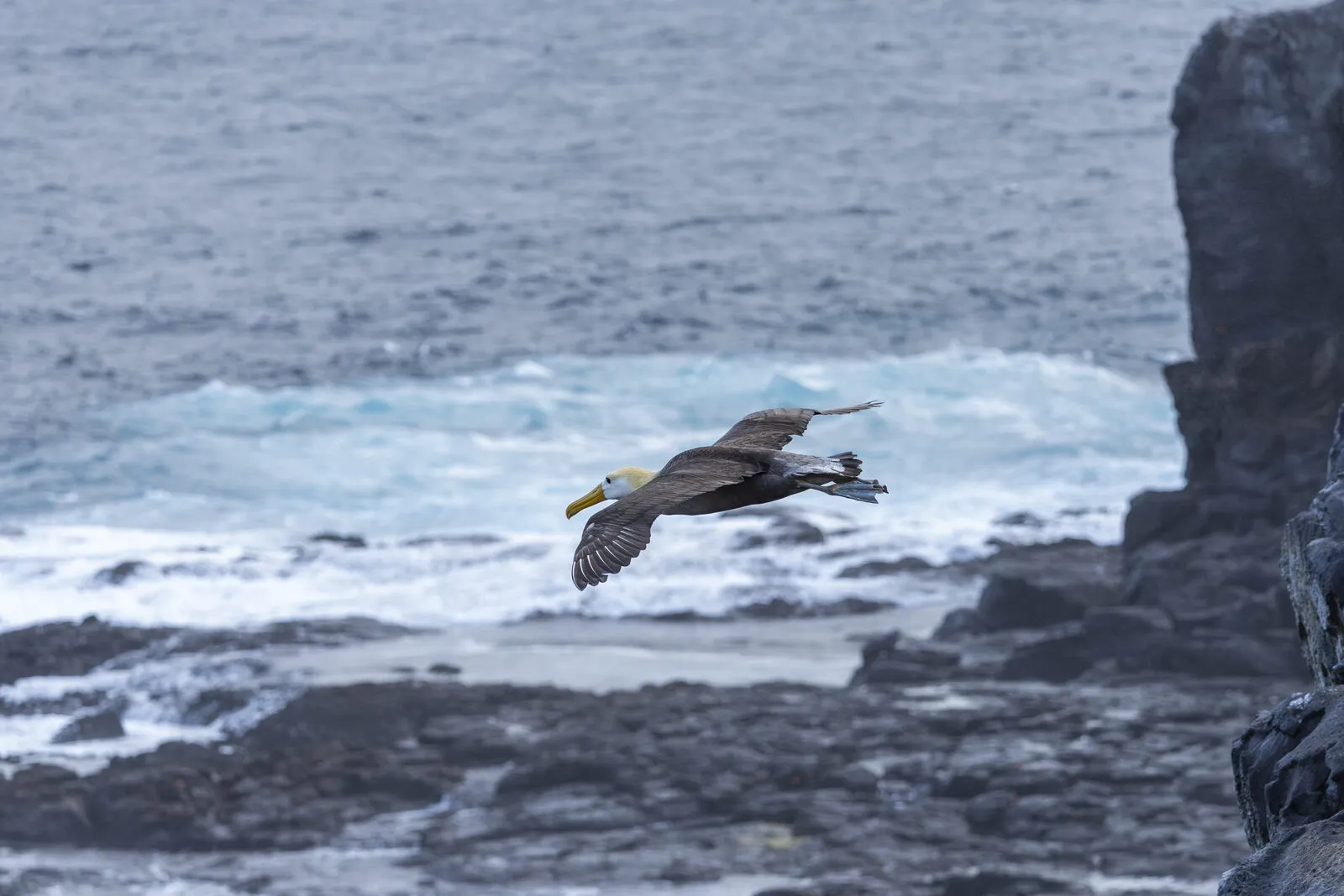
Phoebastria irrorata is an albatross of the family Diomedeidae, described by Salvin in 1883.1 Pterodroma phaeopygia is a petrel of the family Procellariidae, described by Salvin in 1876.2 At the other end of the size range, seven adults of Oceanodroma tethys measured on Chao and Corcovado islands weighed 23 g on average.3 Among the giant petrels, males weigh around 20 % more than females, the greatest size difference between the sexes of any seabird.4
In the Peru Current, within a band up to 370 km from the coast between 3° S and 50° S, 2299 individuals of Procellaria aequinoctialis were counted on 14 cruises made from 1980 to 1995.5 That species belongs to the set of Antarctic and sub-Antarctic birds that move north outside their breeding season and keep to the colder waters.5 In winter it is joined by Thalassarche melanophris, Thalassarche salvini, Fulmarus glacialoides and Daption capense, which eat mostly carrion or prey caught at the surface.5 Others never leave the current: Oceanodroma hornbyi is restricted to its cold waters, from northern Ecuador to central Chile.6
Albatrosses: the ones that cross the Pacific
Nearly all of Phoebastria irrorata breeds on Española Island in the Galápagos, and a few pairs breed on Isla de la Plata, near the mainland; while incubating and raising larger chicks, adults travel to feed in the coastal upwelling off Peru.7 In 2008, all long trips by birds tracked from Española and La Plata ended on the Peruvian coast, and the southernmost latitude reached had a median of 7.18° S in birds from Punta Cevallos.7 The La Plata colony, of 10 to 20 pairs, lies about 850 km from the Peruvian upwelling.7
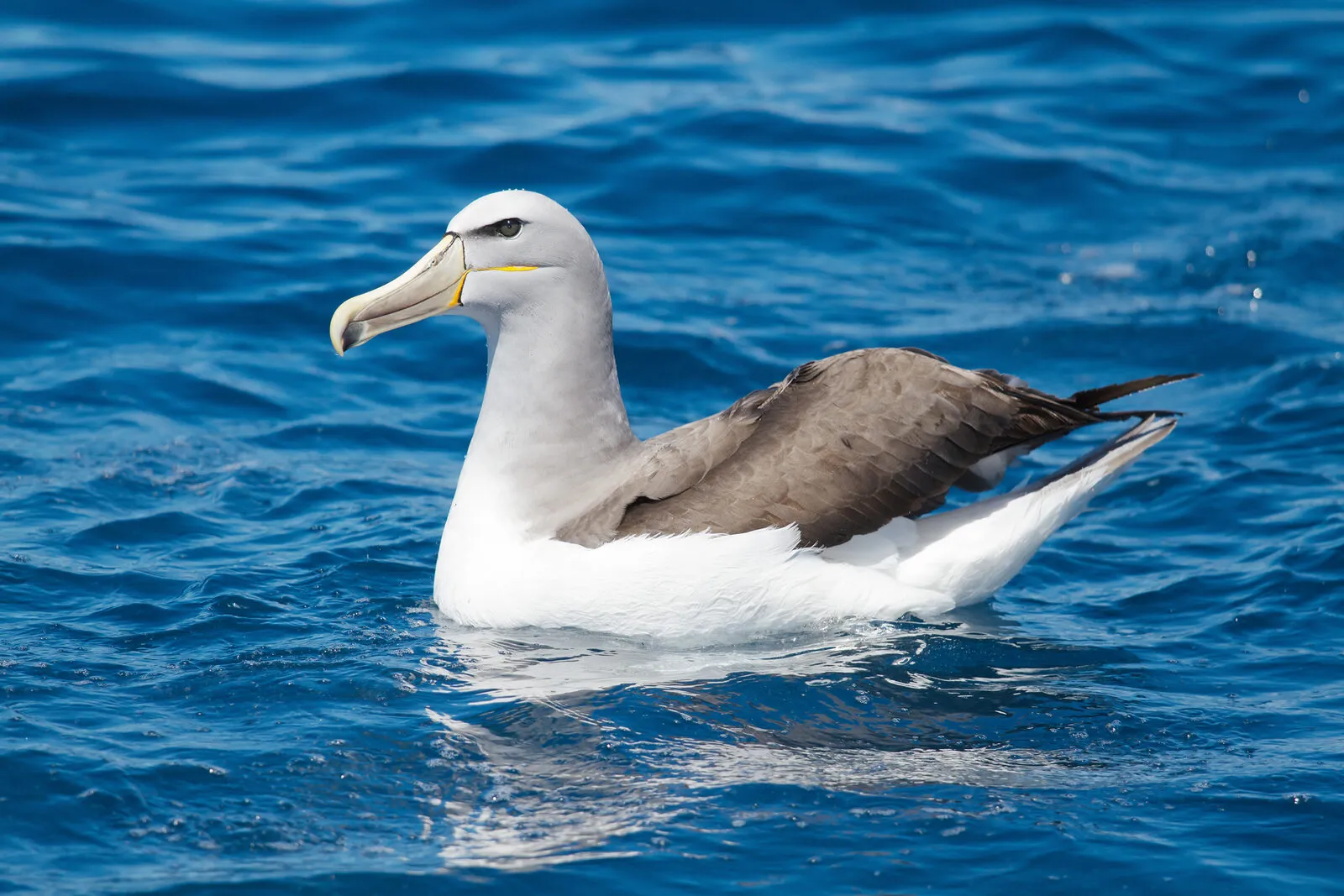
Thalassarche salvini breeds almost exclusively in New Zealand: for 2013 the population was put at 39995 pairs, 99 % of them in the Bounty Islands.8 Outside the breeding season many cross the Pacific: on 15 cruises made off Chile and Peru between 1980 and 1995, 475 individuals were logged, spread along the current system and favouring waters over the continental slope.9

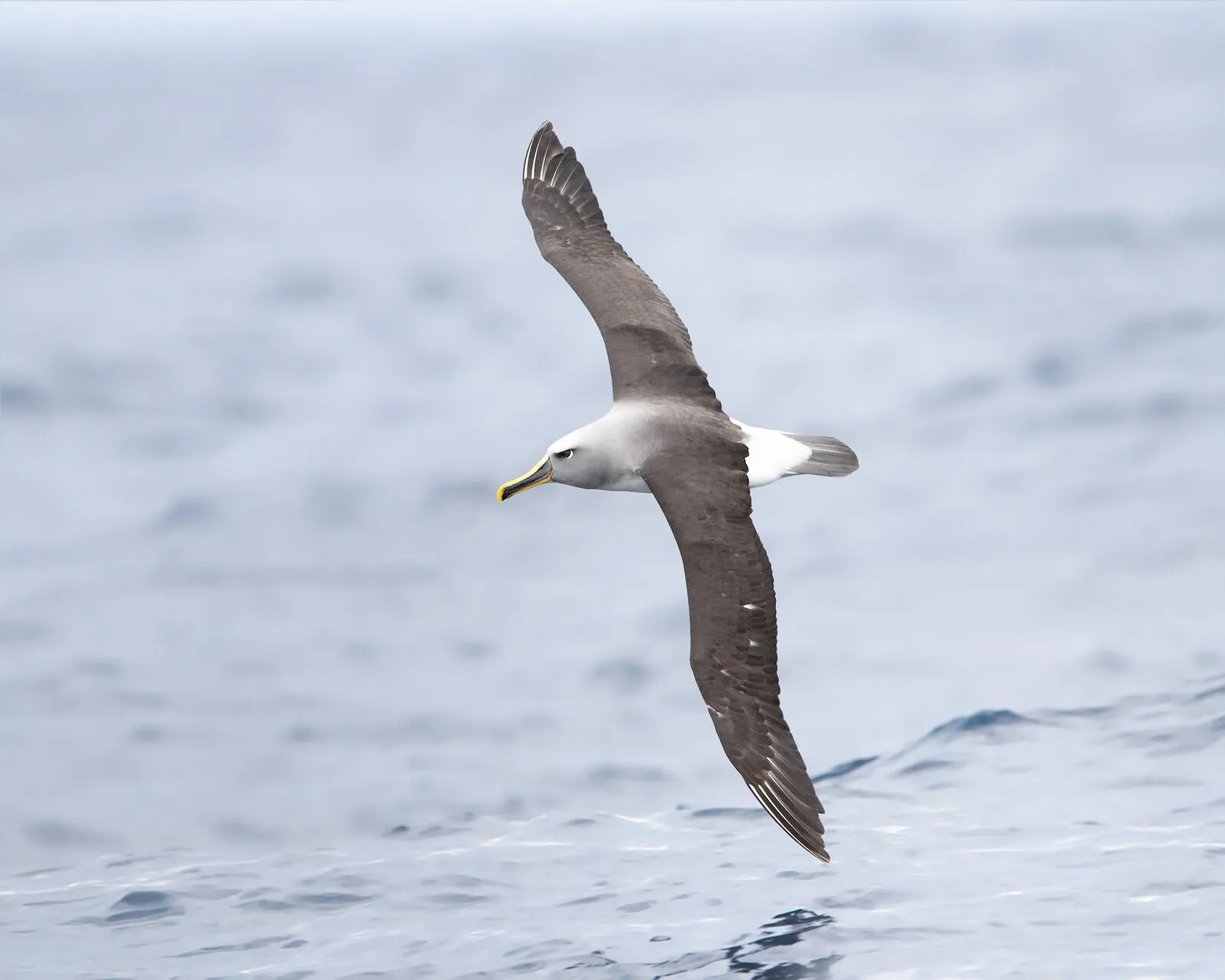
As a breeding bird, Thalassarche bulleri is confined to the New Zealand region.10 The northern form nests in the Chathams, where 19400 pairs were estimated in 2016.11 Followed with geolocators, those birds reached Chilean and Peruvian waters between March and July and left them between August and October.12 Thalassarche eremita breeds only on The Pyramid, the southernmost islet of the Chathams, with about 4500 pairs each year.13 Three adults tracked by satellite in 1997 and 1998 moved between 26° S and 6° S along the South American coast.14

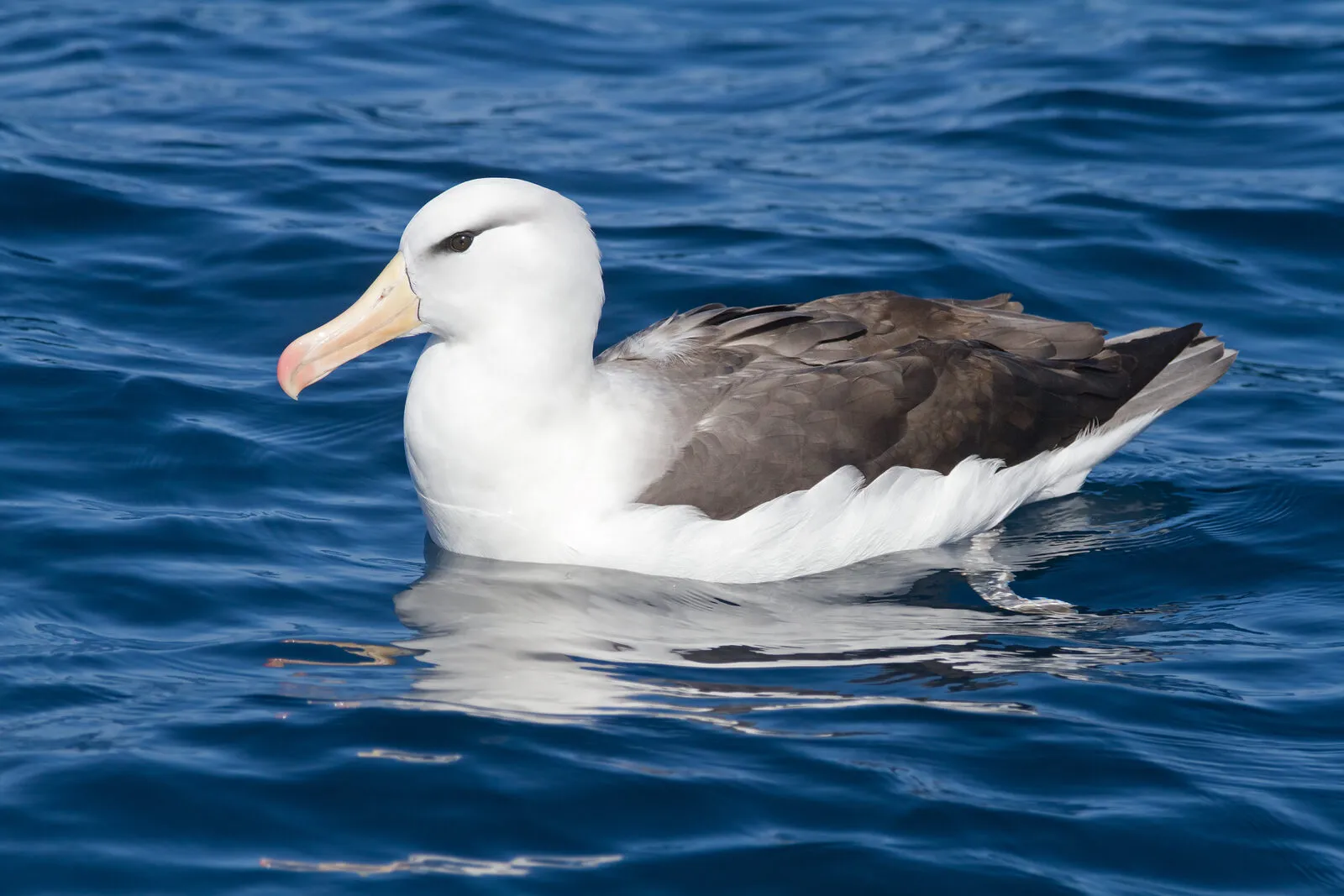
Thalassarche melanophris breeds on several islands of southern Chile, on the Falklands and on South Georgia, among others.15 Censuses from 2001 to 2006 added up to at least 122920 pairs at 6 sites in Chile, a little over 20 % of the world population.16 By contrast, for Peru Thalassarche chrysostoma is only a non-breeding visitor with scarce records, according to the country's Red Book of threatened wildlife.17


Petrels, shearwaters and fulmars
Procellaria aequinoctialis breeds on sub-Antarctic islands of France, New Zealand and South Africa, as well as South Georgia and the Falkland Islands (Malvinas).18 Two birds from South Georgia, followed with geolocators, spent midwinter in the Humboldt Current off Chile and went straight back to the colony from there.19 Procellaria parkinsoni is the smallest member of its genus and the one that breeds farthest north.20 On 28 cruises in the eastern tropical Pacific from 1976 to 1990, 618 birds were recorded close to shore from southern Mexico to northern Peru, and their southern limit on the mainland coast lay near 5° S.21

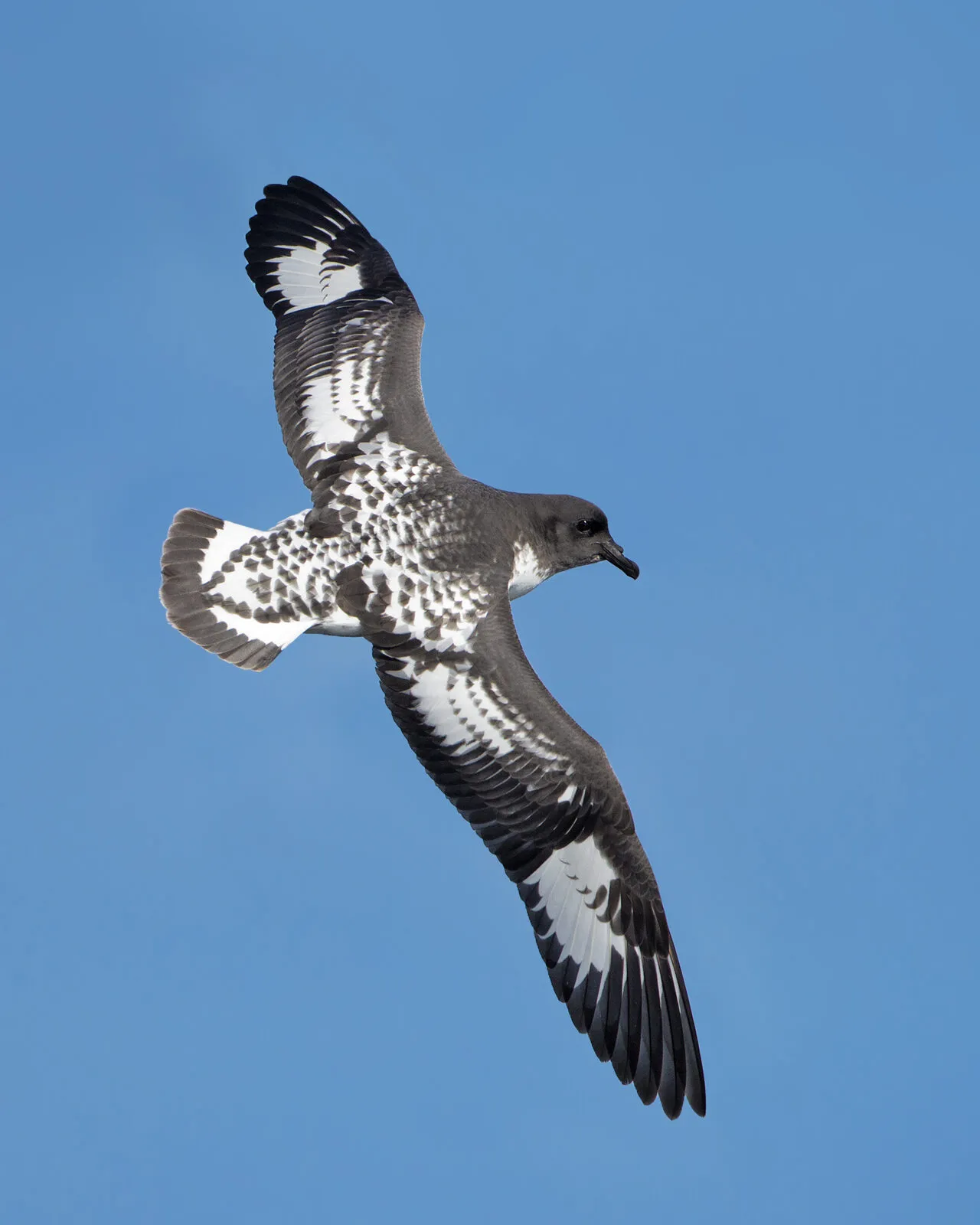
Pterodroma phaeopygia is endemic to the Galápagos archipelago and breeds only in the highlands of 5 islands.22 One of the adults tracked by satellite while breeding entered the far northern edge of Peru's exclusive economic zone.22 In Pterodroma cookii, birds from Little Barrier move north to the North Pacific, while those from Codfish follow the Humboldt Current to their main non-breeding area off Peru, at about 15° S, which they reached after about 19 days of travel.23 That Codfish population is the smaller one: about 6000 pairs, against about 286,000 on Little Barrier.24
Pterodroma externa breeds only on Alejandro Selkirk Island, in the Juan Fernández archipelago.25 Seven birds carrying geolocators, followed from 2020 to 2022, travelled as far as 5781 km from the colony before laying, in waters of the south-eastern Pacific.26 Pterodroma defilippiana has colonies on San Félix and San Ambrosio, in the Desventuradas, and on Santa Clara and Robinson Crusoe, in Juan Fernández; at sea it is found off Peru and northern and central Chile.15 Two subspecies of Pterodroma neglecta are distinguished: the nominate form nests in the south-west Pacific and Pterodroma neglecta juana on San Ambrosio, in the eastern Pacific.27
Ardenna creatopus breeds on only 3 islands of central Chile: at least 70 % of the population nests on Mocha, up to 20 % on Robinson Crusoe and up to 10 % on Santa Clara, and the world population is put at about 60,000 birds.28 Puffinus griseus breeds in New Zealand, Australia and Chile.29 According to the authors, much of the population migrates to the North Pacific after breeding in the austral summer, which would explain its highest counts in the Peruvian autumn and winter censuses.29 The only known breeding place of Puffinus bulleri is the Poor Knights Islands in New Zealand, and around 1981 the world population was roughly 2,500,000 birds.30
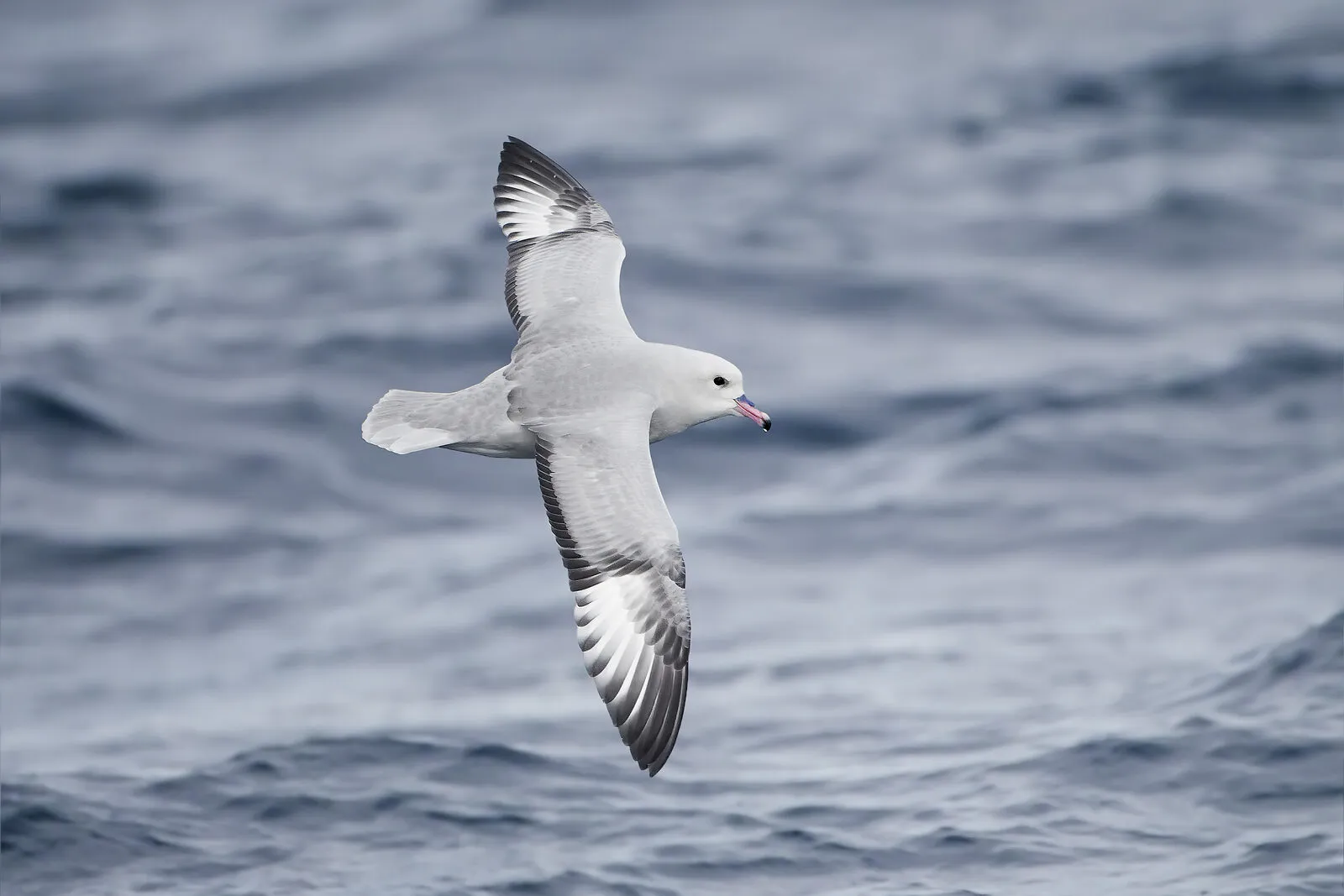
Macronectes giganteus breeds right around the Southern Ocean; in Chile the best-known colony is Isla Noir, where counts from 2003 to 2013 added up to about 1756 breeding pairs.31 Macronectes halli has its largest colony on South Georgia, with 15398 pairs, over 70 % of the world total.32 The first published report of the species in Peruvian waters describes 7 juveniles seen in July and August 2004 near Punta San Juan, the port of Ilo and La Vieja island.33 Daption capense has a circumpolar distribution and breeds on mainland Antarctica and on numerous Antarctic and sub-Antarctic islands.34 Fulmarus glacialoides has been studied at Antarctic colonies; on Peter I Island, 3500 to 4500 breeding pairs were estimated in January 2022.35 Pachyptila belcheri breeds on the Falkland Islands and on Kerguelen, and since 1984 a colony has also been known on Isla Noir in southern Chile.3637


Storm-petrels and the Peruvian diving petrel
Oceanodroma tethys is a species of the tropical eastern Pacific, recorded at sea from Baja California Sur down to northern Chile.38 The nominate subspecies breeds in the Galápagos and ranges north over oceanic waters; kelsalli breeds in Peru and moves from Mexico to Chile over the continental shelf.38 Two new breeding localities were described on Chao and Corcovado islands, where there are no large colonies of guano birds and no guano has been taken for more than 20 years.3
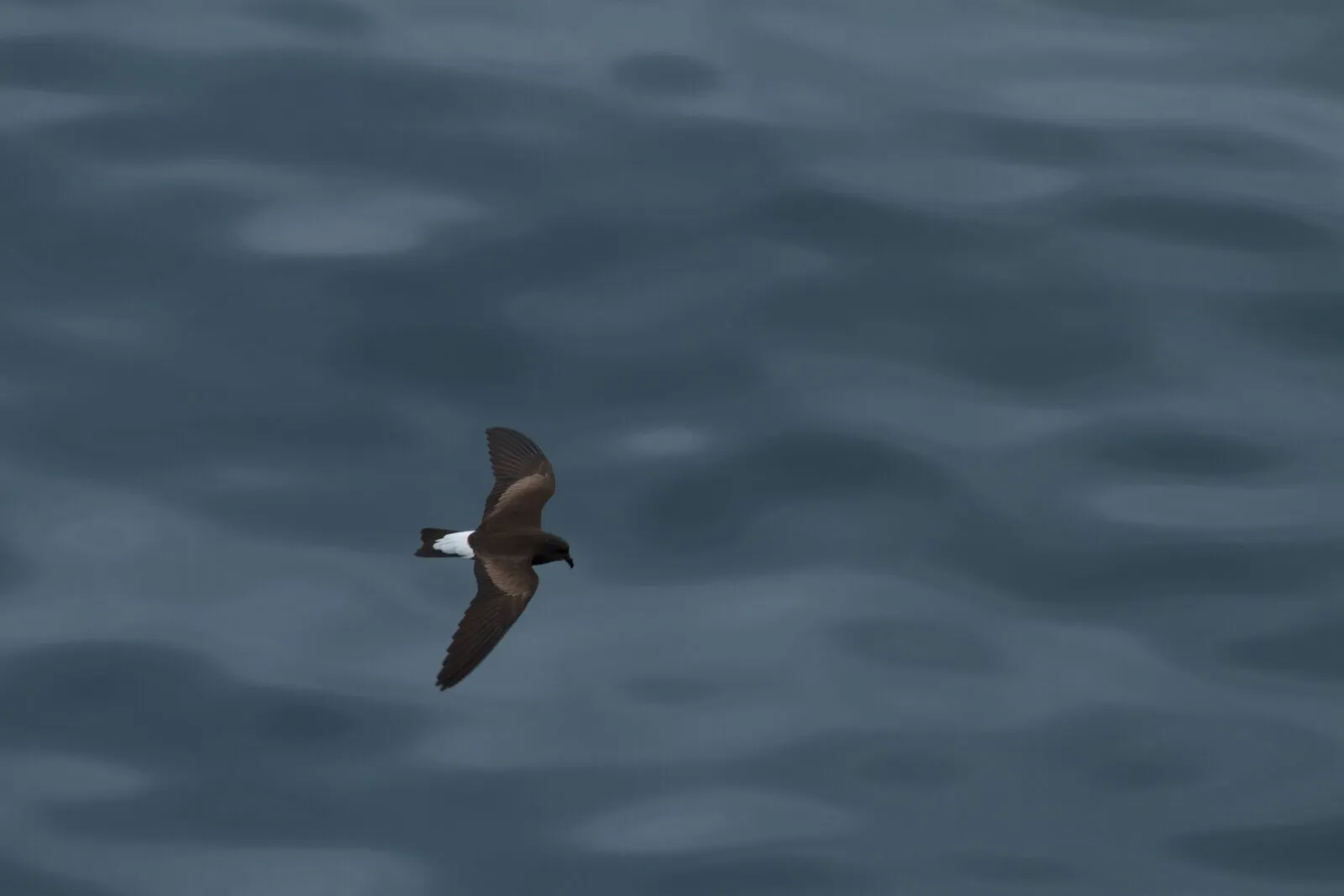

Oceanodroma markhami is a storm-petrel of 21 to 23 cm that lives mainly over tropical waters of the eastern Pacific, between 5° N and 29.9° S.39 In October 2022 a breeding site was found at Pampa Pie de Candela, in Tacna, 11.5 km from the coast at about 160 m elevation, with 15 nests and an estimated 30 pairs.40 Oceanodroma microsoma breeds in Mexico, and in Peru it arrives as a non-breeding boreal migrant regarded as uncommon, with records from November to March.41 Oceanodroma melania, according to an IMARPE study, ranges from Panama to at least 8° S.42 Oceanites gracilis is known from the coastal zones of the Pacific from southern Colombia, through Ecuador and Peru, to central Chile.43
Oceanites oceanicus is a trans-equatorial migrant: the nominate form spends the austral winter in the North Atlantic and North Pacific, while there are no confirmed records of that form from the Humboldt Current, where all specimens are attributed to the Chilean form.44 Pelagodroma marina is a bird of temperate and tropical waters of the Atlantic, Indian and Pacific Oceans.45 Fregetta grallaria breeds in the Pacific and the South Atlantic: the nominate form on Lord Howe and in the Kermadec Islands, with about 2000 pairs, and another population, a few hundred pairs by nest counts, in Juan Fernández and the Desventuradas.46
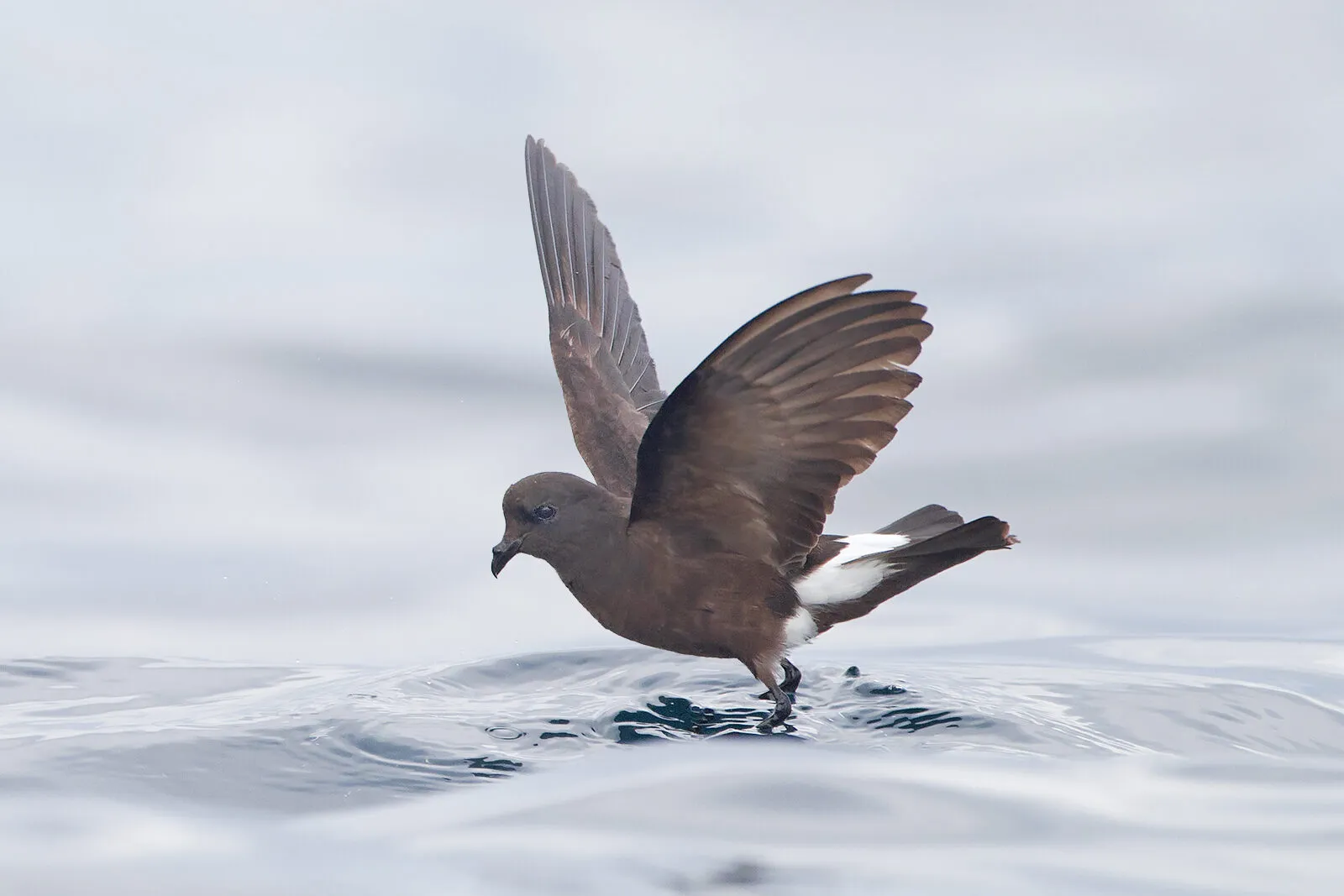

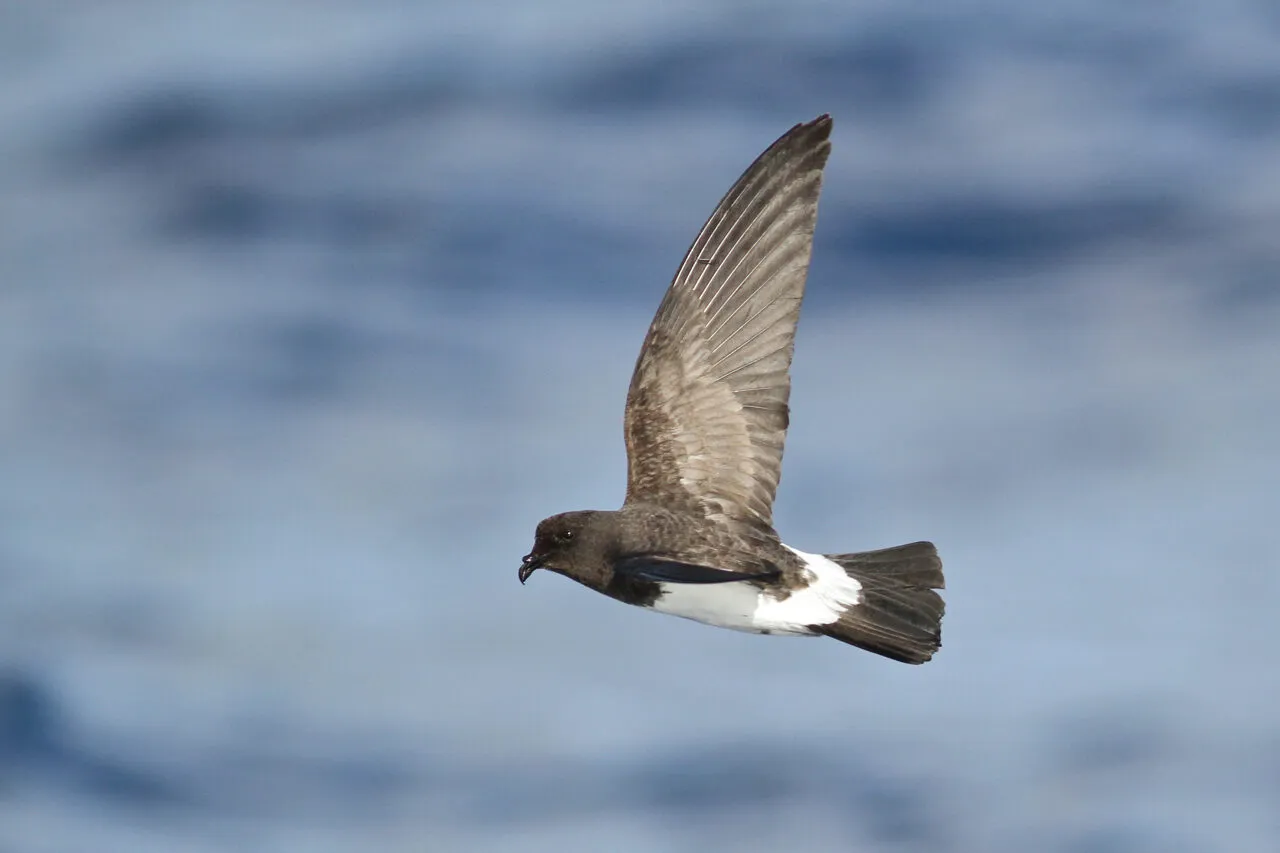

Pelecanoides garnotii is a small, compact seabird: 46 birds weighed on Choros Island, Chile, gave a mean mass of 220 g.47 Underwater it propels itself with its wings, as penguins do, and not with its feet, as cormorants do.48 In the early twentieth century it was documented from Lobos de Tierra Island, at 6° S in Peru, to Chiloé, at 42° S in Chile.49 A 2019 study counted only 7 active breeding sites, and in Peru the islands of San Gallán and La Vieja together hold 12,000 to 13,000 pairs.49
How to tell them apart
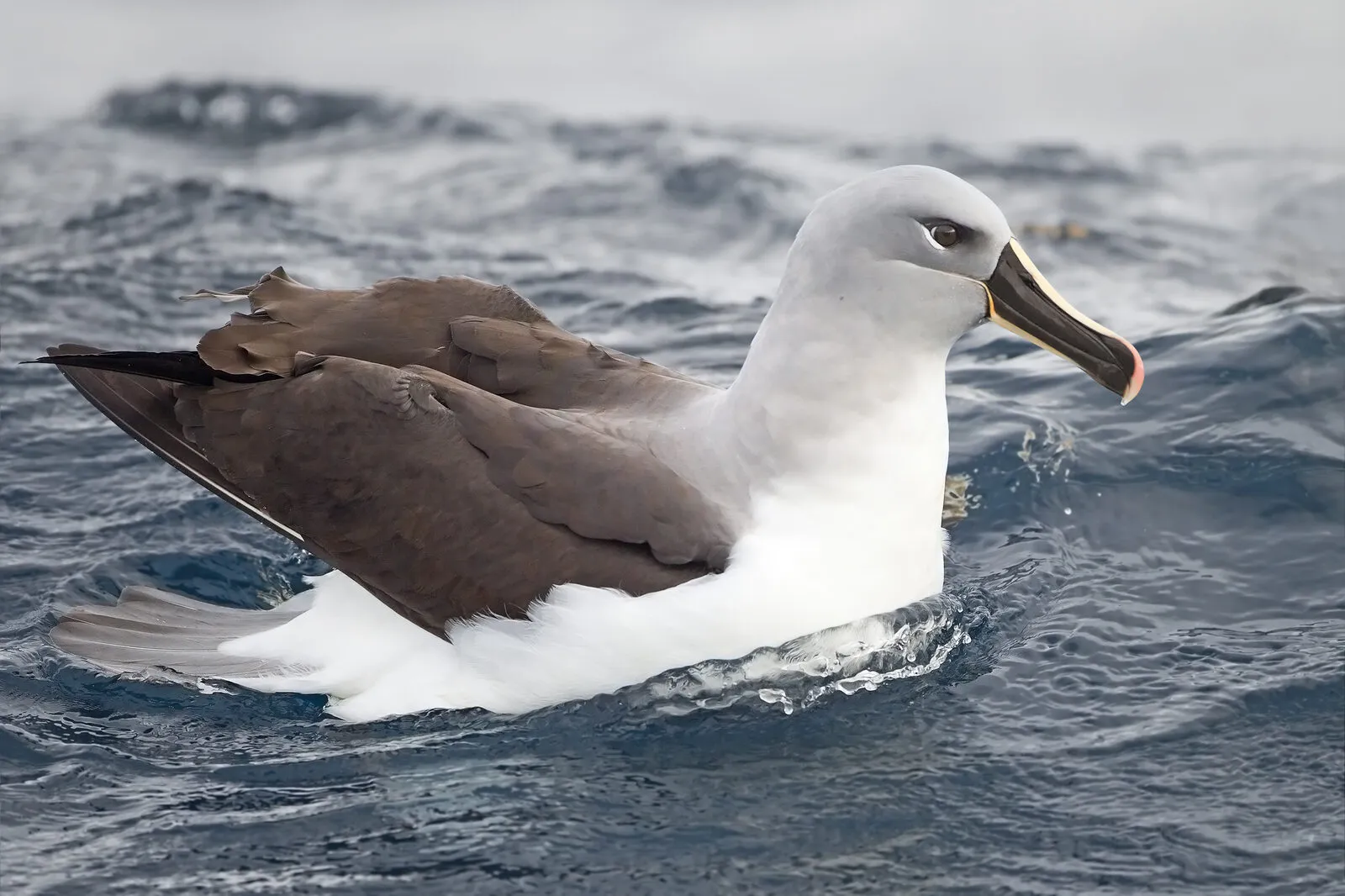
Among the albatrosses, an adult of Thalassarche salvini seen off Argentine Patagonia had a grey head, mantle and back, a pale grey crown and chin, a white rump and underside, black upperwings, and a pale grey bill with a yellow ridge and a blackish tip to the lower mandible.50 In Thalassarche bulleri, the head of the southern form is a pale greyish brown, like that of Thalassarche salvini, while in the northern form the silvery cap covers only the front of the forehead and crown and behind the eye the head is dark grey, close to that of Thalassarche eremita.12 The two forms are so alike in measurements and plumage that telling them apart at sea is hard.12 A bird seen in 1988 off Chiclayo had a straw-coloured bill with a dark tip on both mandibles, a feature that set Thalassarche eremita apart from the other albatrosses of the Thalassarche cauta group.51
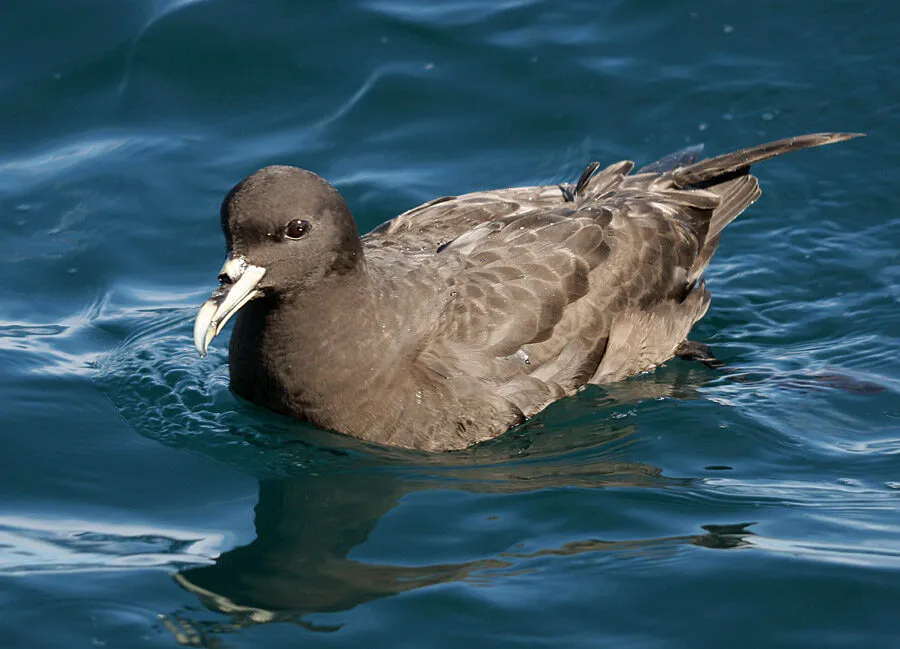
Procellaria aequinoctialis is the largest of the petrels that nest in burrows.52 Its white chin patch is highly variable.53 Compared with it, Procellaria parkinsoni shows a rounder head and wings projecting farther beyond the tail when it sits on the water.54 The plumage of Procellaria parkinsoni is a brownish black all over, and the bill has sharply defined black tips on both mandibles.55 Macronectes halli is separated from its sister species by the horny plate at the bill tip, which is reddish at every age.56 Macronectes giganteus, by contrast, has two plumage phases, one white apart from a few scattered black feathers and one dark.57 Pterodroma externa is about 43 cm long, with a grey-brown cap, a silvery-grey back and a dark M drawn across the back from wingtip to wingtip.25
In Oceanodroma tethys the white covers more than half the length of the tail, and the webbing between the toes is black, not yellow as in Oceanites oceanicus.38 Oceanodroma markhami is dark almost throughout, with a conspicuous diagonal band across the upper side of each wing and a forked tail.58 In the Peruvian diving petrel, Pelecanoides garnotii, the palatine bones of the skull almost meet along the midline, whereas in Pelecanoides urinatrix and Pelecanoides georgicus they stay apart.48
Where and when they are recorded in Peru
In the Peru Current, the mean density of Procellaria aequinoctialis was 30.7 birds per 100 km² in summer and 55.8 in winter.5 Off southern Peru it was the most numerous bird around the small-scale boats that fish for Humboldt squid (Dosidicus gigas), with 181 of the 300 birds recorded, 60.3 %.59 In two surveys off Peru in 2019, the presence of Thalassarche salvini overlapped in space with that of cephalopods and was linked to warmer, saltier water, lower latitudes and lesser depth.60 In autumn 2019, a first-year Thalassarche eremita was photographed 98 km off Punta Caballas.61
On three IMARPE pelagic resource assessment cruises in 2019, Oceanodroma markhami was seen off the whole Peruvian coast, with most sightings beyond the continental shelf.42 In summer it gathered between Chimbote and Pisco, and in autumn between Atico and the Chilean border.42 There were 57 records of Pelecanoides garnotii at sea off Peru between 2005 and 2010, from Sechura to Cañete, in groups of 1 to 10 birds 6.1 to 51 km from shore.62 For Oceanodroma microsoma, the known Peruvian records come only from the far north, between Tumbes and Lambayeque.41
Feeding at sea: discards, dolphins and anchovetas
Around the small-scale Humboldt squid boats in southern Peru, close to 17 % of all birds observed fed on fishery discards.59 Thalassarche salvini did so in 27 % of cases.59 On boats of the jumbo squid and shark longline fisheries, Thalassarche eremita ate discarded viscera in 37 % of cases, the liver above all.61 Beside an artisanal shark longliner, the northern form of Thalassarche bulleri reached the offal after Procellaria aequinoctialis and Thalassarche melanophris, and had to fight the latter for food.15
Procellaria parkinsoni follows dolphins: 469 of the 618 birds recorded in the eastern tropical Pacific, 76 %, were with herds of 10 dolphin species.21 It kept away from the large flocks that feed with tunas and with Stenella attenuata and Stenella longirostris.21 The authors concluded that it dives to retrieve scraps of large prey that those dolphins tear apart below the surface.21
Pelecanoides garnotii is a remarkable diver: in 22 adults the mean maximum depth was 31.6 m and the deepest dive reached 83.1 m.63 In 118 stomach samples from La Vieja Island, the main prey by mass were the anchoveta Engraulis ringens (33.9 %), the krill Euphausia mucronata (26.8 %) and the squat lobster Pleuroncodes monodon (24.3 %).64 The anchovetas it ate averaged 45.9 mm, far below the minimum commercial size of 120 mm.64
Breeding elsewhere
On Española Island, studied in 1970 and 1971, incubation in the waved albatross lasted 60 days on average and raising the chick to its first flight took 167 days.65 The species keeps no stable nest site: adults shift the egg over long stretches, which causes many losses.65
The Bounty Islands, where Thalassarche salvini nests, lie 760 km east of New Zealand and are 22 outcrops of bare granite totalling 135 ha.66 The Pyramid, home of Thalassarche eremita, is an islet of 1.7 ha rising 174 m.13 It lies 870 km east of mainland New Zealand and is almost inaccessible.14 In the Kermadecs, Pterodroma neglecta has nests confirmed on four of the southern islands, with probably fewer than 50 pairs in all.67
Prion wrecks on the Pacific coast of South America appear to be an annual winter event: on 7 July 1968 more than 50,000 prions were estimated in 4 hours of observation at Rinconada, Antofagasta.37 The 8 dead birds examined had no fat and empty or nearly empty stomachs.37
Conservation status and threats
The IUCN Red List classifies Phoebastria irrorata and Pterodroma phaeopygia as Critically Endangered.6869 The Peruvian list approved in 2014 also places them in that category and prohibits hunting, capture, possession, trade, transport and export for commercial purposes.70 The two lists do not always agree on the other species: Thalassarche eremita is Vulnerable for the IUCN and Critically Endangered in Peru.7170 Thalassarche melanophris is Least Concern for the IUCN and Endangered in Peru.7270 Pelecanoides garnotii is Near Threatened for the IUCN and Vulnerable in Peru, and since 2002 it has been listed in Appendix I of the Convention on Migratory Species.7374
The two giant petrels are Least Concern for the IUCN and Near Threatened on the Peruvian list.757670 Procellaria aequinoctialis and Thalassarche salvini are Vulnerable both for the IUCN and on the Peruvian list.777870
Procellaria aequinoctialis is the seabird killed in greatest numbers on longlines in the Southern Ocean.79 Of the 78 birds of Procellaria parkinsoni caught in New Zealand waters between 2002 and 2013, 96.2 % were taken on longlines.80 On South Georgia, the number of breeding pairs of Thalassarche melanophris in the study colonies on Bird Island fell from 607 in 1990 to 202 in 2012, and demersal longline fishing effort was associated with lower adult survival.81
On Española, the 2007 census counted 6045 pairs of Phoebastria irrorata, 88.1 % of the 6857 of 2001.82 According to the authors, the death of adults in Peru's artisanal fishery remains the most convincing explanation for that decline, while plastic looks like a minor threat: only 3 of 43 dead birds examined in 2007 (7.0 %) had any in the proventriculus.82
On San Cristóbal, in 2002 and 2003, only 23.6 % of breeding attempts of Pterodroma phaeopygia ended in success, and rats, which took both eggs and chicks, caused 72.2 % of failures.83 In the colonies of Ardenna creatopus, the regular presence of cats, rats, rabbits and cattle is a serious threat, and neither Mocha nor Robinson Crusoe has a biosecurity system.28 The Raoul Island population of Pterodroma neglecta was essentially extinct by 1966 owing to predation by introduced cats and rats.84 In Pelecanoides garnotii, guano extraction removed the substrate in which it dug its nests, and guano workers and fishers took birds and eggs.8562
On land, artificial light is the best-documented threat in Peru for Oceanodroma hornbyi: SERFOR explains that intense lighting disrupts the birds' navigation and can cause disorientation, momentary blindness and collisions with buildings, poles and vehicles.86 The breeding areas of Oceanodroma markhami in the desert sector of Cerro Lechuza, in the Paracas National Reserve, lie within a strict protection zone of the 2025-2030 Master Plan.87 For Puffinus griseus, adult birds found dead on beaches of northern New Zealand between 1961 and 1999 declined by 64.4 % and fledglings by 77.7 %.88
For Pterodroma phaeopygia the figures do not agree either: there were optimistic estimates of up to 100,000 pairs in the Galápagos, and in 1991 the authors noted that recent research pointed to about 7500 breeding pairs as the more likely figure.89
What is still unknown
The lack of information on Peru's storm-petrels places several species of the group in threat categories on international and national lists.42 Oceanites gracilis is Data Deficient on the IUCN list.90 The IMARPE study includes it among the species with proven breeding sites in Peru and refers to a 2008 paper, but that paper describes a colony of a different species, Oceanodroma tethys kelsalli, on Santa Island.4291
For Oceanodroma tethys kelsalli 800 pairs were known, against offshore estimates of 1,258,700 and 1,451,800 birds of the subspecies, so the authors call for more surveys of nesting areas.91 In 2008 they also noted that the Peruvian state did not protect it for lack of information.91 Access to the Desventuradas Islands, where Pterodroma defilippiana breeds, is fully restricted because of a Chilean Navy base, and no systematic study of their birds has been made since the 1960s.92
For Oceanodroma microsoma, the author calls for regular monitoring of seabirds in coastal waters to understand the movements of these little-known birds.41 And for the prion wrecks, the cause is still unknown in Chile and Peru.37
The species in this article
- Phoebastria irrorata
- Pterodroma phaeopygia
- Procellaria aequinoctialis
- Thalassarche salvini
- Procellaria parkinsoni
- Pelecanoides garnotii
- Thalassarche eremita
- Thalassarche bulleri
- Oceanodroma markhami
- Thalassarche melanophris
- Macronectes giganteus
- Macronectes halli
- Pterodroma defilippiana
- Pterodroma cookii
- Pterodroma externa
- Oceanodroma tethys
- Ardenna creatopus
- Oceanites gracilis
- Thalassarche chrysostoma
- Puffinus griseus
- Oceanodroma hornbyi
- Oceanites oceanicus
- Pelagodroma marina
- Pterodroma neglecta
- Daption capense
- Oceanodroma microsoma
- Pachyptila belcheri
- Puffinus bulleri
- Oceanodroma melania
- Fregetta grallaria
- Fulmarus glacialoides
Sources (92)
- WoRMS Editorial Board (2026). Phoebastria irrorata (Salvin, 1883). World Register of Marine Species. marinespecies.org
- WoRMS Editorial Board (2026). Pterodroma phaeopygia (Salvin, 1876). World Register of Marine Species. marinespecies.org
- Ayala, L.; Mendoza, C.; Perez, J. (2004). Two New Breeding Localities for Wedge-rumped Storm-petrel Oceanodroma Tethys Kelsalli in Peru. Marine Ornithology, 107-108. doi.org
- Thiers, L. et al. (2014). Foraging zones of the two sibling species of giant petrels in the Indian Ocean throughout the annual cycle: implication for their conservation. Marine Ecology Progress Series, 233-248. doi.org
- Spear, L.B.; Ainley, D.G. (2008). The Seabird Community of the Peru Current, 1980-1995, with Comparisons to Other Eastern Boundary Currents. Marine Ornithology, 125-144. doi.org
- Astete, M.; Gingins, R. (2020). Hallazgo del Paíño De Collar (Oceanodroma hornbyi) en el noroeste patagónico: una nueva especie para la avifauna argentina. Nuestras Aves, 92-93. doi.org
- Awkerman, J.A. et al. (2014). Small range and distinct distribution in a satellite breeding colony of the critically endangered Waved Albatross. Journal of Ornithology, 367-378. doi.org
- Dellacasa, R.F.; Chavez, L.N.; Tamini, L.L. (2022). Salvin's Albatross Thalassarche salvini Interacting with Freezer Trawlers in Waters of the Patagonian Shelf. Marine Ornithology, 99-102. doi.org
- Spear, L.B.; Ainley, D.G.; Webb, S.W. (2003). Distribution, abundance and behaviour of Buller’s, Chatham Island and Salvin's Albatrosses off Chile and Peru. Ibis, 253-269. doi.org
- Schweizer, M. et al. (2024). Genetic data confirm that Diomedea platei Reichenow, 1898, is the correct name for the population of Buller’s albatross Thalassarche bulleri breeding at the Chatham Islands, New Zealand. Notornis, 165-175. doi.org
- Frost, P.G.H. et al. (2018). Buller’s mollymawk (Thalassarche bulleri) on Rosemary Rock, Three Kings Islands, New Zealand. Notornis, 164-167. doi.org
- Quiñones, J.; Zavalaga, C.; Robertson, C.J.R. (2023). Identifying northern Buller´s albatross (Thalassarche bulleri subsp.) in offshore waters of southern Perú. Notornis, 49-59. doi.org
- Deppe, L. et al. (2014). Distribution and predictability of foraging areas in breeding Chatham albatrosses Thalassarche eremita in relation to environmental characteristics. Marine Ecology Progress Series, 287-301. doi.org
- Nicholls, D.G.; Robertson, C.J.R. (2007). Assessing flight characteristics for the Chatham albatross (Thalassarche eremita) from satellite tracking. Notornis, 168-179. doi.org
- Servicio Nacional de Áreas Naturales Protegidas por el Estado (SERNANP) (2024). Plan Maestro de la Reserva Nacional Dorsal de Nasca 2024-2029. SERNANP; aprobado por RP N.° 000040-2024-SERNANP. cdn.www.gob.pe
- Moreno, C.A.; Robertson, G. (2008). ¿Cuántos albatros de ceja negra, Thalassarche melanophrys (Temminck, 1828) anidan en Chile?. Anales del Instituto de la Patagonia, 89-92. doi.org
- Servicio Nacional Forestal y de Fauna Silvestre (SERFOR) (2018). Libro Rojo de la Fauna Silvestre Amenazada del Perú. SERFOR, Ministerio de Agricultura y Riego; documento en SINIA, Ministerio del Ambiente, 237. sinia.minam.gob.pe
- Kolesnikovas, C.K.M. et al. (2021). Unusual Mass Stranding Event of White-chinned Petrels Procellaria aequinoctialis in Santa Catarina State, Southern Brazil. Marine Ornithology, 183-187. doi.org
- Phillips, R.A. et al. (2006). Year-round distribution of white-chinned petrels from South Georgia: Relationships with oceanography and fisheries. Biological Conservation, 336-347. doi.org
- Imber, M.J. (1987). Breeding ecology and conservation of the black petrel (Procellaria parkinsoni). Notornis, 19-39. doi.org
- Pitman, R.L.; Ballance, L.T. (1992). Parkinson's Petrel Distribution and Foraging Ecology in the Eastern Pacific: Aspects of an Exclusive Feeding Relationship with Dolphins. The Condor, 825-835. doi.org
- Proaño, C.B. et al. (2026). Satellite tracking of Galapagos Petrel Pterodroma phaeopygia reveals distribution and movements during chick rearing. Marine Ornithology, 63-74. doi.org
- Rayner, M.J. et al. (2011). Contemporary and historical separation of transequatorial migration between genetically distinct seabird populations. Nature Communications, 2:332. doi.org
- Rayner, M.J. et al. (2008). Foraging ecology of the Cook's petrel Pterodroma cookii during the austral breeding season: a comparison of its two populations. Marine Ecology Progress Series, 271-284. doi.org
- Barbosa, C.B. et al. (2024). First record of Juan Fernández Petrel Pterodroma externa (Salvin, 1875) in Brazil. Papéis Avulsos de Zoologia, e202464037. doi.org
- Brooke, M. de L.; Clay, T.A. (2026). Dispersive migration of breeding Juan Fernández Petrels Pterodroma externa across the eastern Pacific Ocean and overlap with tropical tuna fisheries. Emu - Austral Ornithology, 133-146. doi.org
- Marín, M.; González, R.; Trucco, S. (2020). Population Status of the Kermadec Petrel (Pterodroma neglecta juana) at San Ambrosio Island, Chile. Marine Ornithology, 209-214. doi.org
- Carle, R.D. et al. (2021). Introduced and native vertebrates in pink-footed shearwater (Ardenna creatopus) breeding colonies in Chile. PLOS One, e0254416. doi.org
- Figueroa, J.; Suazo, E. (2012). Distribución de las aves marinas frente a la costa norte-centro del Perú en el invierno de 2010 y su interacción potencial con la pesquería. The Biologist (Lima), 41-71. doi.org
- Harper, P.C. (1983). Biology of the Buller’s shearwater (Puffinus bulleri) at the Poor Knights Islands, New Zealand. Notornis, 299-318. doi.org
- Marin, M. (2018). Breeding of Southern Giant Petrel Macronectes Giganteus in Southern Chile. Marine Ornithology, 57-60. doi.org
- Quiñones, J.; Romero, C.; Zavalaga, C. (2021). Vessel survey observations confirm wintering dispersion of northern giant-petrel (Macronectes halli) juveniles in southern-central Perú; what is their origin?. Notornis, 76-85. doi.org
- Ayala, L. (2007). Records of juvenile northern giant petrels (Macronectes halli) in Peruvian seas. Notornis, 234-236. doi.org
- Sagar, P.M. (1979). Breeding of the Cape pigeon (Daption capense) at the Snares Islands. Notornis 26(1), 23-36. doi.org
- Jackson, M.; Clarkin, E.; Ryan, C. (2025). The Biodiversity of Peter I Island—The Most Remote Island in the World. Ecology and Evolution 15, e71634. doi.org
- Quillfeldt, P. et al. (2017). Does genetic structure reflect differences in non-breeding movements? A case study in small, highly mobile seabirds. BMC Evolutionary Biology 17. doi.org
- Post, P.W. (2007). Observations of prion (Pachyptila) wrecks on the west coast of South America. Notornis 54(4), 220-225. doi.org
- Kammerichs-Berke, D. (2018). Northernmost record of the Wedge-rumped Storm-Petrel (Oceanodroma tethys). Western Birds, 74-76. doi.org
- Norambuena, H.V. et al. (2021). Living on the edge: genetic structure and geographic distribution in the threatened Markham’s Storm-Petrel (Hydrobates markhami). PeerJ, e12669. doi.org
- Gallardo, B. et al. (2023). Descubrimiento del primer sitio de reproducción de Golondrina de Mar Negra (Hydrobates markhami) en el extremo sur del Perú. El Hornero, 63-69. doi.org
- Ugarte, M. (2025). Status of the Least Storm Petrel Hydrobates microsoma in Peru. Marine Ornithology, 379-382. doi.org
- Romero, C. (2021). Distribución espacio-temporal de la golondrina de mar de Markham Oceanodroma markhami (Salvin, 1883) y la golondrina de mar acollarada O. hornbyi (Gray, 1854) en Perú. 2019. Boletín Instituto del Mar del Perú, 68-84. doi.org
- Pearman, M. (2000). Primeros registros del Paiño de Elliot (Oceanites gracilis) en la Argentina. El Hornero, 141-143. doi.org
- Howell, S.N.G. (2024). Wing-molt phenology in Wilson's, Fuegian, and Pincoya Storm Petrels, the Southern-breeding Oceanites oceanicus complex. Marine Ornithology, 229-233. doi.org
- Rayner, M.J. et al. (2017). The breeding biology of northern white-faced storm petrels (Pelagodroma marina maoriana) and results of an in-situ chick translocation. Notornis, 76-86. doi.org
- Flood, R.L. et al. (2021). Pelagic birds around Rapa and Marotiri, French Polynesia, October–December 2019, with notes on Rapa Shearwater Puffinus myrtae and Titan Storm Petrel Fregetta [grallaria] titan. Bulletin of the British Ornithologists' Club, 387-411. doi.org
- Fernández, C.E. et al. (2023). At-sea distribution patterns of the Peruvian diving petrel Pelecanoides garnotii during breeding and non-breeding seasons. Scientific Reports, 14463. doi.org
- Stucchi, M.; Mattos, J. (2011). CARACTERES OSTEOLÓGICOS CLAVE DEL POTOYUNCO PERUANO PELECANOIDES GARNOTII (PROCELLARIIFORMES, PELECANOIDIDAE). The Biologist (Lima), 53-65. doi.org
- Cristofari, R. et al. (2019). Unexpected population fragmentation in an endangered seabird: the case of the Peruvian diving-petrel. Scientific Reports, 2021. doi.org
- Seco Pon, J.P.; Weinecke, B.; Robertson, G. (2007). First record of Salvin’s albatross (Thalassarche salvini) on the Patagonian Shelf. Notornis, 49-51. doi.org
- Haase, B. (1994). A Chatham Island mollymawk off the Peruvian coast. Notornis, 50. doi.org
- Hall, A.J. (1987). The breeding biology of the white-chinned petrel Procellaria aequinoctialis at South Georgia. Journal of Zoology, 605-617. doi.org
- Miskelly, C.M. (2009). A very white-chinned petrel (Procellaria aequinoctialis) off Kaikoura. Notornis, 46-48. doi.org
- Cabezas, L.A. et al. (2012). The black petrel (Procellaria parkinsoni) in pelagic waters off northern Chile: a southern extension to the known distribution and interactions with the pelagic longline fishery. New Zealand Journal of Marine and Freshwater Research, 537-544. doi.org
- Spear, L.B.; Ainley, D.G.; Webb, S.W. (2005). Distribution, abundance, habitat use and behaviour of three Procellaria petrels off South America. Notornis, 88-105. doi.org
- Zavalaga, C.B. et al. (2009). Immature Northern Giant Petrels Macronectes Halli Visiting the Coast of Peru. Marine Ornithology, 237-240. doi.org
- Shaughnessy, P.D. (1970). The genetics of plumage phase dimorphism of the southern giant petrel Macronectes giganteus. Heredity, 501-506. doi.org
- Montenegro-Avila, M. et al. (2024). Record of Markham's Storm Petrel Hydrobates markhami in La Paz, Bolivia. Bulletin of the British Ornithologists’ Club, 39-41. doi.org
- Moreno, C.; Quiñones, J. (2022). Albatross and Petrel Interactions with an Artisanal Squid Fishery in Southern Peru during El Niño, 2015-2017. Marine Ornithology, 49-56. doi.org
- Quiñones, J. et al. (2021). Fine-Scale Distribution, Abundance, and Foraging Behavior of Salvin's, Buller's, and Chatham Albatrosses in the Northern Humboldt Upwelling System. Pacific Science, 85-105. doi.org
- Quiñones, J. et al. (2022). At-sea surveys reveal new insights of fine-scale distribution and foraging behaviour of Chatham albatrosses (Thalassarche eremita) in central southern Peru. Notornis, 72-78. doi.org
- Figueroa, J.; Suazo, E.; Santillán, L. (2011). REGISTROS ACTUALES E HISTÓRICOS DEL POTOYUNCO PERUANO PELECANOIDES GARNOTII (LESSON, 1828) (PROCELLARIIFORMES, PELECANOIDIDAE) EN EL PERÚ. The Biologist (Lima), 19-37. doi.org
- Zavalaga, C.B.; Jahncke, J. (1997). Maximum Dive Depths of the Peruvian Diving-Petrel. The Condor, 1002-1004. doi.org
- García-Godos, I.; Goya, E. (2006). Diet of Peruvian Diving Petrels Pelecanoides Garnotii on La Vieja Island, Central Peru, Between 1997 and 2000, Potential Fishery Interactions and Conservation Implications. Marine Ornithology, 33-41. doi.org
- Harris, M.P. (1973). THE BIOLOGY OF THE WAVED ALBATROSS DIOMEDEA IRRORATA OF HOOD ISLAND, GALAPAGOS. Ibis, 483-510. doi.org
- Sagar, P.M. et al. (2015). Population trends, timing of breeding and survival of Salvin’s albatrosses (Thalassarche salvini) at Proclamation Island, Bounty Islands, New Zealand. Notornis, 21-29. doi.org
- Tennyson, A.J.D.; Scofield, R.P.; Bell, B.D. (2003). Confirmation of Kermadec petrels breeding on the southern Kermadec Islands. Notornis, 236-237. doi.org
- BirdLife International (2018). Phoebastria irrorata: BirdLife International. The IUCN Red List of Threatened Species 2018: e.T22698320A132641638. doi.org
- BirdLife International (2018). Pterodroma phaeopygia: BirdLife International. The IUCN Red List of Threatened Species 2018: e.T22698020A132619647. doi.org
- Ministerio de Agricultura y Riego (2014). Decreto Supremo N.° 004-2014-MINAGRI: actualización de la lista de clasificación y categorización de las especies amenazadas de fauna silvestre legalmente protegidas. El Peruano (08-04-2014); ficha en SINIA, Ministerio del Ambiente. sinia.minam.gob.pe
- BirdLife International (2018). Thalassarche eremita: BirdLife International. The IUCN Red List of Threatened Species 2018: e.T22698393A132644476. doi.org
- BirdLife International (2018). Thalassarche melanophris: BirdLife International. The IUCN Red List of Threatened Species 2018: e.T22698375A132643647. doi.org
- BirdLife International (2020). Pelecanoides garnotii: BirdLife International. The IUCN Red List of Threatened Species 2020: e.T22698280A179971538. doi.org
- Convention on the Conservation of Migratory Species of Wild Animals (2026). Peruvian Diving Petrel Pelecanoides garnotii. CMS species page. cms.int
- BirdLife International (2018). Macronectes giganteus: BirdLife International. The IUCN Red List of Threatened Species 2018: e.T22697852A132608499. doi.org
- BirdLife International (2018). Macronectes halli: BirdLife International. The IUCN Red List of Threatened Species 2018: e.T22697859A132609000. doi.org
- BirdLife International (2018). Procellaria aequinoctialis: BirdLife International. The IUCN Red List of Threatened Species 2018: e.T22698140A132628887. doi.org
- BirdLife International (2018). Thalassarche salvini: BirdLife International. The IUCN Red List of Threatened Species 2018: e.T22698388A132644161. doi.org
- Barbraud, C. et al. (2008). Demographic response of a population of white-chinned petrels Procellaria aequinoctialis to climate and longline fishery bycatch. Journal of Applied Ecology, 1460-1467. doi.org
- Bell, E.A. (2016). Diving behaviour of black petrels (Procellaria parkinsoni) in New Zealand waters and its relevance to fisheries interaction. Notornis, 57-65. doi.org
- Pardo, D. et al. (2017). Additive effects of climate and fisheries drive ongoing declines in multiple albatross species. Proceedings of the National Academy of Sciences, E10829-E10837. doi.org
- Anderson, D.J. et al. (2008). Population status of the Critically Endangered waved albatross Phoebastria irrorata, 1999 to 2007. Endangered Species Research, 185-192. doi.org
- Cruz-Delgado, F.; González, J.A.; Wiedenfeld, D.A. (2010). Breeding biology of the Critically Endangered Galapagos Petrel Pterodroma phaeopygia on San Cristóbal Island: conservation and management implications. Bird Conservation International, 306-319. doi.org
- Veitch, C.R.; Harper, G. (1998). Breeding season of Kermadec petrels (Pterodroma neglecta neglecta) at Meyer Islands, Kermadec Group, New Zealand. Notornis, 67-69. doi.org
- Figueroa, J.; Stucchi, M. (2008). Peruvian Diving-petrels Pelecanoides Garnotii on Lobos De Afuera Islands, Peru. Marine Ornithology, 189-190. doi.org
- SERFOR (2025). SERFOR rescata a golondrina de mar encontrada en urbanización de Tacna. Nota de prensa, Servicio Nacional Forestal y de Fauna Silvestre (3 de abril de 2025). gob.pe
- Servicio Nacional de Áreas Naturales Protegidas por el Estado (2025). Plan Maestro de la Reserva Nacional de Paracas 2025-2030. Anexo de la Resolución de Presidencia Ejecutiva N.° 000173-2025-SERNANP/PE, 52-53. cdn.www.gob.pe
- Scofield, R.P.; Christie, D. (2002). Beach patrol records indicate a substantial decline in sooty shearwater (Puffinus griseus) numbers. Notornis, 158-165. doi.org
- Tomkins, R.J.; Milne, B.J. (1991). Differences among dark-rumped petrel (Pterodroma phaeopygia) populations within the Galapagos archipelago. Notornis, 1-35. doi.org
- BirdLife International (2018). Oceanites gracilis: BirdLife International. The IUCN Red List of Threatened Species 2018: e.T22698442A132647135. doi.org
- Ayala, L. et al. (2008). Una colonia reproductiva de la Golondrina de la Tempestad Peruana, Oceanodroma tethys kelsalli (Lowe 1925), en la Isla Santa, Perú. Revista Peruana de Biología, 117-120. doi.org
- Flores, M.A.; Schlatter, R.P.; Hucke-Gaete, R. (2014). Seabirds of Easter Island, Salas y Gomez Island and Desventuradas Islands, southeastern Pacific Ocean. Latin American Journal of Aquatic Research, 752-759. doi.org