
Blog · wildlife of Peru
Seabirds of Peru: seventy-seven species between wind and guano
Peru's coast receives birds that breed in the Galápagos, in New Zealand, in the Arctic or in the Atacama Desert, and it shelters others found nowhere else. The guide has accounts of 77 seabird species.
Published

A group that is a place, not a lineage
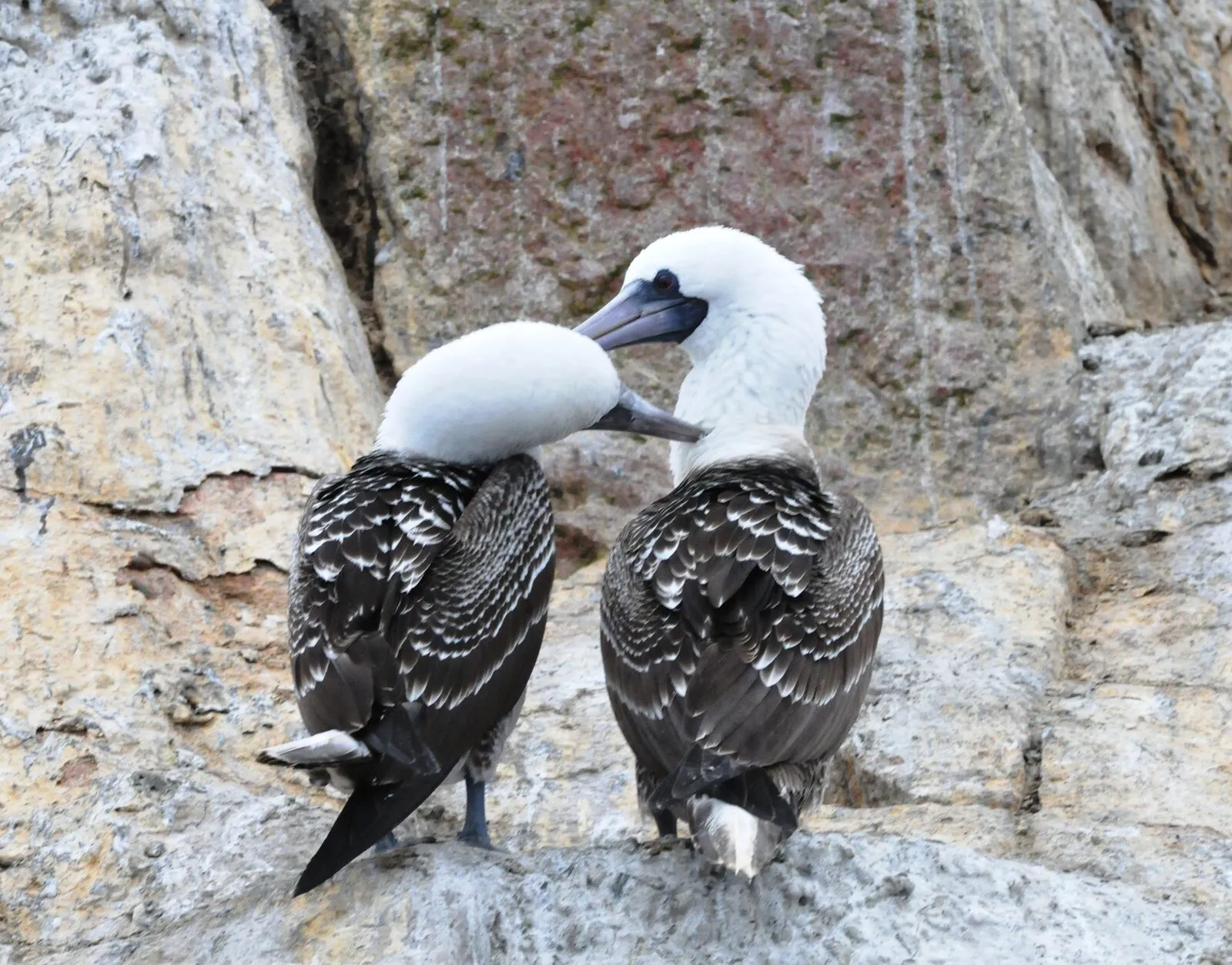
Skuas belong to the family Stercorariidae, within the order Charadriiformes.1 Phalaropus fulicarius, although classified as a shorebird, behaves at sea like a seabird that feeds on zooplankton at the surface.2 Phoebastria irrorata is an albatross of the family Diomedeidae, described by Salvin in 1883.3 At the other end of the size range, seven adults of Oceanodroma tethys measured on Chao and Corcovado islands weighed 23 g on average.4
Oceanodroma hornbyi is restricted to the cold waters of the Humboldt Current, from northern Ecuador to central Chile.5 The Peruvian booby is endemic to the Humboldt Current upwelling and nests on islands and headlands from northern Peru to south-central Chile.6 The guanay is endemic to the Humboldt Current and is one of the three cormorants that breed on the Peruvian coast.7 Larus belcheri has a range restricted to the Humboldt Current region, from the far south of Ecuador to northern Chile.8 Sternula lorata is a bird of the Humboldt Current that, unlike other seabirds, breeds in the coastal desert.9
Residents, northern travellers and southern visitors
Larosterna inca is resident: it makes no regular migrations, though it may move to follow food, especially during El Niño episodes.10 Larus belcheri lives all year on the coast of Peru.11 Charadrius vociferus is a resident and is common along the Peruvian coast.12
Of the Sterna hirundo from North American lake colonies followed with geolocators, 70 % of those whose wintering site could be identified spent the boreal winter in Peru.13 In the Western Hemisphere, the main wintering area of Phalaropus lobatus is the Humboldt Current off Ecuador, Peru and northern Chile.14 From the Canadian Arctic, the large majority of Xema sabini tracks ended off the coast of Peru.15 Leucophaeus pipixcan breeds in interior North American marshes and spends the boreal winter on the Pacific coast of South America.16 It reaches the coasts of Peru in October and November.17
In the Peru Current, within a band up to 370 km from the coast between 3° S and 50° S, 2299 individuals of Procellaria aequinoctialis were counted on 14 cruises made from 1980 to 1995.18 In winter it is joined by Thalassarche melanophris, Thalassarche salvini, Fulmarus glacialoides and Daption capense, which eat mostly carrion or prey caught at the surface.18 Others come from the south: Stercorarius chilensis, which breeds in southern Chile and Argentina, disperses northward outside the breeding season and in Peru is regarded as a rare visitor to the coast.1920
As a breeding bird, Thalassarche bulleri is confined to the New Zealand region.21 Ardenna creatopus breeds on only 3 islands of central Chile: at least 70 % of the population nests on Mocha, up to 20 % on Robinson Crusoe and up to 10 % on Santa Clara, and the world population is put at about 60,000 birds.22
Oceanodroma markhami is a storm-petrel of 21 to 23 cm that lives mainly over tropical waters of the eastern Pacific, between 5° N and 29.9° S.23 In October 2022 a breeding site was found at Pampa Pie de Candela, in Tacna, 11.5 km from the coast at about 160 m elevation, with 15 nests and an estimated 30 pairs.24
Albatrosses, petrels and storm-petrels
Nearly all of Phoebastria irrorata breeds on Española Island in the Galápagos, and a few pairs breed on Isla de la Plata, near the mainland; while incubating and raising larger chicks, adults travel to feed in the coastal upwelling off Peru.25 In 2008, all long trips by birds tracked from Española and La Plata ended on the Peruvian coast, and the southernmost latitude reached had a median of 7.18° S in birds from Punta Cevallos.25
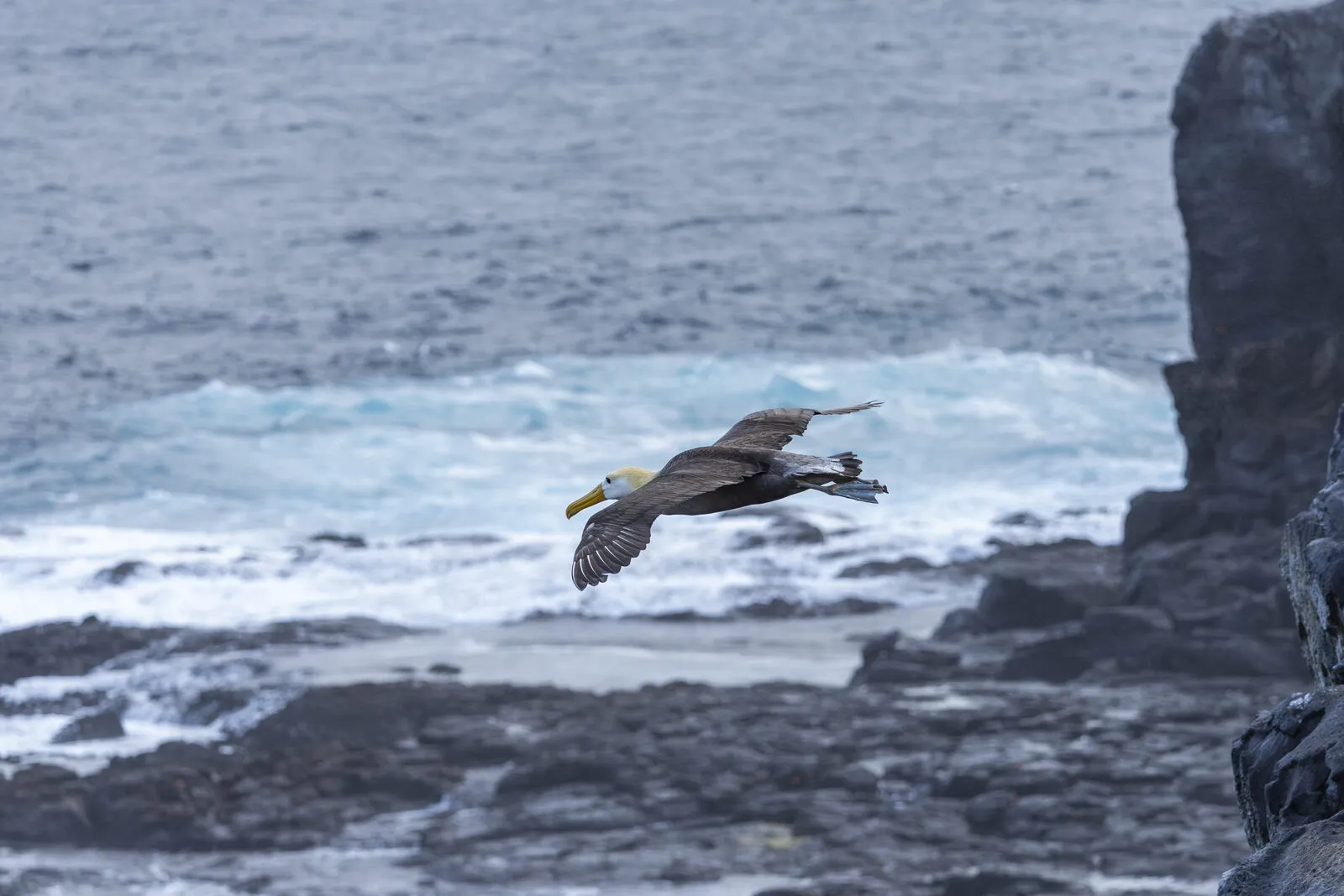

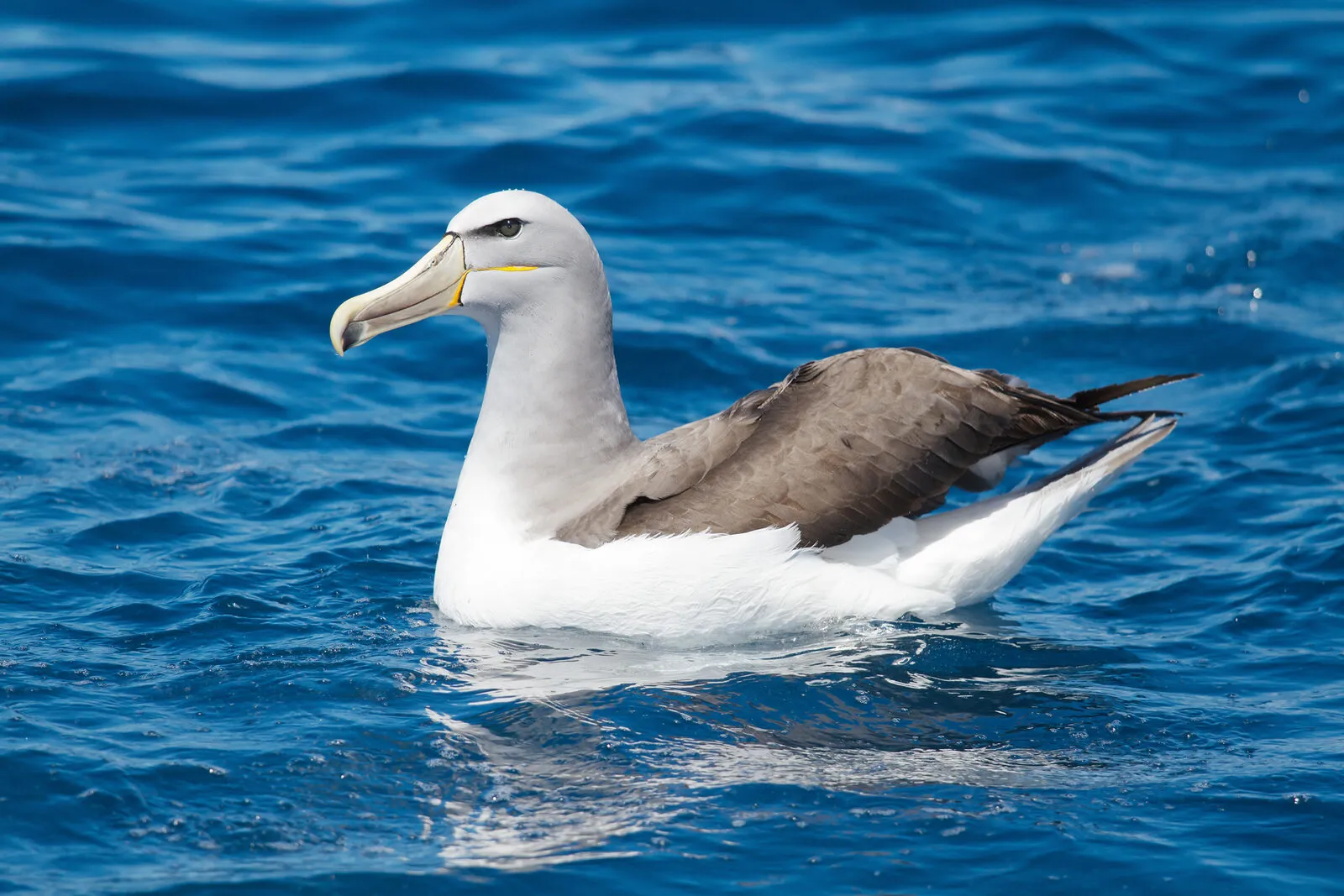
Thalassarche salvini breeds almost exclusively in New Zealand: for 2013 the population was put at 39995 pairs, 99 % of them in the Bounty Islands.26 Outside the breeding season many cross the Pacific: on 15 cruises made off Chile and Peru between 1980 and 1995, 475 individuals were logged, spread along the current system and favouring waters over the continental slope.27

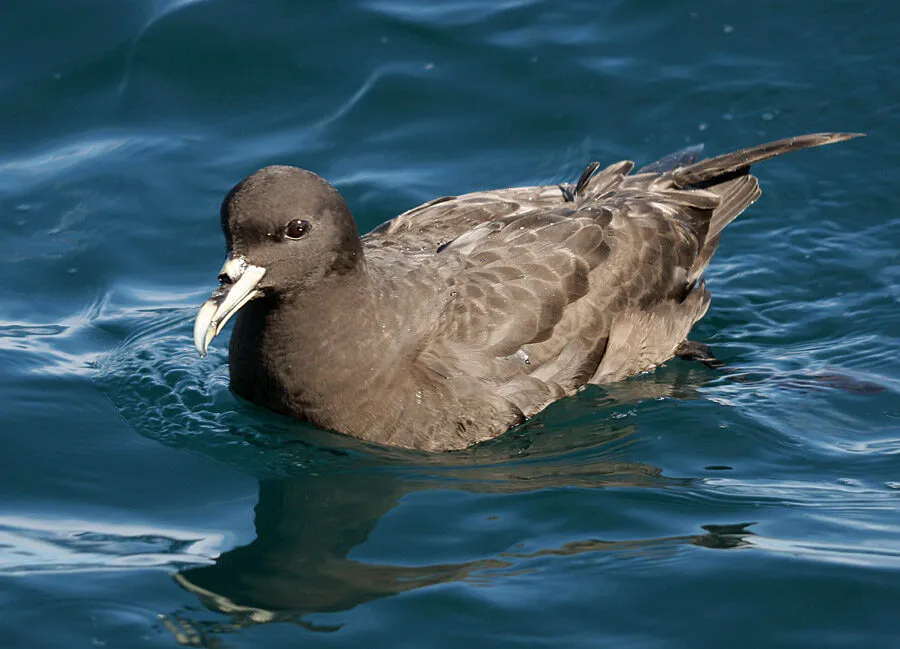
Procellaria aequinoctialis breeds on sub-Antarctic islands of France, New Zealand and South Africa, as well as South Georgia and the Falkland Islands (Malvinas).28 Two birds from South Georgia, followed with geolocators, spent midwinter in the Humboldt Current off Chile and went straight back to the colony from there.29 In the Peru Current, the mean density of Procellaria aequinoctialis was 30.7 birds per 100 km² in summer and 55.8 in winter.18

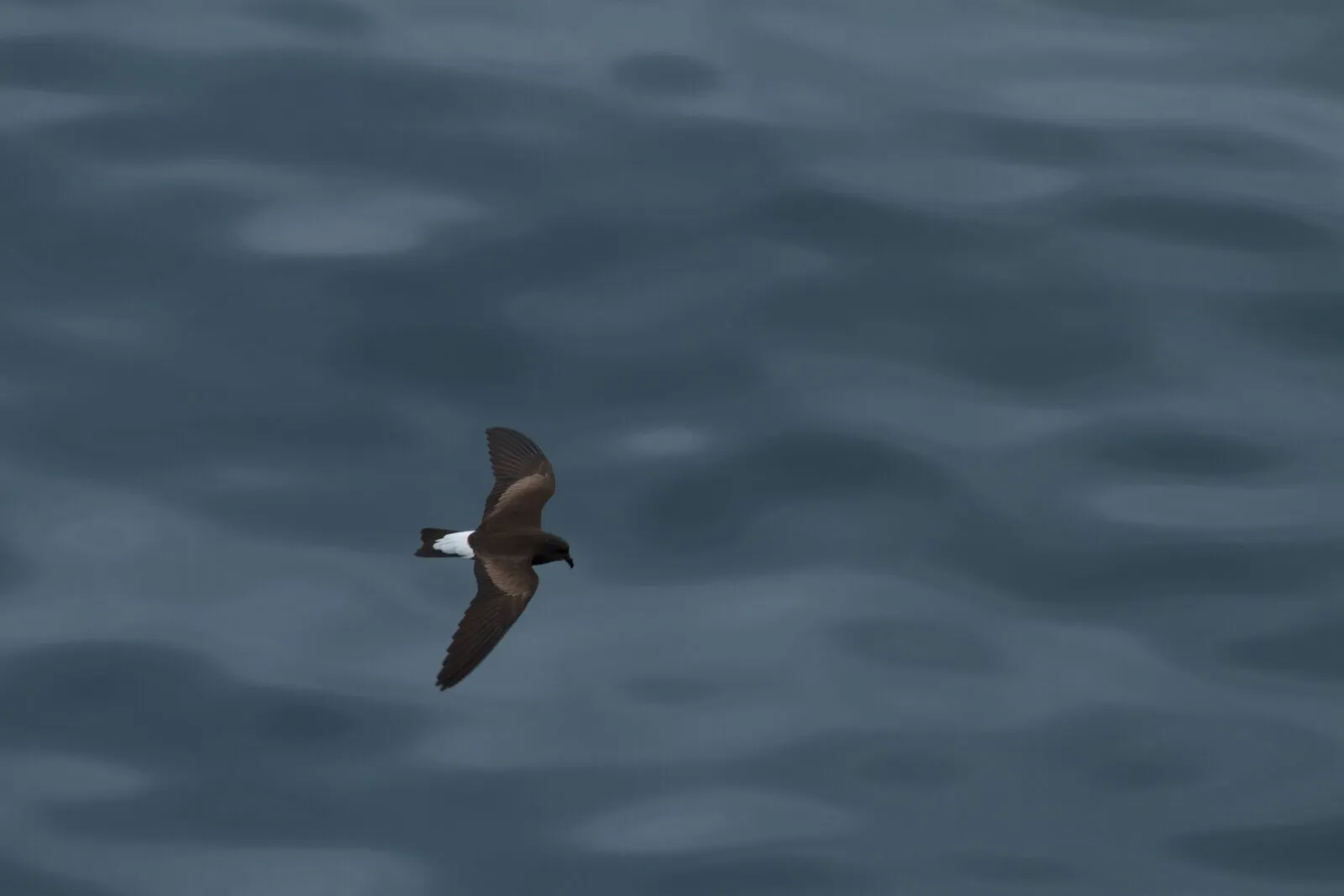
Oceanodroma tethys is a species of the tropical eastern Pacific, recorded at sea from Baja California Sur down to northern Chile.30 The nominate subspecies breeds in the Galápagos and ranges north over oceanic waters; kelsalli breeds in Peru and moves from Mexico to Chile over the continental shelf.30 Two new breeding localities were described on Chao and Corcovado islands, where there are no large colonies of guano birds and no guano has been taken for more than 20 years.4

Pelecanoides garnotii is a small, compact seabird: 46 birds weighed on Choros Island, Chile, gave a mean mass of 220 g.31 Underwater it propels itself with its wings, as penguins do, and not with its feet, as cormorants do.32
Gulls, terns, skuas and shorebirds
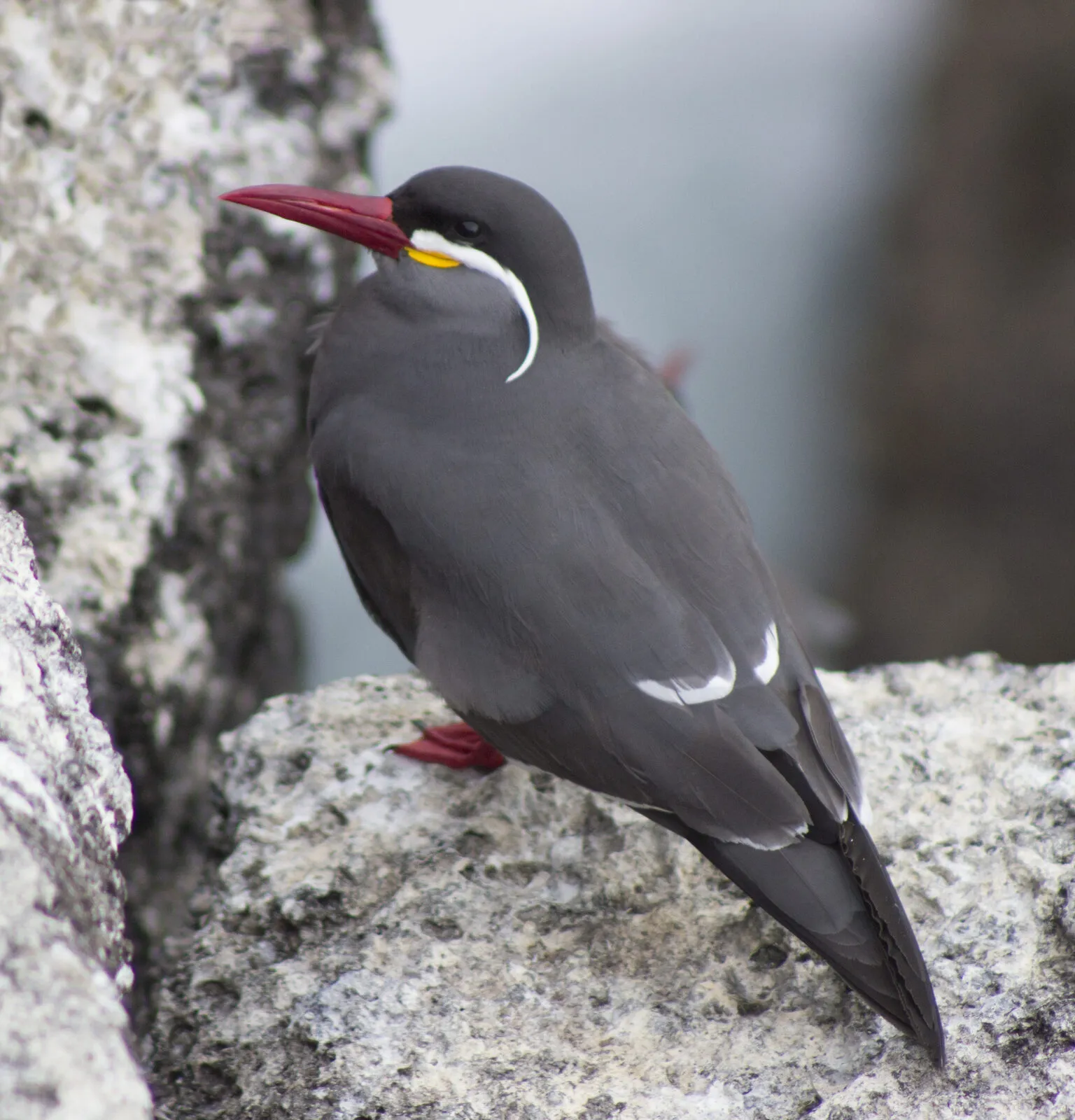
The Inca tern (Larosterna inca) is a dark-bodied tern with a bright red bill, white feather moustaches and yellow caruncles at the gape.10 In Peru it is known as «zarcillo».33

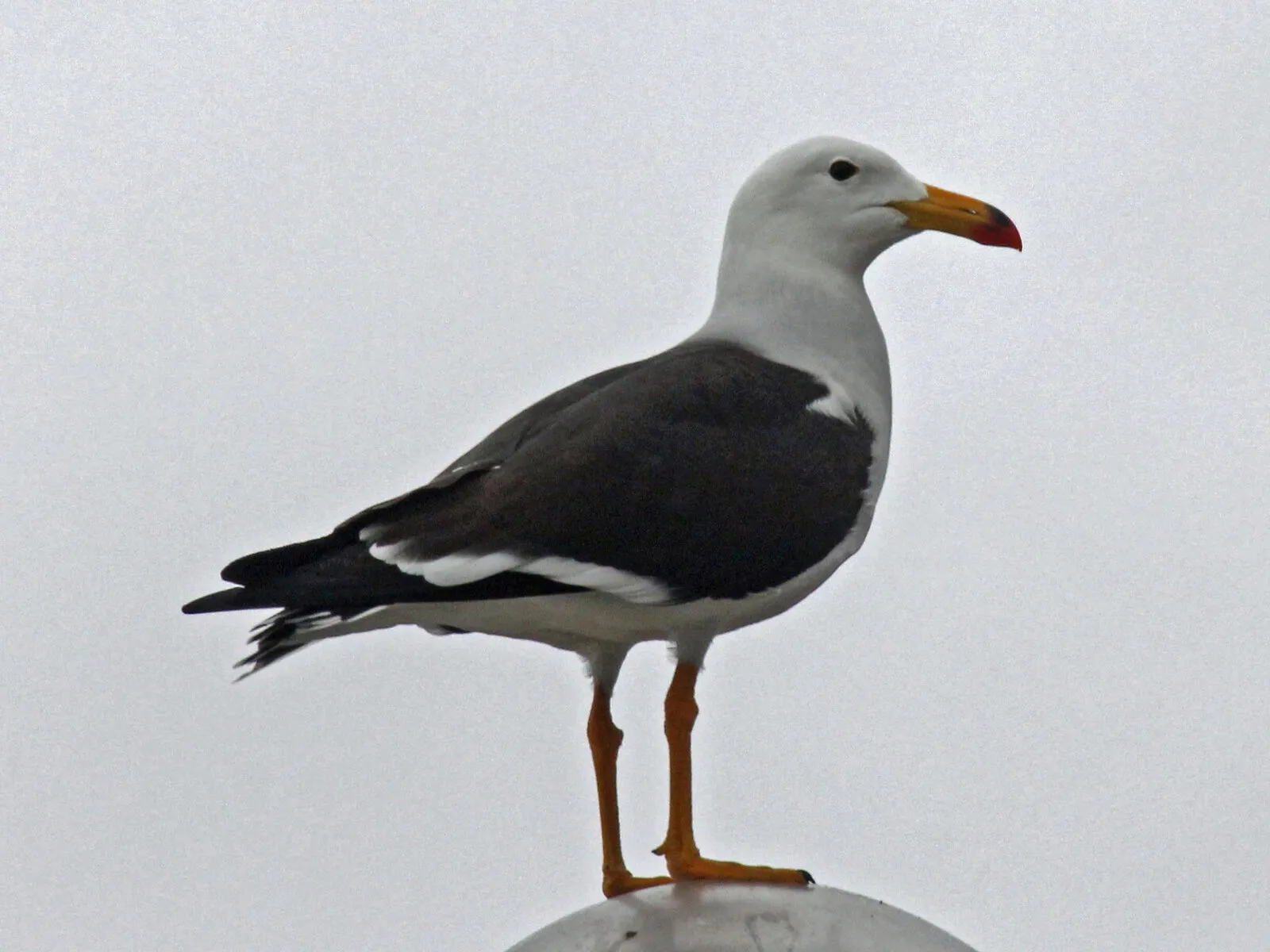
Larus belcheri is a coastal bird often found in rocky settings, although it will feed several kilometres from the shore.8 It is omnivorous and a scavenger: it eats fish, crabs, molluscs and dead animals, and it also preys on the eggs and chicks of the guano birds.11

Sterna hirundinacea is a tern of the South American coasts: on the Atlantic side it lives from Brazil to Cape Horn, and on the Pacific side it reaches Ecuador.34 The northernmost known colony on the South American Pacific coast is on Isla Vieja, in southern Peru, at about 14° S.35 Sternula lorata is a bird of the Humboldt Current that, unlike other seabirds, breeds in the coastal desert.9
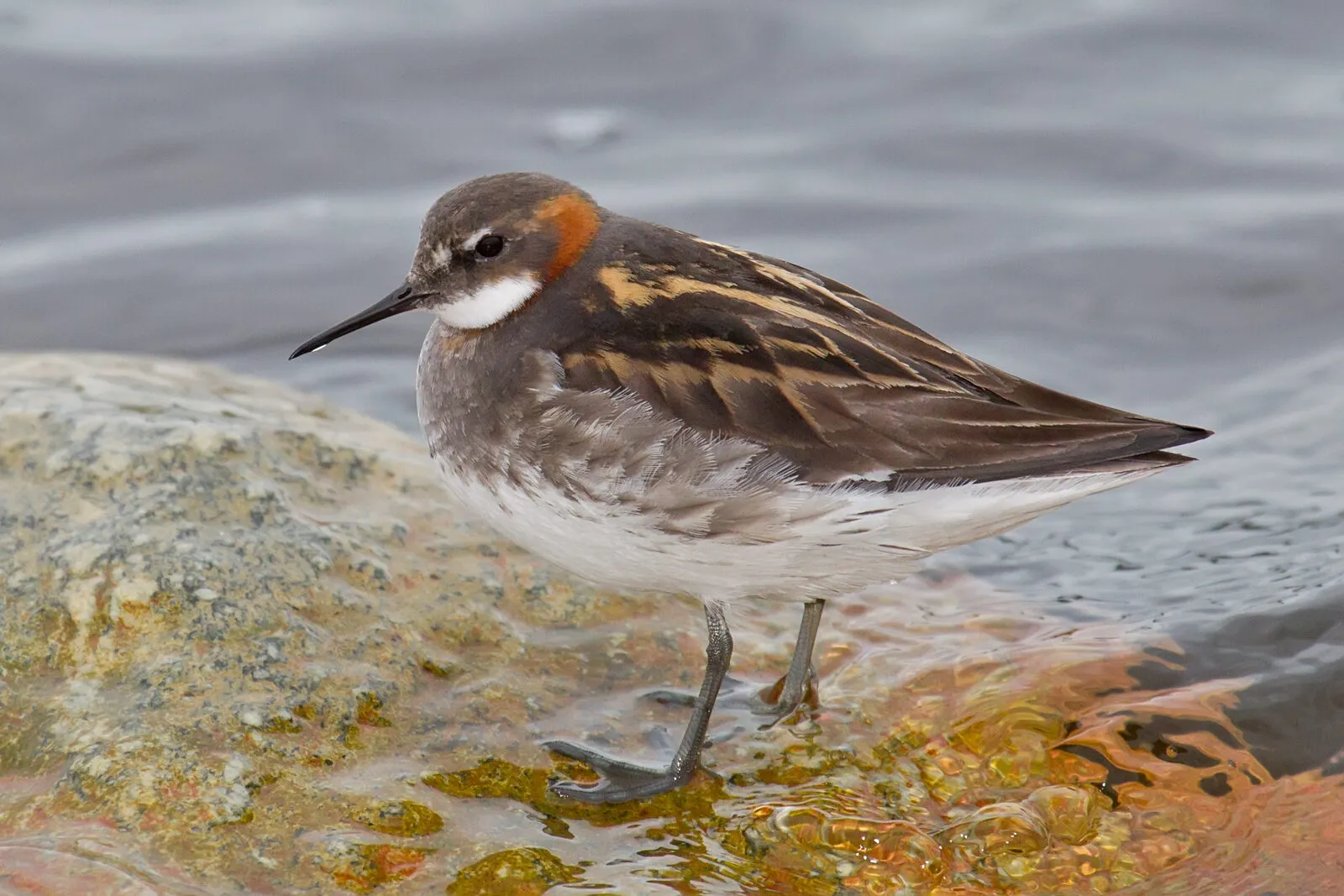
Stercorarius chilensis breeds on the coast and islands of centre-southern Chile, including Cape Horn, and in southern Argentina.19 Phalaropus lobatus breeds on freshwater tundra ponds and from there travels to the tropical ocean; of 8 birds of the western route with complete tracks, 6 wintered in the northern Humboldt Current.36

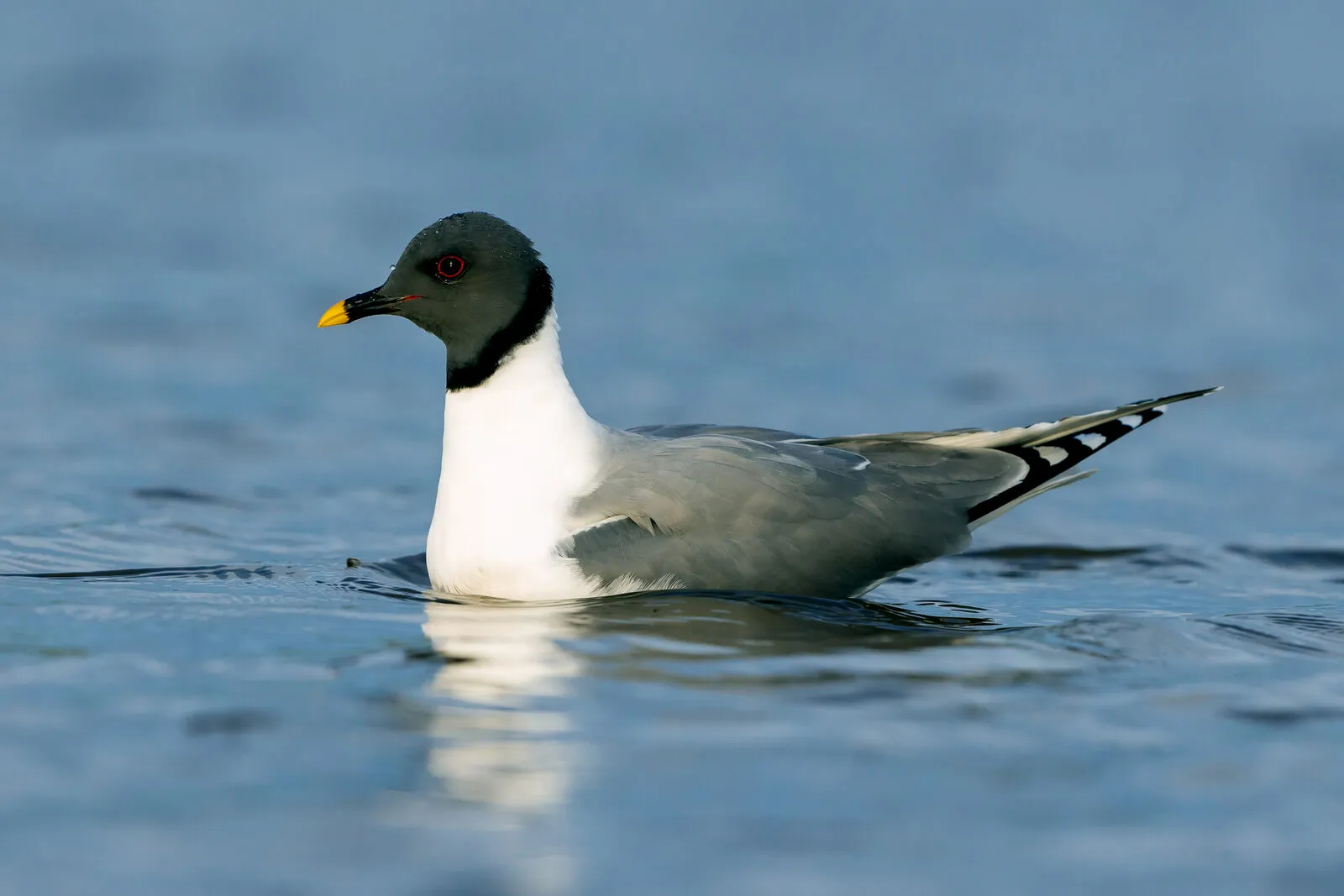
Creagrus furcatus is near-endemic to the Galápagos Islands, where the colonies studied are located.37 According to its authors it is the only gull that forages exclusively at night: across 114 GPS-tracked trips, 99.5 % of the time at sea fell in night hours.37 Xema sabini has a fragmented breeding range around the Arctic and outside the breeding season is highly pelagic.15 Every breeding population is presumed to reach one of two large upwelling zones of the southern hemisphere: the Humboldt Current off Peru or the Benguela Current off South Africa and Namibia.15

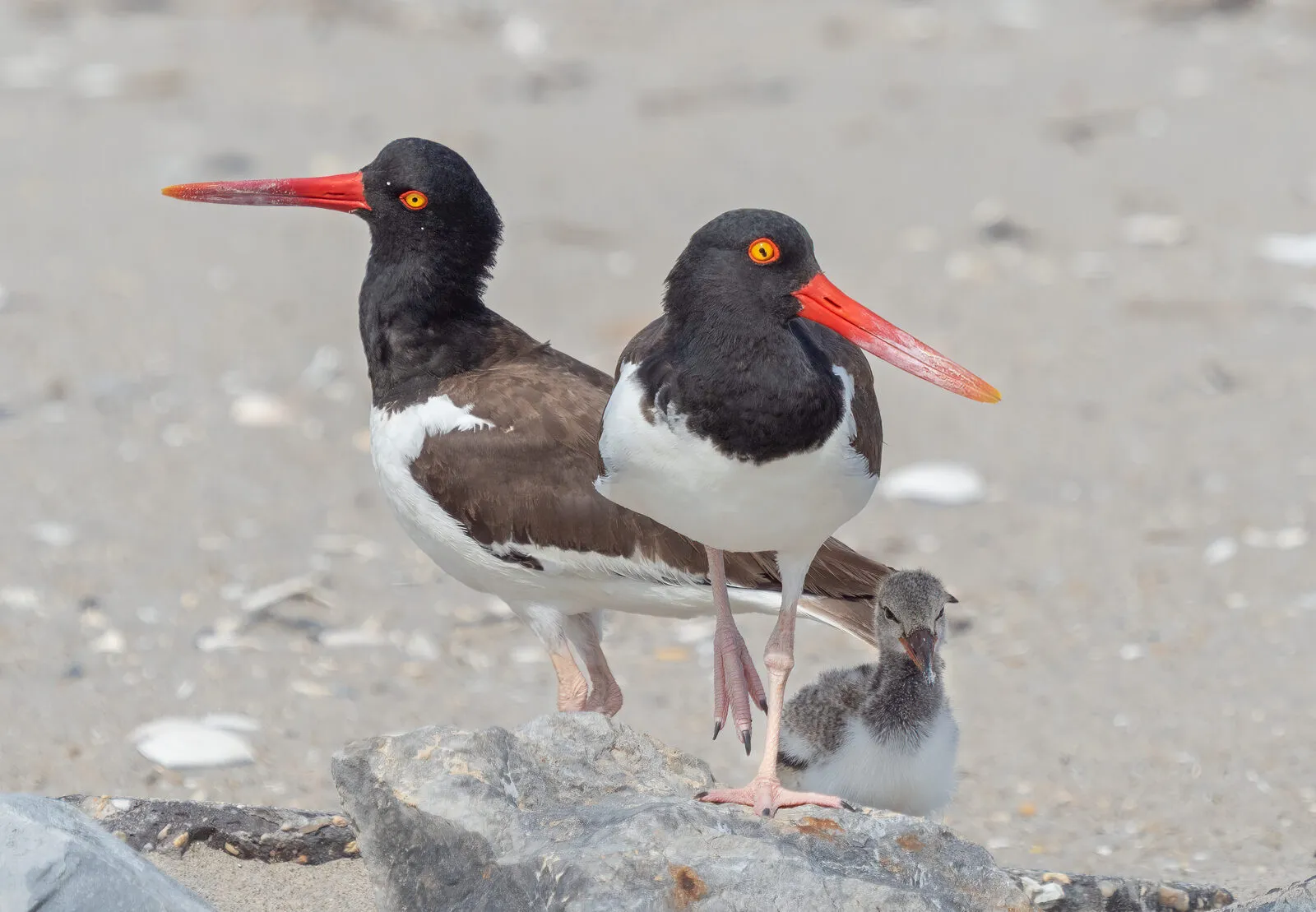
Haematopus palliatus is represented on the South American Pacific by the subspecies Haematopus palliatus pitanay, from Ecuador to southern Chile.38 At Pantanos de Villa, in Lima, it nests on sand less than 50 m from the highest high-tide line, and oystercatchers in general tolerate people poorly.39

Guano birds: boobies, pelicans, cormorants and the penguin
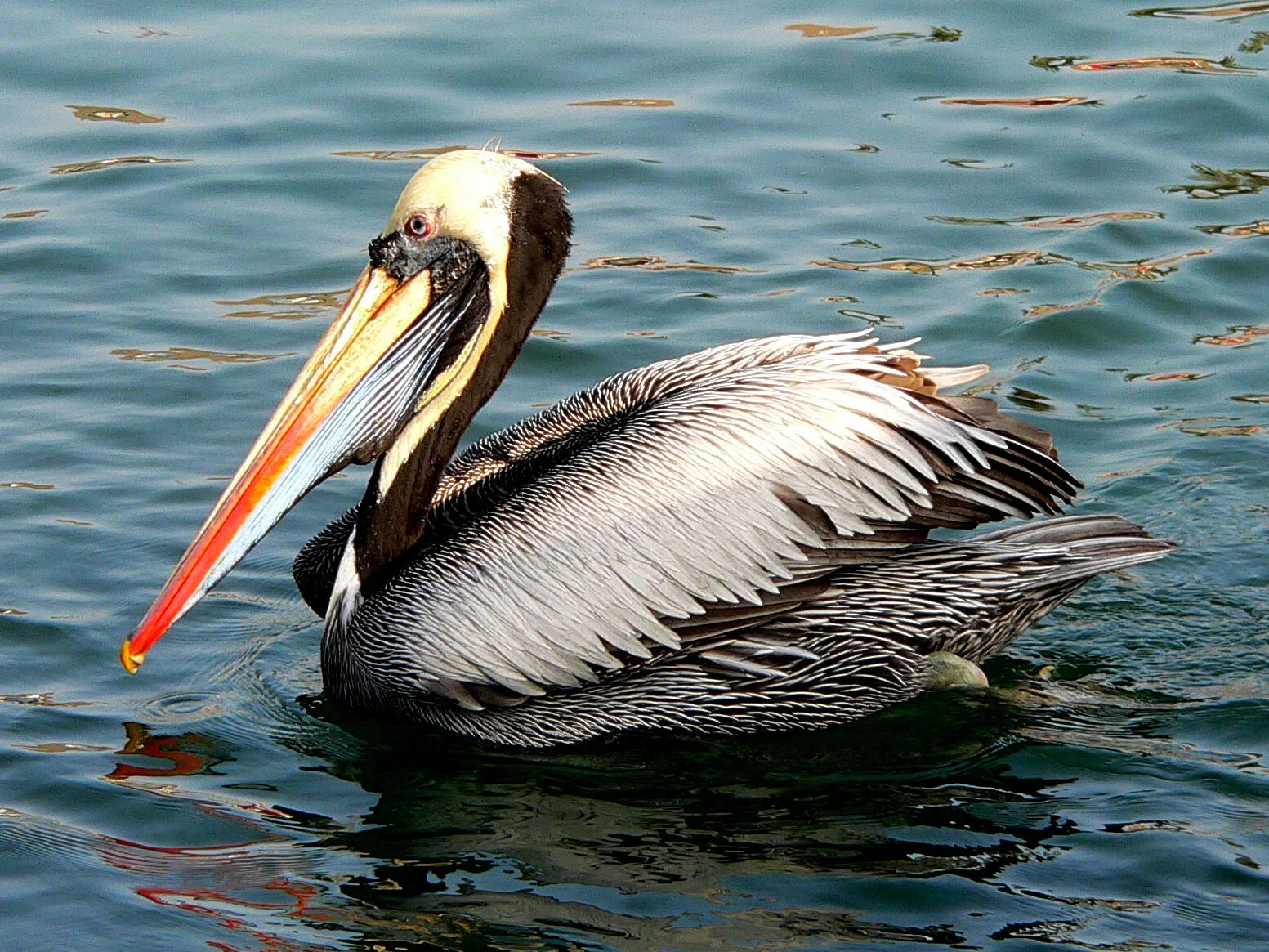
The trio known as the guano birds is made up of the Peruvian pelican, the guanay cormorant and the Peruvian booby, and the pelican is the least numerous of the three.40 The Peruvian booby breeds along the Peruvian coast, from Lobos de Tierra Island to Morro Sama.41
The Peruvian pelican (Pelecanus thagus) is bulky, with broad wings and a long bill, and an adult weighs between 5 and 7 kg.4042 The Peruvian pelican lives in the cold sea off the coast, mostly between Tacna and Piura, although it has been recorded as far as the far north of Tumbes.43 Its southernmost breeding site in the country is Punta Coles, in Ilo.40

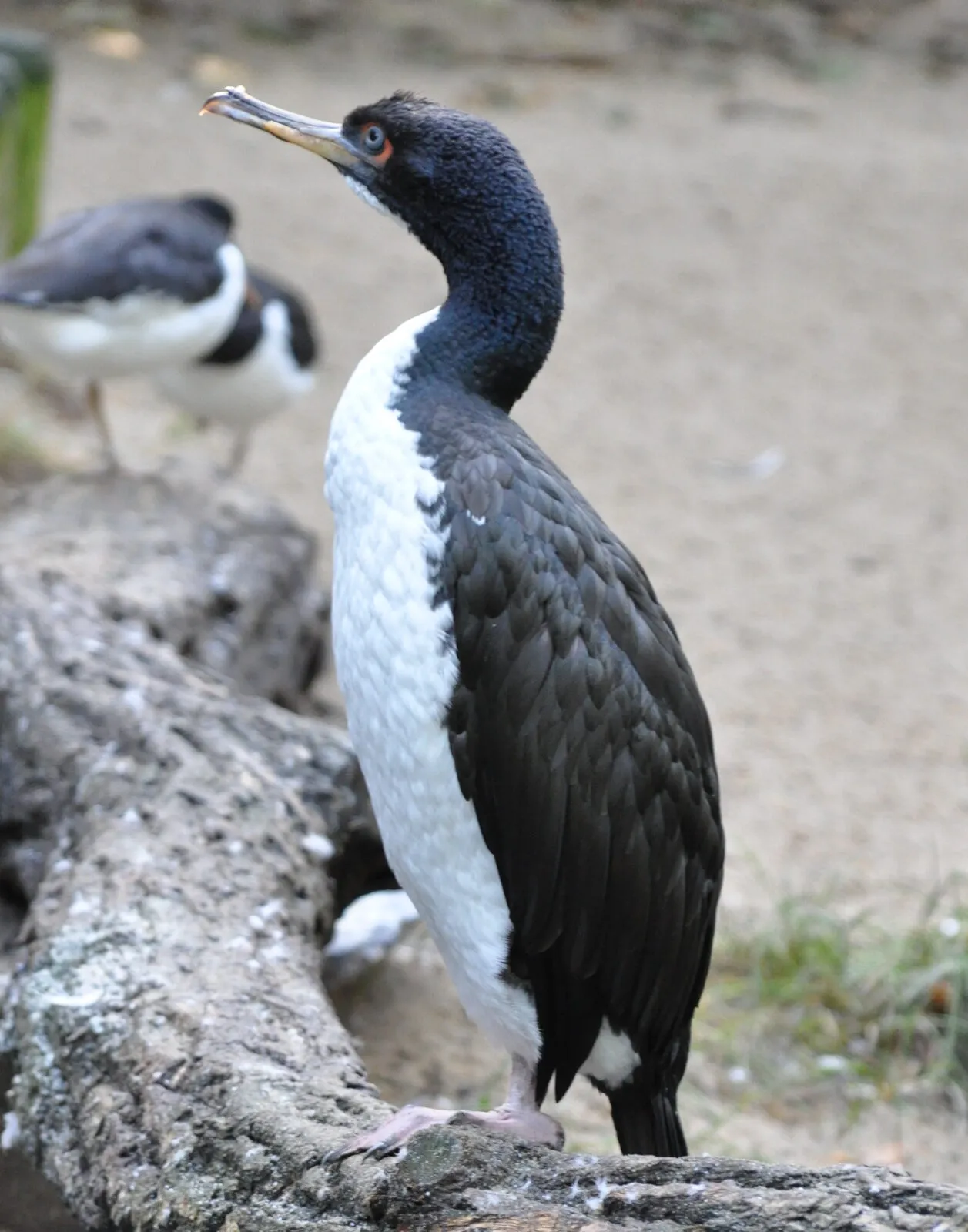
The guanay is a two-coloured bird: its throat, breast and belly are white, and its head, back and wings are black.7 At Punta San Juan, about 137 thousand breeding pairs of guanay were estimated in January 2017, 46 thousand in January 2019 and 20 thousand in January 2020.7

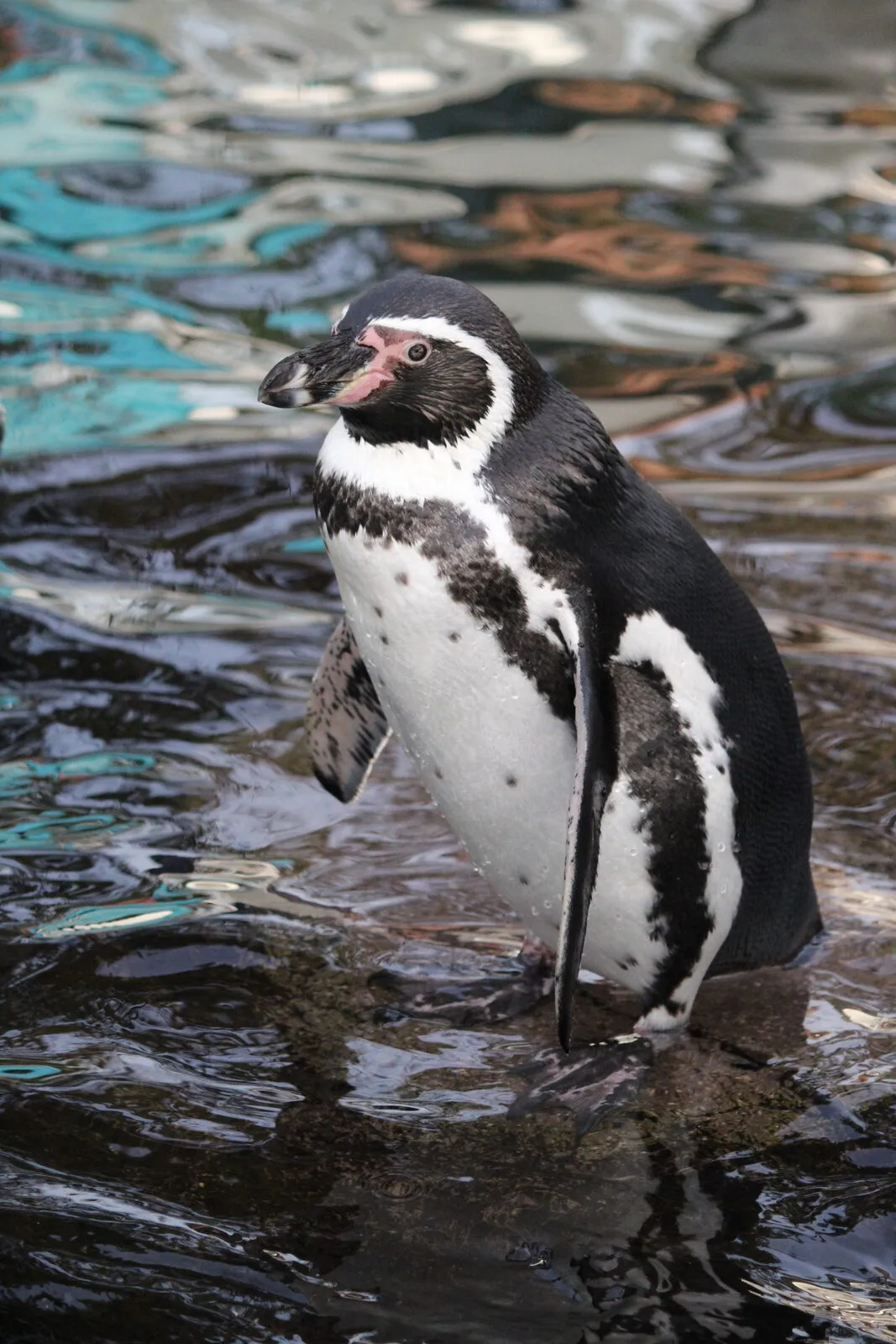
The Humboldt penguin breeds on the Pacific coast of South America, from La Foca Island in northern Peru to Metalqui Island in southern Chile.44 The Humboldt penguin was censused in Peru in 1999 and 2000, after the 1997-1998 El Niño, and was found from La Foca Island to Punta Coles.45 Almost four of every five birds, 78 %, were in only five localities: Punta San Juan, San Juanito islet, Hornillos Island, Pachacamac Island and Tres Puertas.45

The blue-footed booby breeds on Lobos de Tierra and Lobos de Afuera, where it lives alongside the Peruvian booby but far outnumbers it.41 In the monthly censuses of 2014, up to 239980 birds were estimated on Lobos de Tierra, in January, and up to 60000 on Lobos de Afuera, in March and April.46
Telling them apart
The masked and Nazca boobies were recognised as separate species only in 1998.47 The masked booby has a yellow bill and pale olive-green legs, whereas the Nazca has an orange bill in the male and coral red in the female, and khaki-grey legs.47 In the breeding season the adult of Sterna hirundinacea has pale grey upperparts that contrast with a black cap, and a vermilion bill; outside the breeding season the forehead and crown turn white and the bill becomes blackish or dull red.48
Macronectes halli is separated from its sister species by the horny plate at the bill tip, which is reddish at every age.49 Macronectes giganteus, by contrast, has two plumage phases, one white apart from a few scattered black feathers and one dark.50 In Oceanodroma tethys the white covers more than half the length of the tail, and the webbing between the toes is black, not yellow as in Oceanites oceanicus.30
Feeding at sea: anchoveta, discards and night
The Peruvian boobies followed with GPS and depth recorders on Lobos de Tierra and Lobos de Afuera fed only on anchoveta, which they caught with shallow plunge dives: the median was 2.5 m and the deepest reached 8.8 m.51 Larosterna inca feeds mainly on small fish, usually anchoveta (Engraulis ringens), and also on scraps left by fishing, so it often approaches boats.10 Pelecanoides garnotii is a remarkable diver: in 22 adults the mean maximum depth was 31.6 m and the deepest dive reached 83.1 m.52 In 118 stomach samples from La Vieja Island, the main prey by mass were the anchoveta Engraulis ringens (33.9 %), the krill Euphausia mucronata (26.8 %) and the squat lobster Pleuroncodes monodon (24.3 %).53 Anchoveta thus appears in the diet of birds from three different families: the Peruvian booby, the Inca tern and the Peruvian diving-petrel.511053
On Pescadores Island, the guanay, which dives from the surface, reached 32 m, while the Peruvian booby, which plunges from the air, stayed at a median of 2 m, so it can only reach the shallowest schools.54 The Peruvian pelican does the opposite: 87 % of the sea trips of 5 adults carrying GPS were strictly nocturnal.42 The authors propose that feeding at night would let them avoid competition with boobies and guanays, which fish only by day.42
Observers aboard the industrial anchoveta purse-seine fleet recorded top predators in 12,778 hauls between 2015 and 2019: the Inca tern was present in 26.69 % of them and was the most frequently sighted seabird in the whole study.33 Around the small-scale Humboldt squid boats in southern Peru, close to 17 % of all birds observed fed on fishery discards.55 Procellaria parkinsoni follows dolphins: 469 of the 618 birds recorded in the eastern tropical Pacific, 76 %, were with herds of 10 dolphin species.56
The frigatebird, known as the pirate of the seas, chases other seabirds in flight, mostly boobies, until they regurgitate, and takes their food; it also exploits fishing waste.57 At sea off the north-central coast of Peru, an individual Leucophaeus modestus was seen taking food from a Sterna hirundinacea.58 On the northern islands, Larus dominicanus often ate eggs and stole food from blue-footed boobies.59
Breeding elsewhere, or breeding at odd times
The Bounty Islands, where Thalassarche salvini nests, lie 760 km east of New Zealand and are 22 outcrops of bare granite totalling 135 ha.60 The Pyramid, home of Thalassarche eremita, is an islet of 1.7 ha rising 174 m.61
On the Pacific side, Sterna hirundinacea seems to breed from May to July, with late cases into August, in Ecuador, Peru and northern Chile.34 At the 31 breeding sites followed between 2003 and 2012, breeding in the three guano birds starts mostly between the austral winter and early spring, so that chicks fledge when food is at its best.62
At Punta San Juan, between 1993 and 1997, Humboldt penguin females laid eggs from mid-March to the first week of December, with one peak in April and another in August and September.63 In some shorebirds the roles are reversed: in Actitis macularius females compete for territories and for males, often take more than one mate, and it is the male that incubates.64
Conservation status and threats
The IUCN Red List classifies Phoebastria irrorata and Pterodroma phaeopygia as Critically Endangered.6566 The Peruvian list approved in 2014 also places them in that category and prohibits hunting, capture, possession, trade, transport and export for commercial purposes.67 The two lists do not always agree on the other species: Thalassarche eremita is Vulnerable for the IUCN and Critically Endangered in Peru.6867
The Humboldt penguin is Vulnerable on the IUCN Red List69, and the official Peruvian list of threatened wildlife approved in 2014 places it Endangered.70 The Peruvian booby is Least Concern for the IUCN71, but in Peru it is classified Endangered.70 The same bird can be of Least Concern for the IUCN and Endangered, or even Critically Endangered, on the Peruvian list, as happens with the Peruvian booby and with Sterna hirundinacea.71706772 Larosterna inca is Near Threatened on the IUCN Red List.73
Procellaria aequinoctialis is the seabird killed in greatest numbers on longlines in the Southern Ocean.74 On Española, the 2007 census counted 6045 pairs of Phoebastria irrorata, 88.1 % of the 6857 of 2001.75 According to the authors, the death of adults in Peru's artisanal fishery remains the most convincing explanation for that decline, while plastic looks like a minor threat: only 3 of 43 dead birds examined in 2007 (7.0 %) had any in the proventriculus.75
Incidental capture in fishing nets is one of the most serious threats to the Humboldt penguin.76 Surveys of 779 fishers at 39 landing sites in Peru and Chile estimated 4067 penguins caught in 2023, most of them in gillnets.76 According to a 2012 paper, in some 50 years the guanay went from about 21 million to 2 million individuals, while the Peruvian booby stayed near 2 million.54 A model of carbon flow to the three guano birds explained 94 % of the variation in their populations between 1925 and 2000, and attributed the fall after 1955 to competition with the fishery, which came to take about 85 % of the anchoveta.77
On San Cristóbal, in 2002 and 2003, only 23.6 % of breeding attempts of Pterodroma phaeopygia ended in success, and rats, which took both eggs and chicks, caused 72.2 % of failures.78 On land, artificial light is the best-documented threat in Peru for Oceanodroma hornbyi: SERFOR explains that intense lighting disrupts the birds' navigation and can cause disorientation, momentary blindness and collisions with buildings, poles and vehicles.79 In the San Fernando National Reserve, in a year of monitoring no pair of Larosterna inca with eggs or chicks was seen, and the authors suggest that tourism and seaweed collection may have led it to stop breeding there.80
Between November 2022 and January 2023 the H5N1 avian influenza outbreak left at least 55,000 seabirds dead on Peru's beaches and islands; a juvenile Inca tern found dead in Villa El Salvador (Lima) tested positive, the first confirmed detection in the species in Peru.81 On 29 November 2022 SERFOR counted 2919 Peruvian boobies and 614 blue-footed boobies dead among more than 13869 seabirds.82 In 1907, 100000 Peruvian pelicans were recorded on Lobos de Tierra Island; Peru's population was estimated at 350000 birds in 1953 and reached its recorded maximum, 509000, in 1988, but during the 1997 El Niño it fell from 300000 to 1800 birds.83
What is still unknown
For Sterna hirundinacea in Peru no population estimates exist.34 Oceanites gracilis is Data Deficient on the IUCN list.84 The IMARPE study includes it among the species with proven breeding sites in Peru and refers to a 2008 paper, but that paper describes a colony of a different species, Oceanodroma tethys kelsalli, on Santa Island.8586
The authorities reported between 39633 and 47414 dead pelicans, when in August 2022 125794 had been counted in protected areas.83 Another study cites about 558000 seabirds of at least 14 species dead in Peru, mostly from December 2022 to June 2023, with 58000 Peruvian pelicans among the most recorded.87 For Pterodroma phaeopygia the figures do not agree either: there were optimistic estimates of up to 100,000 pairs in the Galápagos, and in 1991 the authors noted that recent research pointed to about 7500 breeding pairs as the more likely figure.88 Calidris alba is Least Concern for the IUCN, but the management plan of the Illescas National Reserve states that its population may be suffering a serious decline.89
Of the masked booby in Peru, the study cited describes a single record, from a single visit.47 In 1997 masked boobies were reported nesting on Lobos de Tierra, but their features resemble the Nazca booby's more.47 According to the 2016 master plan, the Lobos de Tierra colony between Ñopo beach and Punta Sáenz is of Nazca boobies.46 On Sula leucogaster in Peru, the authors of the study assigned the Guañape bird to the subspecies brewsteri and the others to etesiaca.90 Under the current classification, both forms belong to Sula brewsteri and not to Sula leucogaster in the strict sense.91
For Oceanodroma microsoma, the author calls for regular monitoring of seabirds in coastal waters to understand the movements of these little-known birds.92 Along the Pacific coast of South America little is known about the at-sea ecology of several skuas.20
The species in this article
- Larosterna inca
- Sternula lorata
- Sterna hirundinacea
- Calidris minutilla
- Thalasseus elegans
- Actitis macularius
- Larus belcheri
- Larus dominicanus
- Haematopus palliatus
- Charadrius vociferus
- Calidris alba
- Calidris pusilla
- Thalasseus maximus
- Thalasseus sandvicensis
- Himantopus mexicanus
- Sterna paradisaea
- Calidris melanotos
- Calidris bairdii
- Sterna hirundo
- Stercorarius chilensis
- Creagrus furcatus
- Stercorarius pomarinus
- Phalaropus fulicarius
- Phalaropus lobatus
- Xema sabini
- Leucophaeus modestus
- Stercorarius longicaudus
- Stercorarius parasiticus
- Stercorarius maccormicki
- Larus pipixcan
- Phoebastria irrorata
- Pterodroma phaeopygia
- Procellaria aequinoctialis
- Thalassarche salvini
- Procellaria parkinsoni
- Pelecanoides garnotii
- Thalassarche eremita
- Thalassarche bulleri
- Oceanodroma markhami
- Thalassarche melanophris
- Macronectes giganteus
- Macronectes halli
- Pterodroma defilippiana
- Pterodroma cookii
- Pterodroma externa
- Oceanodroma tethys
- Ardenna creatopus
- Oceanites gracilis
- Thalassarche chrysostoma
- Puffinus griseus
- Oceanodroma hornbyi
- Oceanites oceanicus
- Pelagodroma marina
- Pterodroma neglecta
- Daption capense
- Oceanodroma microsoma
- Pachyptila belcheri
- Puffinus bulleri
- Oceanodroma melania
- Fregetta grallaria
- Fulmarus glacialoides
- Anas bahamensis
- Butorides striata
- Chloroceryle americana
- Fregata magnificens
- Pelecanus occidentalis
- Pelecanus thagus
- Phaethon aethereus
- Phalacrocorax bougainvillii
- Phalacrocorax gaimardi
- Platalea ajaja
- Spheniscus humboldti
- Sula dactylatra
- Sula granti
- Sula leucogaster
- Sula nebouxii
- Sula variegata
Sources (92)
- Soto, R., Ruiz R., V.H. & Vega-Roman, E. (2012). Estado actual del conocimiento de la familia Stercorariidae en el extremo sur de Chile. Anales del Instituto de la Patagonia, 83-93. doi.org
- Saalfeld, S.T. et al. (2024). From land to sea: the fall migration of the red phalarope through the Western Hemisphere. Marine Ecology Progress Series 729, 1-29. doi.org
- WoRMS Editorial Board (2026). Phoebastria irrorata (Salvin, 1883). World Register of Marine Species. marinespecies.org
- Ayala, L.; Mendoza, C.; Perez, J. (2004). Two New Breeding Localities for Wedge-rumped Storm-petrel Oceanodroma Tethys Kelsalli in Peru. Marine Ornithology, 107-108. doi.org
- Astete, M.; Gingins, R. (2020). Hallazgo del Paíño De Collar (Oceanodroma hornbyi) en el noroeste patagónico: una nueva especie para la avifauna argentina. Nuestras Aves, 92-93. doi.org
- Taylor, S.A., Zavalaga, C.B., Luna-Jorquera, G., Simeone, A., Anderson, D.J., Friesen, V.L. (2010). Panmixia and high genetic diversity in a Humboldt Current endemic, the Peruvian Booby (Sula variegata). Journal of Ornithology, 623-630. doi.org
- Gonzales Del Carpio, D.D. (2022). Flexibilidad del comportamiento de forrajeo del cormorán guanay (Phalacrocorax bougainvillii) bajo un ambiente marino impredecible. Universidad Peruana Cayetano Heredia (tesis de licenciatura). hdl.handle.net
- Burger, J. et al. (2024). Belcher's Gull (Larus belcheri). Birds of the World, version 1.1. doi.org
- Amorós Kohn, S., Saravia Guevara, P. & Williams, M. (2010). Biología reproductiva de Sternula lorata, «gaviotín peruano», en la reserva nacional de paracas (rnp), ica – perú. Ecología Aplicada, 125-132. doi.org
- VanderWerf, E.A. (2022). An Inca Tern in the Hawaiian Islands: first record for Hawaii and the United States. Western Birds, 208-215. doi.org
- Gomez-Puerta, L.A. & Naupay, A. (2019). Algunos helmintos parásitos de la gaviota peruana (Larus belcheri). Revista Peruana de Biología, 149-156. doi.org
- Chávez-Villavicencio, C. et al. (2015). Registro de actividad reproductiva de Charadrius vociferus (Linnaeus 1758, chorlo gritón) en el humedal de Paraíso, Huacho (Lima – Perú). The Biologist (Lima), 443-445. doi.org
- Bracey, A.M. et al. (2018). Migratory routes and wintering locations of declining inland North American Common Terns. The Auk, 385-399. doi.org
- Hunnewell, R.W., Diamond, A.W. & Brown, S.C. (2016). Estimating the migratory stopover abundance of phalaropes in the outer Bay of Fundy, Canada. Avian Conservation and Ecology, 11. doi.org
- Davis, S.E., Maftei, M. & Mallory, M.L. (2016). Migratory Connectivity at High Latitudes: Sabine's Gulls (Xema sabini) from a Colony in the Canadian High Arctic Migrate to Different Oceans. PLoS ONE 11(12): e0166043, e0166043. doi.org
- Burger, J. & Gochfeld, M. (2020). Franklin's Gull (Leucophaeus pipixcan). Birds of the World. doi.org
- Acuña-Ruz, M.P. et al. (2026). Ocean Chlorophyll-a Concentration and the Extension of the Migration of Franklin’s Gulls (Leucophaeus pipixcan) in Southern South America. Animals. doi.org
- Spear, L.B.; Ainley, D.G. (2008). The Seabird Community of the Peru Current, 1980-1995, with Comparisons to Other Eastern Boundary Currents. Marine Ornithology, 125-144. doi.org
- Seco Pon, J.P. et al. (2017). Asociación de la Escúa Parda (Stercorarius antarcticus) y la Escúa Común (Stercorarius chilensis) con operaciones de pesca en el Mar Argentino. El Hornero, 205-214. doi.org
- Simeone, A., Anguita, C. & Luna-Jorquera, G. (2014). At-sea abundance and distribution of skuas and jaegers (Charadriiformes: Stercorariidae) at coastal waters off central Chile. Revista Chilena de Historia Natural, 87:6. doi.org
- Schweizer, M. et al. (2024). Genetic data confirm that Diomedea platei Reichenow, 1898, is the correct name for the population of Buller’s albatross Thalassarche bulleri breeding at the Chatham Islands, New Zealand. Notornis, 165-175. doi.org
- Carle, R.D. et al. (2021). Introduced and native vertebrates in pink-footed shearwater (Ardenna creatopus) breeding colonies in Chile. PLOS One, e0254416. doi.org
- Norambuena, H.V. et al. (2021). Living on the edge: genetic structure and geographic distribution in the threatened Markham’s Storm-Petrel (Hydrobates markhami). PeerJ, e12669. doi.org
- Gallardo, B. et al. (2023). Descubrimiento del primer sitio de reproducción de Golondrina de Mar Negra (Hydrobates markhami) en el extremo sur del Perú. El Hornero, 63-69. doi.org
- Awkerman, J.A. et al. (2014). Small range and distinct distribution in a satellite breeding colony of the critically endangered Waved Albatross. Journal of Ornithology, 367-378. doi.org
- Dellacasa, R.F.; Chavez, L.N.; Tamini, L.L. (2022). Salvin's Albatross Thalassarche salvini Interacting with Freezer Trawlers in Waters of the Patagonian Shelf. Marine Ornithology, 99-102. doi.org
- Spear, L.B.; Ainley, D.G.; Webb, S.W. (2003). Distribution, abundance and behaviour of Buller’s, Chatham Island and Salvin's Albatrosses off Chile and Peru. Ibis, 253-269. doi.org
- Kolesnikovas, C.K.M. et al. (2021). Unusual Mass Stranding Event of White-chinned Petrels Procellaria aequinoctialis in Santa Catarina State, Southern Brazil. Marine Ornithology, 183-187. doi.org
- Phillips, R.A. et al. (2006). Year-round distribution of white-chinned petrels from South Georgia: Relationships with oceanography and fisheries. Biological Conservation, 336-347. doi.org
- Kammerichs-Berke, D. (2018). Northernmost record of the Wedge-rumped Storm-Petrel (Oceanodroma tethys). Western Birds, 74-76. doi.org
- Fernández, C.E. et al. (2023). At-sea distribution patterns of the Peruvian diving petrel Pelecanoides garnotii during breeding and non-breeding seasons. Scientific Reports, 14463. doi.org
- Stucchi, M.; Mattos, J. (2011). CARACTERES OSTEOLÓGICOS CLAVE DEL POTOYUNCO PERUANO PELECANOIDES GARNOTII (PROCELLARIIFORMES, PELECANOIDIDAE). The Biologist (Lima), 53-65. doi.org
- Rivadeneyra-Villafuerte, S. & Román-Amancio, G. (2022). Depredadores tope en la pesquería industrial de anchoveta entre los años 2015 y 2019. Boletín Instituto del Mar del Perú, 91-112. doi.org
- Jaime Cursach Valenzuela, Vilugrón, J. & Rau, J.R. (2021). Nidificación del gaviotín sudamericano (Sterna hirundinacea) en islas Caicura (41° S), Seno de Reloncaví, sur de Chile. Anales del Instituto de la Patagonia, 49:6. doi.org
- Portflitt-Toro, M. et al. (2018). Breeding of the South American Tern (Sterna hirundinacea) on anchored boats in Coquimbo, northern Chile. Ornitología Neotropical, 187-191. doi.org
- van Bemmelen, R.S.A. et al. (2019). A Migratory Divide Among Red-Necked Phalaropes in the Western Palearctic Reveals Contrasting Migration and Wintering Movement Strategies. Frontiers in Ecology and Evolution, 86. doi.org
- Cruz, S.M. et al. (2025). The owl gull: Exclusively nocturnal foraging by the Swallow-tailed Gull Creagrus furcatus in Galápagos. Marine Ornithology 53(1), 63-69. doi.org
- Thomson, R.F. et al. (2025). Population trends and vital rates for the American Oystercatcher (Haematopus palliatus pitanay) in Central Chile. Journal of Field Ornithology. doi.org
- Arenas, A. et al. (2020). Reproductive success of Haematopus palliatus, the Common oystercatcher, and anthropic activities in the Marvilla Circuit, Pantanos de Villa, Lima- Peru. South Sustainability, e020. doi.org
- Governments of Chile, Ecuador, Panama and Peru (2023). Proposal for the inclusion of the Peruvian Pelican (Pelecanus thagus) in Appendices I and II of the Convention. Convention on the Conservation of Migratory Species of Wild Animals, UNEP/CMS/COP14/Doc.31.4.6. cms.int
- Figueroa, J., Stucchi, M. (2008). Possible Hybridization Between the Peruvian Booby Sula Variegata and the Blue-footed Booby S Nebouxii in Lobos De Afuera Islands, Peru. Marine Ornithology, 75-76. doi.org
- Zavalaga, C.B., Dell'Omo, G., Becciu, P., Yoda, K. (2011). Patterns of GPS Tracks Suggest Nocturnal Foraging by Incubating Peruvian Pelicans (Pelecanus thagus). PLoS ONE, e19966. doi.org
- Servicio Nacional Forestal y de Fauna Silvestre (SERFOR) (2018). Libro Rojo de la Fauna Silvestre Amenazada del Perú. SERFOR, Ministerio de Agricultura y Riego; documento en SINIA, Ministerio del Ambiente, 237. sinia.minam.gob.pe
- Vianna, J.A., Cortes, M., Ramos, B., Sallaberry-Pincheira, N., González-Acuña, D., Dantas, G.P.M., Morgante, J., Simeone, A., Luna-Jorquera, G. (2014). Changes in Abundance and Distribution of Humboldt Penguin Spheniscus Humboldti. Marine Ornithology. doi.org
- Paredes, R., Zavalaga, C.B., Battistini, G., Majluf, P., McGill, P. (2003). Status of the Humboldt Penguin in Peru, 1999-2000. Waterbirds, 129-133. doi.org
- Servicio Nacional de Áreas Naturales Protegidas por el Estado (2016). Plan Maestro de la Reserva Nacional Sistema de Islas, Islotes y Puntas Guaneras 2016-2020. SERNANP; copia en SINIA, Ministerio del Ambiente. sinia.minam.gob.pe
- Figueroa, J. (2004). First Record of Breeding by the Nazca Booby Sula Granti on Lobos De Afuera Islands, Peru. Marine Ornithology, 117-118. doi.org
- Carlos, C.J. & Voisin, J.-F. (2013). The type locality of the South American Tern, Sterna hirundinacea (Aves: Charadriiformes: Sternidae), with designation of a lectotype. Zoologia (Curitiba), 356-358. doi.org
- Zavalaga, C.B. et al. (2009). Immature Northern Giant Petrels Macronectes Halli Visiting the Coast of Peru. Marine Ornithology, 237-240. doi.org
- Shaughnessy, P.D. (1970). The genetics of plumage phase dimorphism of the southern giant petrel Macronectes giganteus. Heredity, 501-506. doi.org
- Zavalaga, C.B., Halls, J.N., Mori, G.P., Taylor, S.A., Dell'Omo, G. (2010). At-sea movement patterns and diving behavior of Peruvian boobies Sula variegata in northern Peru. Marine Ecology Progress Series, 259-274. doi.org
- Zavalaga, C.B.; Jahncke, J. (1997). Maximum Dive Depths of the Peruvian Diving-Petrel. The Condor, 1002-1004. doi.org
- García-Godos, I.; Goya, E. (2006). Diet of Peruvian Diving Petrels Pelecanoides Garnotii on La Vieja Island, Central Peru, Between 1997 and 2000, Potential Fishery Interactions and Conservation Implications. Marine Ornithology, 33-41. doi.org
- Weimerskirch, H., Bertrand, S., Silva, J., Bost, C., Peraltilla, S. (2012). Foraging in Guanay cormorant and Peruvian booby, the major guano-producing seabirds in the Humboldt Current System. Marine Ecology Progress Series, 231-245. doi.org
- Moreno, C.; Quiñones, J. (2022). Albatross and Petrel Interactions with an Artisanal Squid Fishery in Southern Peru during El Niño, 2015-2017. Marine Ornithology, 49-56. doi.org
- Pitman, R.L.; Ballance, L.T. (1992). Parkinson's Petrel Distribution and Foraging Ecology in the Eastern Pacific: Aspects of an Exclusive Feeding Relationship with Dolphins. The Condor, 825-835. doi.org
- Ochoa, M., Bouchon, M., Quiñones, J. (2021). Distribución del ave fragata común (Fregata magnificens Mathews, 1914) durante eventos anómalos positivos en el litoral norte centro del Perú. 2015 - 2019. Boletín del Instituto del Mar del Perú, 44-53. doi.org
- Figueroa, J. & Suazo, E. (2012). Distribución de las aves marinas frente a la costa norte-centro del Perú en el invierno de 2010 y su interacción potencial con la pesquería. The Biologist (Lima), 41-71. doi.org
- Figueroa, J. (2010). Aspectos de la biología reproductiva de la gaviota dominicana Larus dominicanus (Charadriiformes, Laridae) en tres islas del norte del Perú. The Biologist (Lima), 189-211. doi.org
- Sagar, P.M. et al. (2015). Population trends, timing of breeding and survival of Salvin’s albatrosses (Thalassarche salvini) at Proclamation Island, Bounty Islands, New Zealand. Notornis, 21-29. doi.org
- Deppe, L. et al. (2014). Distribution and predictability of foraging areas in breeding Chatham albatrosses Thalassarche eremita in relation to environmental characteristics. Marine Ecology Progress Series, 287-301. doi.org
- Passuni, G., Barbraud, C., Chaigneau, A., Demarcq, H., Ledesma, J., Bertrand, A., Castillo, R., Perea, A., Mori, J., Viblanc, V.A., Torres-Maita, J., Bertrand, S. (2016). Seasonality in marine ecosystems: Peruvian seabirds, anchovy, and oceanographic conditions. Ecology, 182-193. doi.org
- Paredes, R., Zavalaga, C.B., Boness, D.J. (2002). Patterns of Egg Laying and Breeding Success in Humboldt Penguins (Spheniscus Humboldti) at Punta San Juan, Peru. The Auk, 244-250. doi.org
- Blizard, M. & Pruett-Jones, S. (2017). Plumage pattern dimorphism in a shorebird exhibiting sex-role reversal (Actitis macularius). The Auk, 363-376. doi.org
- BirdLife International (2018). Phoebastria irrorata: BirdLife International. The IUCN Red List of Threatened Species 2018: e.T22698320A132641638. doi.org
- BirdLife International (2018). Pterodroma phaeopygia: BirdLife International. The IUCN Red List of Threatened Species 2018: e.T22698020A132619647. doi.org
- Ministerio de Agricultura y Riego (2014). Decreto Supremo N.° 004-2014-MINAGRI: actualización de la lista de clasificación y categorización de las especies amenazadas de fauna silvestre legalmente protegidas. El Peruano (08-04-2014); ficha en SINIA, Ministerio del Ambiente. sinia.minam.gob.pe
- BirdLife International (2018). Thalassarche eremita: BirdLife International. The IUCN Red List of Threatened Species 2018: e.T22698393A132644476. doi.org
- BirdLife International (2020). Spheniscus humboldti: BirdLife International. The IUCN Red List of Threatened Species 2020: e.T22697817A182714418. doi.org
- Ministerio de Agricultura y Riego (2014). Decreto Supremo N.° 004-2014-MINAGRI: actualización de la lista de clasificación y categorización de las especies amenazadas de fauna silvestre legalmente protegidas. El Peruano, Normas Legales, 8 de abril de 2014 (edición del diario oficial en el portal del Ministerio de Economía y Finanzas). mef.gob.pe
- BirdLife International (2018). Sula variegata: BirdLife International. The IUCN Red List of Threatened Species 2018: e.T22696686A132589026. doi.org
- BirdLife International (2018). Sterna hirundinacea: BirdLife International. The IUCN Red List of Threatened Species 2018: e.T22694618A132562410. doi.org
- BirdLife International (2018). Larosterna inca: BirdLife International. The IUCN Red List of Threatened Species 2018: e.T22694834A132576903. doi.org
- Barbraud, C. et al. (2008). Demographic response of a population of white-chinned petrels Procellaria aequinoctialis to climate and longline fishery bycatch. Journal of Applied Ecology, 1460-1467. doi.org
- Anderson, D.J. et al. (2008). Population status of the Critically Endangered waved albatross Phoebastria irrorata, 1999 to 2007. Endangered Species Research, 185-192. doi.org
- Segura-Cobeña, E., Alfaro-Shigueto, J., Colodro, V., Mangel, J.C. (2025). Use of rapid assessments of fishery bycatch of Humboldt penguins Spheniscus humboldti in Peru and Chile to help identify conservation priorities. Royal Society Open Science. doi.org
- Jahncke, J., Checkley, D.M., Hunt, G.L. (2004). Trends in carbon flux to seabirds in the Peruvian upwelling system: effects of wind and fisheries on population regulation. Fisheries Oceanography, 208-223. doi.org
- Cruz-Delgado, F.; González, J.A.; Wiedenfeld, D.A. (2010). Breeding biology of the Critically Endangered Galapagos Petrel Pterodroma phaeopygia on San Cristóbal Island: conservation and management implications. Bird Conservation International, 306-319. doi.org
- SERFOR (2025). SERFOR rescata a golondrina de mar encontrada en urbanización de Tacna. Nota de prensa, Servicio Nacional Forestal y de Fauna Silvestre (3 de abril de 2025). gob.pe
- Meza, M.A., Llapapasca Lloclla, M. & Romero, C. (2021). Avifauna de algunas playas de la Reserva Nacional de San Fernando (RNSF) Ica – Perú. Junio 2018 - Mayo 2019. Boletín Instituto del Mar del Perú, 29-44. doi.org
- Palomino-Kobayashi, L.A., Zavalaga, C. & Pons, M.J. (2026). Molecular detection of Highly Pathogenic H5N1 Avian Influenza in seabirds from Lima, Peru in 2022. South Health, e003. doi.org
- Servicio Nacional Forestal y de Fauna Silvestre (2022). Más de 13 mil aves silvestres marinas muertas por influenza aviar. Nota de prensa, SERFOR (29-11-2022). gob.pe
- Ayala, L., Sandoval-Lazaro, G. (2025). Updating the Status of the Peruvian Pelican Pelecanus thagus Following Avian Influenza and El Niño Events in Peru. Marine Ornithology, 217-221. doi.org
- BirdLife International (2018). Oceanites gracilis: BirdLife International. The IUCN Red List of Threatened Species 2018: e.T22698442A132647135. doi.org
- Romero, C. (2021). Distribución espacio-temporal de la golondrina de mar de Markham Oceanodroma markhami (Salvin, 1883) y la golondrina de mar acollarada O. hornbyi (Gray, 1854) en Perú. 2019. Boletín Instituto del Mar del Perú, 68-84. doi.org
- Ayala, L. et al. (2008). Una colonia reproductiva de la Golondrina de la Tempestad Peruana, Oceanodroma tethys kelsalli (Lowe 1925), en la Isla Santa, Perú. Revista Peruana de Biología, 117-120. doi.org
- Kuiken, T., Vanstreels, R.E.T., Banyard, A.C., Begeman, L., Breed, A.C., Dewar, M., Fijn, R., Serafini, P.P., Uhart, M., Wille, M. (2025). Emergence, spread, and impact of high-pathogenicity avian influenza H5 in wild birds and mammals of South America and Antarctica. Conservation Biology, e70052. doi.org
- Tomkins, R.J.; Milne, B.J. (1991). Differences among dark-rumped petrel (Pterodroma phaeopygia) populations within the Galapagos archipelago. Notornis, 1-35. doi.org
- Servicio Nacional de Áreas Naturales Protegidas por el Estado (2024). Plan Maestro de la Reserva Nacional Illescas 2024-2028. SERNANP, aprobado por Resolución Presidencial N.° 000025-2024-SERNANP. cdn.www.gob.pe
- Gutiérrez, C., Melgarejo-Layza, I., Figueroa, J. (2018). PIQUERO PARDO (SULA LEUCOGASTER) EN EL PERÚ:. Biotempo. doi.org
- VanderWerf, E.A. (2025). Identification and distribution of the Brown and Cocos Boobies and their subspecies. Western Birds, 176-199. doi.org
- Ugarte, M. (2025). Status of the Least Storm Petrel Hydrobates microsoma in Peru. Marine Ornithology, 379-382. doi.org